


A troubling public health picture is emerging in Ghana’s Amansie West District, where malaria cases have risen for a second consecutive year and children are bearing the heaviest burden.
Official data now shows that cases among children under five jumped from 8,000 in 2024 to 10,000 in 2025, a 25 per cent increase that health officials describe as deeply alarming.
District-wide, the numbers are similarly sobering. Outpatient Department records show malaria cases rose from over 36,000 in 2024 to more than 38,000 in 2025. Health authorities point squarely at illegal small-scale mining — locally known as galamsey — as a key culprit. The excavated pits left behind by these operations, often abandoned and left uncovered, have become fertile breeding grounds for mosquitoes that stretch across communities in the district.
“We are shifting from control to elimination,” said Pharm. Bernard Badu Bediako, the Amansie West District Director of Health Services, at a commemoration of this year’s World Malaria Day. He stressed that public education has been intensified, urging residents to complete full courses of anti-malaria medication rather than stopping treatment prematurely, and to sleep consistently under long-lasting insecticide-treated nets despite common complaints about heat and discomfort. The risk of severe malaria, he emphasised, far outweighs the inconvenience.

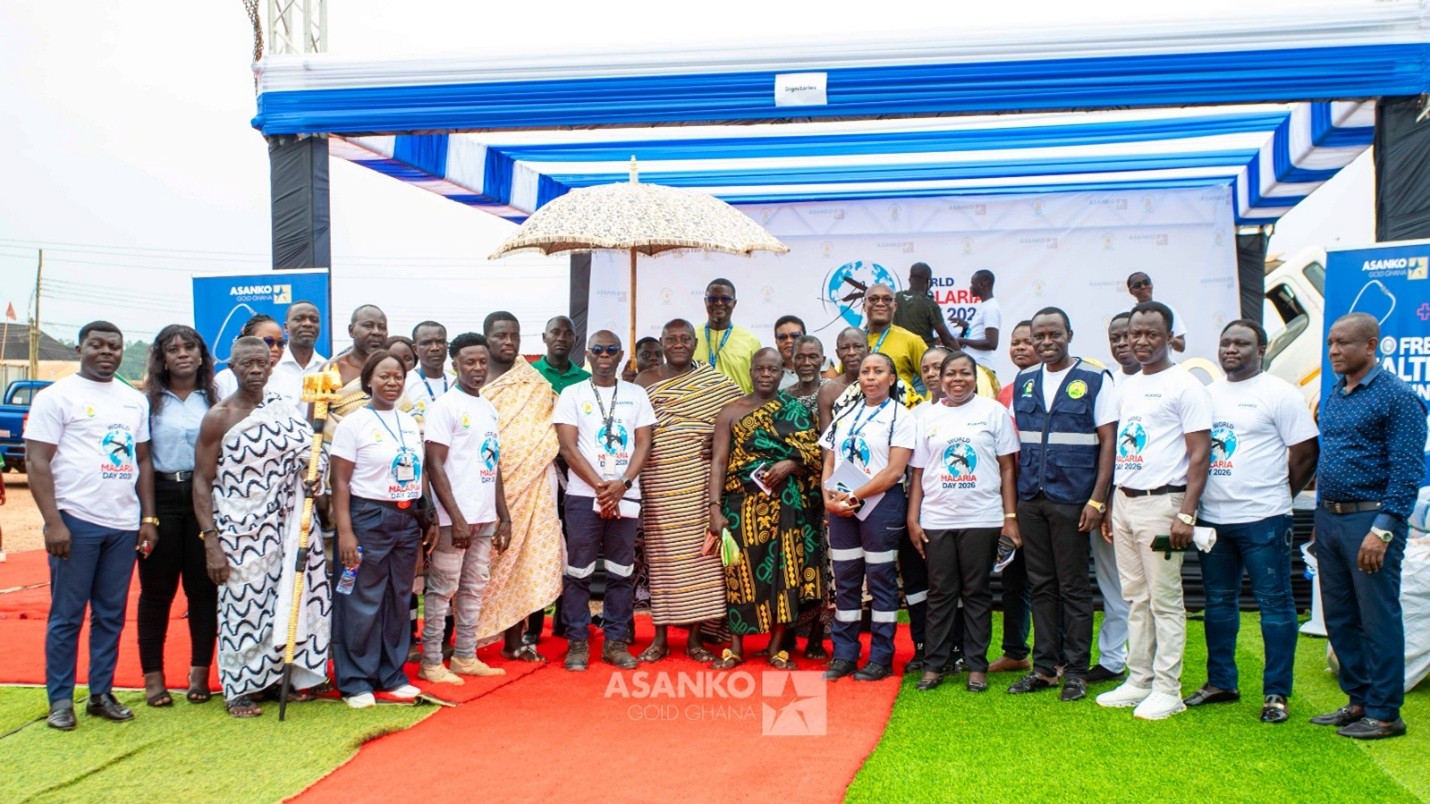
Marking the day alongside health authorities, Asanko Gold Ghana Limited organised free health screenings for residents of Manso Abore and surrounding communities, offering malaria testing, blood pressure and blood sugar checks, and general medical consultations. The company also distributed over 2,000 insecticide-treated mosquito nets to Senior High School students within its catchment area.
Speaking at the event, General Manager Justice Fenteng, represented by a company official, outlined Asanko’s broader healthcare commitments, including the construction of Community Health Planning and Services (CHPS) compounds at Tetrem and Krofrom to improve health access in underserved communities. “These are long-term investments aimed at improving access to healthcare and strengthening our communities,” he said.

Fenteng called on residents of Manso and surrounding areas to take personal responsibility: keep environments clean, use mosquito nets regularly, and seek early testing rather than waiting until symptoms worsen. Malaria prevention, he argued, cannot rest solely on institutions or governments, it must begin at home.
This year’s World Malaria Day is observed under the theme: “Driven to End Malaria: Now We Can. Now We Must.” a rallying call that, in Amansie West, carries particular urgency.
Post Views: 1
Discover more from The Business & Financial Times
Subscribe to get the latest posts sent to your email.