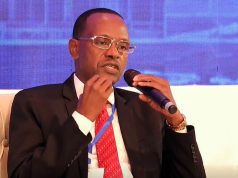



By Robert DZATO, FCIB
Ghana’s macroeconomic environment has entered a phase of stability consolidation, with declining inflation, improved exchange‑rate conditions, easing domestic yields, increasing banks’ appetite to lend and recovering confidence in policy institutions.
The Pre‑129th MPC Industry Survey and Post‑MPC Policy Seminar organised by the Chartered Institute of Bankers, Ghana (CIB Ghana) highlighted broad support within the financial sector for the current monetary policy direction. However, panelists (from the Ministry of Finance, Bank of Ghana, CIB Ghana, Association of Ghana Industries, Ghana Union of Traders Association and Bankers) at the CIB Ghana Post MPC Policy Seminar agreed that stability is a necessary tool for economic growth.
For the Ghanaian economy, however, these stability gains are unfolding amid heightened geopolitical tensions, which now represent the dominant external risk to price stability, financial system resilience, and sustainable growth. The central policy challenge is no longer stability in itself, but safeguarding and balancing the stability with growth to build resilience in the context of recurrent external shocks.
Monetary policy and geopolitical risk
The CIB Ghana survey conducted between February and March 2026 and Policy Seminar held on 24th March confirmed strong industry confidence in the macroeconomic environment, Monetary Policy Committee (MPC) of Bank of Ghana and credibility of the its decision‑making framework .
The March 2026 decision to reduce the Monetary Policy Rate by 150 basis points to 14percent reflects improved inflation dynamics and anchored expectations. However, respondents consistently flagged geopolitical developments—energy price volatility, supply‑chain disruptions, and renewed imported inflation risks—as key factors warranting a cautious, data‑driven easing path. In this context, geopolitical shocks are viewed by industry players as persistent tail risks, reinforcing the need for policy optionality, forward‑looking risk assessment, and clear communication to preserve confidence.

Financial stability and banking sector conditions
From a financial stability perspective, the banking system exhibits improving liquidity conditions, declining government yields, and strong expectations for credit expansion, particularly toward SMEs and private‑sector activity. Nonetheless, structural constraints continue to weaken transmission from policy rates to lending conditions:
- Elevated real interest rates albeit easing
- Legacy non‑performing loans and high credit‑risk perception
- Mismatch between short‑term deposit funding and long‑term investment needs
- Regulatory constraints, notably the Cash Reserve Ratio and tighter Net Open Position limits.
The banking sector players agreed that while prudential measures have supported exchange‑rate management and stability, balance‑sheet flexibility is important at a time when geopolitical shocks could rapidly increase liquidity and FX pressures. Encouragingly, risk management practices have strengthened, with tighter underwriting standards and improved governance screening. However, weak corporate governance among SMEs remains a binding constraint on sustainable credit expansion.
ESG, structural risks, and long‑term resilience
The discussions from the Post MPC Policy Seminar underscored the need for the macroeconomic stabilisation to translate into productive, inclusive, and environmentally sustainable job-creating growth. Domestic value‑addition, investment in capital expenditure and dedicated industrialisation funds are imperatives to structural transformation of the Ghanaian economy.
From an ESG and financial stability perspective, participants emphasised the need to:
- Pivot fiscal and financial policies toward productivity‑enhancing and climate‑resilient investment,
- Expand access to long‑term, patient capital for industry and infrastructure,
- Align trade and tax policies with industrial and sustainability objectives,
- Strengthen regulatory frameworks for digital assets to manage cyber, integrity, and cross‑border risks without stifling innovation.
Banks broadly support cautious engagement with digital assets but highlighted readiness gaps and the need for regulatory clarity to mitigate financial integrity and systemic risks.
Policy Implications
This edition of CIB Ghana Policy Brief points to a strategic inflection point. Monetary Policy easing alone cannot deliver durable growth or resilience in an environment of persistent geopolitical uncertainty. The key policy implications are:
- Maintain cautious, data‑driven easing while preserving credibility and inflation discipline.
- Strengthen monetary‑fiscal coordination to avoid policy offsets.
- Enhance transmission mechanisms to ensure rate cuts translate into effective lending.
- Support long‑term financing frameworks that reduce structural vulnerabilities.
- Integrate geopolitical and ESG risk assessments more explicitly into macro‑prudential surveillance.
- Take the politics out of policy and maintain independence of institutions.
Conclusion
It is the considered view of Chartered Institute of Bankers, Ghana that the Ghanaian economy is exiting the crisis‑response mode into a period of much needed stability and recovery phase. Yet global geopolitical tensions, particularly US/Israel-Iran, have fundamentally altered the risk environment. Sustaining macro‑financial stability now depends not only on prudent monetary policy calibration but on building economic structures that are resilient, inclusive, and ESG‑aligned. The next phase of policy must therefore move decisively from stabilisation toward growth and transformation—anchoring confidence while preparing the economy for a more volatile global order. Strong fiscal policy and monetary policy coordination is an imperative.
CIB Ghana will continue to deliver on its mandate of promoting banking education and regulating the banking profession in Ghana through research, policy insights, and thought leadership programmes to inform policy. Most importantly, we will continue to develop trusted professionals (Chartered Bankers) with focus on character (ethics), competence (knowledge), conduct (code of professionalism) and accountability to drive financial sector stability and economic transformation in Ghana.
>>>the writer is CEO of CIB Ghana
Post Views: 1
Discover more from The Business & Financial Times
Subscribe to get the latest posts sent to your email.