

Ghana’s former Vice President and New Patriotic Party (NPP) presidential candidate, Dr. Mahamudu Bawumia, has publicly criticized President John Mahama’s administration for allegedly deploying state security agencies to intimidate political rivals.
The remarks follow an attempted arrest of Assin South MP Rev. John Ntim Fordjour by National Intelligence Bureau (NIB) officials on April 9, sparking a heated exchange over the rule of law.
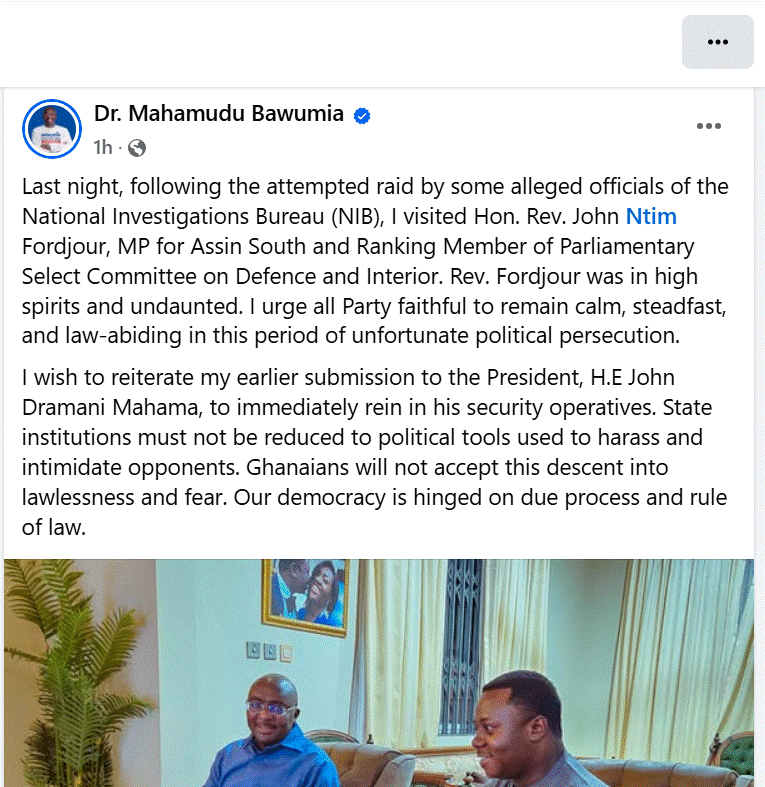
Bawumia condemned the incident, calling it a dangerous politicization of state institutions. “State institutions must not be reduced to political tools used to harass opponents. Ghanaians will not accept this descent into lawlessness,” he stated in a Facebook post, urging Mahama to “rein in his security operatives.” According to government spokesperson Felix Kwakye Ofosu, NIB officials sought to arrest Fordjour—a ranking member of Parliament’s Defence and Interior Committee—over comments he made regarding a drug-related aircraft investigation. Fordjour reportedly refused to cooperate, leading to a standoff.
The MP, who remains unharmed, thanked Bawumia and former President Nana Akufo-Addo for their support, contrasting Mahama’s approach with the previous administration. “Under Akufo-Addo’s leadership, no opposition MP faced harassment for demanding probes. This intolerance sets back our democracy,” Fordjour wrote on social media. He framed the incident as part of a broader pattern of suppression, alleging the government aims to stifle parliamentary oversight.
The clash underscores escalating tensions between Ghana’s ruling National Democratic Congress (NDC) and the NPP ahead of the 2024 elections. While Mahama’s government has yet to formally respond to Bawumia’s allegations, the NDC has historically defended its enforcement actions as lawful. Legal analysts note that Ghana’s judiciary has occasionally intervened in politically charged cases, though perceptions of executive influence over state agencies remain a recurring concern.
The controversy also revives debates about democratic norms in Ghana, once hailed as a regional model. Under Akufo-Addo’s tenure, the NPP faced similar accusations from opponents, highlighting cyclical friction between governance and opposition accountability. Bawumia’s appeal to “due process and rule of law” mirrors broader civic demands for institutional neutrality, even as partisan rivalries test these principles. With elections approaching, the incident may galvanize calls for reforms to insulate state bodies from political interference—a challenge familiar to many emerging democracies.
Send your news stories to newsghana101@gmail.com
Follow News Ghana on Google News