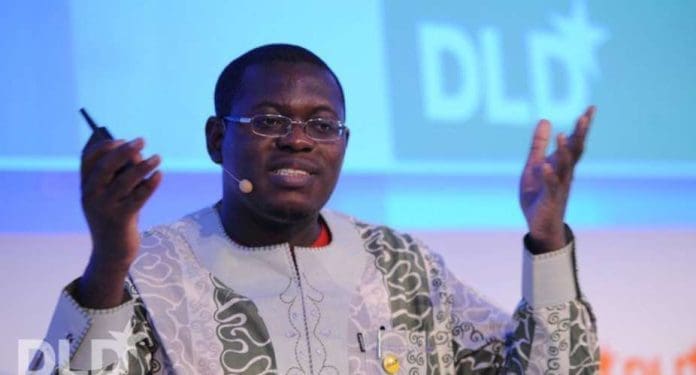

Ghanaian policy analyst Bright Simons continues gaining international recognition with his October 2025 appointment as co-chair of the World Economic Forum’s Global Development Council alongside ODI chief Sara Pantuliano.
The World Economic Forum announced the council’s formation on October 13, 2025, to reimagine international cooperation amid declining development aid and geopolitical upheaval. Simons, founder of mPedigree and Honorary Vice President of IMANI Centre for Policy and Education, brings decades of governance analysis and technological innovation to the role. The appointment positions him at the center of global development policy discussions.
The Global Development Council aims to explore innovative financing models, strengthen regional cooperation, and identify scalable solutions capable of thriving amid political fragmentation and fiscal austerity. The council brings together government leaders, development experts, economists, and private sector innovators. The Financial Times once described Simons as frighteningly clever for his policy analysis work.
Simons founded mPedigree, a mobile authentication platform enabling consumers to verify medicine and product authenticity through text messages. The innovation helps combat counterfeiting and protect public health across three continents. His technological work operates in partnership with governments, Fortune 500 companies, and grassroots organizations.
Beyond technology, Simons has distinguished himself as an evidence based policy commentator noted for rigorous analysis of governance challenges across Africa. He holds prestigious fellowships at the Overseas Development Institute and Harvard University. He earlier benefited from an astrophysics research scholarship at Durham University. His academic credentials span multiple disciplines including physics and policy analysis.
ODI appointed Simons as Senior Visiting Fellow in November 2024. ODI ranks number one among global think tanks focused on international development. The institution announced his appointment on LinkedIn, stating he would continue as a thoughtful and fearless commentator on African politics and economics.
Simons responded to his ODI appointment by noting that the organization has supported governments worldwide with evidence based policymaking for six decades. He said Africa’s governance capacity faces mounting challenges that make the fellowship timing particularly opportune. His commentary reaches a broad audience through social media and policy platforms.
Through IMANI and other platforms, Simons examines policy failures in Ghana and across Africa using data driven critiques. His analysis of popular but flawed policy proposals has earned him a devoted following. He coined the term katanomics to describe the disconnect between political rhetoric and sound policy in African countries. The concept gained traction among scholars and analysts as a framework for understanding governance dysfunction.
Simons defines katanomics as high political accountability but low policy accountability. He argues that policies are rolled out rapidly without proper planning, monitoring, or opportunities for national learning. The resulting system produces poor policy outcomes and limited impact on public welfare, according to his analysis. Multiple scholars have adopted the term in policy discourse.
His 2025 writings examined over 20 governance failures including mining nationalizations, decommissioning contracts, regulatory compromises, and institutional weaknesses. He analyzed topics ranging from catfish industry struggles to Swiss trader fraud accusations. His platform The Scarab publishes investigative pieces on Ghana’s economic and political landscape.
Simons serves on multiple international boards including Care International, UCB biopharma, Salzburg Global Seminar, and Africa Population Health Research Center. He previously served on Microsoft Africa Advisory Council. His advisory work spans regional and international panels addressing development challenges. He received the 2019 Skoll Award and appeared on Fortune’s 2016 list of the World’s 50 Greatest Leaders.
Still in his forties, Simons is regarded as a thought leader likely to shape African governance debates for years. His work combines technological innovation with policy analysis to address supply chain fraud, governance accountability, and development challenges. The World Economic Forum role further elevates his influence within international development policy circles.