
By Buertey Francis BORYOR
Akua Agyeiwaa Brentuo Amoo, President-Safety, Health, Environmental and Quality Professionals Association of Ghana (SHEQ-PA), has called for stronger workplace health and safety regulations, urging authorities to address mental health and psychosocial risks facing employees.
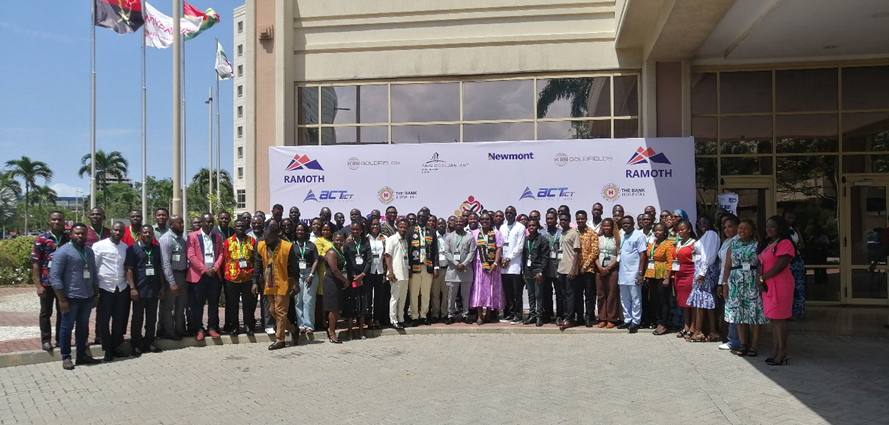
Speaking at the World Health and Safety Conference 2026 in Accra, she said businesses, regulators and health and safety practitioners must go beyond physical safety and pay more attention to workers’ mental wellbeing and overall safety.
“We should not focus only on the physical safety but also pay particular attention to psychosocial or mental health as it affects employees at our workplaces,” she said.
She highlighted the association’s plans to organise smaller sessions for business leaders, especially general managers in the mining sector and mine support providers, to ensure they buy into proposed workplace health and safety policies.
Also, she noted that the association will use technical committee meetings and other platforms to deepen awareness and share knowledge on health and safety.
The 2-day conference is being held in partnership with Ghana Chamber of Mines, and Inspectorate Division of Minerals Commission – sponsored by Ramoth, Newmont, AngloGold Ashanti, Kibi Goldfields and many others.
This year’s conference, she said, follows directions of the International Labour Organisation theme, which place more emphasis on mental health and psychosocial wellbeing at work – adding that it will move beyond discussions and drive practical action in workplaces.
“This year’s conference places greater attention on the ‘softer side’ of workplace health and safety. Last year’s conference focused on the use of technology in managing workplace health and safety, which has since led to the adoption of innovations such as collision avoidance and fatigue detection systems in industries such as mining,” she also said.
Chief Operating Officer-Ghana Chamber of Mines, Ahmed Dasana Nantogmah, in an interview with media at the event said employee wellbeing is critical to productivity and profitability in the mining sector.
“Without employees you cannot produce anything. A safe employee is a productive mine,” he said.
He urged mining firms to continue investing in employee training, capacity building and health and safety programmes to ensure they are equipped to work safely and efficiently.
He added that although health and safety in mining is heavily regulated, companies must go beyond compliance and adopt proactive, responsible mining practices.
Mr. Nantogmah said the conference would expose participants to innovation and the use of artificial intelligence to improve their wellbeing and workplace safety.
On government’s decision to increase local participation in mining operations, he said the Chamber is not against local contractors but believes the choice between contract mining and owner mining should remain a business decision – cautioning that forcing companies to change operational models without proper planning could affect productivity and reduce government revenue.
According to him, any transition toward local participation must be systematic and involve mine owners and other stakeholders.
Deputy Chief Inspector of Mines in charge of Technical Services and Explosives at the Minerals Commission of Ghana, Desmond Boahen, said health and safety remains a critical concern in the mining sector due to the industry’s high-risk nature – adding that mine accidents can result in fatalities, injuries and equipment damage, leading companies to spend heavily on safety systems.
Mr. Boahen said one of the conference’s expected outcomes is to raise awareness about ‘silent’ psychosocial risks such as workplace bullying, leadership pressure and mental health challenges. He noted that current laws are not explicit on some of these issues and called for legislation to catch up with realities in modern workplaces.
Post Views: 2
Discover more from The Business & Financial Times
Subscribe to get the latest posts sent to your email.