
By Kwesi Yankah
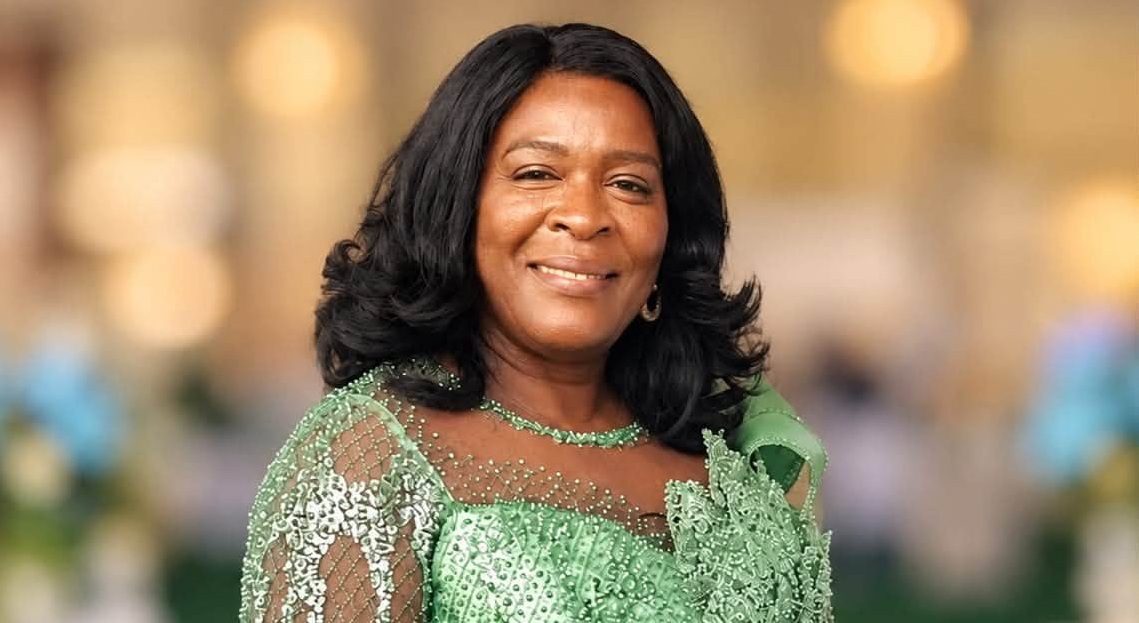
On Saturday October 10, of all unmissable events before me, there was one I would have been convicted skipping. ‘Monkye no.’ Not a simple invite but virtual summons by one forgotten martyr of Ghana’s 4th Republic. Her name? Vida Ofori (now Mrs Asiedu Amponsah), somehow forgotten by a nation with short memory. Since 1994 when my ‘write hand’ helped uplift her hopes for a normal life, I have been a virtual Godfather to her family. Saturday’s event was a family ceremony, but also an opportunity to recall with nostalgia my 1994 headline story, that stopped the Press.
Early days of the 4th Republic, I took the risk to spotlight Vida Ofori, a victim of a brutal police assault on students of IPS (Institute of Professional Studies, now UPSA), who were demonstrating against Government. She was cooking in her room, when a hail of bullets shot through her wall, swept her off. 21 pellet entry points were identified on her. Seventeen got lodged in various parts of her body. Five were successfully removed. A year after, Vida still had twelve pellets lodged in her frail body.
That was 1993; the Rawlings Revolution was over, but not quite. We were in the 4th Republic, but a little alcohol ‘still dey for our eyes.’ A student protest she was not part of, left her wincing in pain at the intensive care unit of Korle Bu. For a period of one year, Korle Bu had become Vida’s virtual home. Vida Ofori hit the headlines and became a household name among students on Ghana’s tertiary landscape. Some called her a victim, others a heroine.
T-shirts and other souvenirs celebrated her courage. But that was all; she was a martyr only by name; her future was uncertain. Would she survive the trauma, finish her education and make it through a successful marital life?
March 1994, a year thereafter; I visited Vida at Korle Bu, and elicited the full story. Hear excerpts from the harrowing narrative by a sobbing Vida Ofori, as appeared in my column in the Mirror.
“I still have pain in various parts of my body where the pellets entered; numbness in my right foot, and of late crippling weakness in the knee, which wobbles when I stand for extended periods. They tell me the pellets are deep, and may cause injury if they attempt a full removal. But I keep wondering why they do not recommend that I be sent abroad for treatment. I have done lots and lots of x-rays, but I don’t see the outcome.
“I worry a lot about the effect of rusty pellets, the several x-rays, the infra-red I have been through, etc. I feel very uneasy with all these in me. I am a young lady…not yet married. How can I walk around with pellets in my abdomen, thigh, chest, back? My colleagues in school do not think that I am normal because I still have pellets inside me. Some ask me directly if I am a normal human being, and if I can give birth in life….” Vida’s closest buddies at IPS were all gone. They had graduated and left, and there she was still nursing pellet wounds at the hospital. She had virtually lost a year of schooling and had to make up, hoping to graduate by the end of the year.
But she reeled in pain and agony from failed promises by Government to compensate her after a report by the Medical Board. But continued silence was the response from the Education and Interior ministries. Vida however expressed gratitude for visits by some members of Government, including Mrs Mary Grant, plus her own Institution, IPS that paid most of her bills. Her greatest appreciation was to her doctor, Dr Frimpong Boateng who sometimes paid for her medication from his own pocket. Hear my concluding statement in the write up of March 1994.
“Vida Ofori could have been anybody’s innocent daughter gunned down by a police monster. Let parliament suspend business and express concern over Government’s silence. Vida is everybody’s child…. a living dead wobbling on earth with 12 time bombs ticking in her….”
Vida’s own statement summed up my writeup:
“Perhaps if I had been the daughter of a Minister, I would have been sent abroad for treatment.”
Within a week of our ‘fire alarm,’ the NDC Government announced plans to send Vida to the Cromwell Hospital in London for further treatment.
That was March 1994. That year, Providence had landed me a Cadbury Fellowship to spend 6 months at the Centre for West African Studies, University of Birmingham UK, handing me a great opportunity to continue monitoring the wellbeing of this courageous icon, now my virtual daughter. August 1994, with the knowledge of the Ghana High Commission in UK, I went to London (from Birmingham) to visit Vida Ofori at the Cromwell Hospital; and there she was almost recovered, with pellets removed. The bright smile playing around her lips whispered the good news. It was at the Cromwell I incidentally saw on admission Ghana’s celebrated Black Starlet goalkeeper, Ali Jarrah, who sadly had been on extended admission with paralysis. Ali was in the cheerful company of his father.
But the pace moved faster on Vida’s discharge from Cromwell Hospital. December 1995, greater news seeped in: a surprise invitation for me to attend the wedding of Vida Ofori and Elisha Asiedu Amponsah: the perilous journey finally crowned with a blissful marriage. For 30 years thereafter, we only occasionally heard from the Vida family, and later knew why. On my blind side as Godfather, Vida and husband had ‘Nicodemously’ berthed four kids: ‘pɔr pɔr pɔrpɔr,’ in dramatic Fanti.
A few weeks ago, the truth was out when I received another summons to the wedding of Vida’s first born daughter to a lucky Felix Wobil. The ceremony in Accra was simply splendid, and guess who was called upon to help the young couple cut the cake? The better half of Yours Truly: Daavi Victoria.
What a happy ending to a tale of suspense: celebrating Vida Ofori, one forgotten martyr in our struggle to entrench Ghana’s democracy.
U.P.S.A, please do your institution the honor of a well-deserved monument: The Vida Ofori Hall.
I rest my case.
—
About the author:
Kwesi Yankah is an Emeritus Professor at Ashesi University, a former Minister of State in charge of Tertiary Education in Ghana, a former Vice-Chancellor of Central University and a former Pro-Vice-Chancellor of the University of Ghana. He is also an author. He can be contacted via email at kyankah@ashesi.edu.gh