


By Elizabeth PUNSU, Kumasi
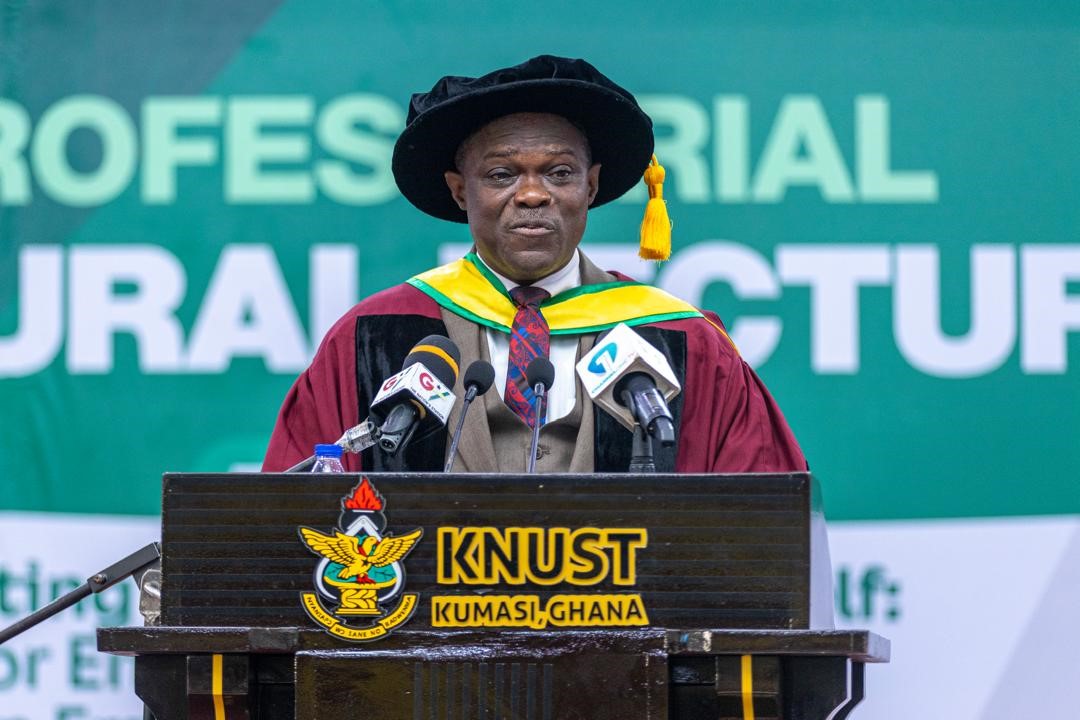
The country is warming at a rate approximately 15 per cent higher than the global average, a development that poses serious risks to human comfort, health, and energy consumption in buildings, Professor Samuel Amos-Abanyie, a Professor of Architecture at the Kwame Nkrumah University of Science and Technology (KNUST), has revealed.

Delivering his professorial inaugural lecture last Thursday, on the subject “Protecting Humanity from Itself: Indoor Environmental Quality in Era of Climate Stress”, Prof. Amos-Abanyie revealed that the rising temperatures, coupled with increasing humidity levels, are significantly affecting Indoor Environmental Quality (IEQ) in homes, offices and public buildings across the country.
He explained that Indoor Environmental Quality, which encompasses air quality, lighting, sound, temperature, and dampness, plays a critical role in determining occupants’ comfort, health, and overall well-being. Poor conditions, he noted, are linked to respiratory illnesses, cardiovascular diseases, cancer and cognitive decline. “These are threats to humanity, and therefore solutions must be pursued,” he stressed.
According to him, climate change is intensifying existing indoor environmental challenges, as higher outdoor temperatures translate into discomfort indoors and increased reliance on cooling systems.
He noted that a 1°C rise in outdoor temperature could lead to an increase in electricity consumption for cooling by between 3.2 and 10.4 percent, depending on building design and efficiency of appliances.
Prof. Amos-Abanyie further explained that buildings must be viewed as active environments that interact continuously with the human body, rather than passive structures.
He emphasised that IEQ is influenced by a complex mix of factors, including thermal comfort, visual comfort, acoustic comfort and indoor air quality.
On housing conditions, he cited studies indicating that a significant portion of the country’s building stock does not meet acceptable environmental standards. He pointed out that about 72 per cent of buildings have been modified through extensions, with approximately 95 percent of such works undertaken without professional input, often compromising ventilation and natural lighting.
He also highlighted the growing concern over indoor air pollution, noting that common materials such as paints, adhesives, furniture and carpets emit chemicals that accumulate over time and affect occupants’ health. Damp conditions, he added, further worsen indoor environments by encouraging mould growth and trapping allergens.
To address these challenges, Prof. Amo – Abanyie called for stronger policy interventions, recommending that the Ministry of Works and Housing, together with relevant agencies, establish dedicated Indoor Environmental Quality units within Metropolitan, Municipal and District Assemblies (MMDAs).
He said such units would ensure that IEQ considerations are integrated into building approvals, development control and public education, ultimately safeguarding public health in the face of climate change.
Post Views: 50
Discover more from The Business & Financial Times
Subscribe to get the latest posts sent to your email.