
By Juliet ETEFE ([email protected])
Ghana could significantly reduce its reliance on the International Monetary Fund (IMF) if it narrows its widening tax gap, Acting Commissioner-Domestic Tax Revenue Division (DTRD) Dr. Martin Kobil Yamborigya has said.
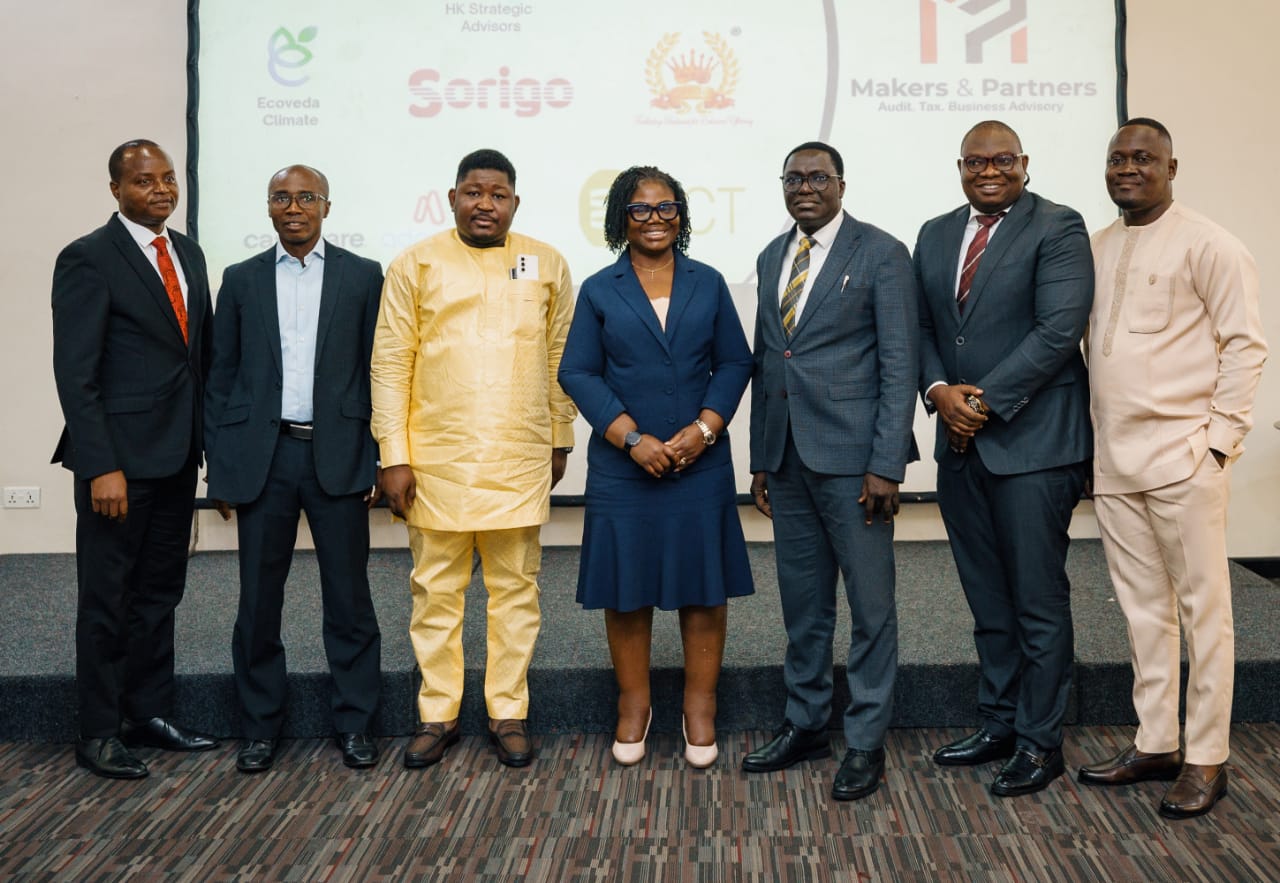
Speaking at the Executive Business Dialogue 2026 organised by Makers & Partners, Dr. Yamborigya revealed that the income tax gap stands at 67 percent – meaning only 33% of potential revenue is being collected while VAT compliance is at 39 percent, leaving a 61 percent gap.
He said broadening the tax base and improving compliance will ease the burden on the few taxpayers currently in the system and strengthen domestic revenue mobilisation.
“The solution to our problem lies with us Ghanaians. If we are patriotic and all willing to register and pay taxes as required by law, we will be able to mobilise enough resources domestically to take care of our needs and we may not need to rely on others outside the country,” he stressed.
According to the 2026 budget, government projects total revenue and grants to rise from GH¢226.5billion in 2025 to GH¢268.1billion for 2026, with non-oil tax revenue alone expected to reach GH¢216.1billion – accounting for more than 80 percent of total revenue and underscoring the critical role of tax compliance in financing national development.
Dr. Yamborigya highlighted recent reforms under the VAT Act 1151, which came into effect on 1 January 2026. The Act increased the VAT registration threshold from GH¢200,000 to GH¢750,000, exempting many small businesses from VAT registration and filing obligations.
“This removes the complexity of keeping records and filing returns for small businesses and automatically reduces the price of goods, benefitting both businesses and consumers,” he said.
GRA has also introduced e-invoicing and electronic fiscal devices to replace manual systems.
These digital tools simplify compliance, reduce errors and provide real-time monitoring of transactions, helping small businesses manage operations while allowing the tax authority to track revenues more efficiently.
On nationwide compliance, Dr. Yamborigya said GRA is rolling out a three-year tax education programme targetting both registered and unregistered businesses to increase awareness of tax obligations, rights and benefits.
He added that a National Compliance and Enforcement Team will be launched to ensure all eligible businesses register and pay taxes, creating parity in the system.
Review
The Commissioner also outlined plans to review Ghana’s domestic tax laws this year, including the Income Tax Act 896, Excise Tax Act and Customs Act, to modernise the framework and simplify compliance for businesses.
“SMEs are crucial to the economy. Our goal is to support their growth while ensuring they contribute to national development through taxation. With digitalisation, simplified regimes and sustained education, we aim to improve compliance, broaden the tax base and mobilise sufficient domestic resources to reduce reliance on external borrowing,” Dr. Yamborigya said.
According to him, improving voluntary compliance across the informal sector remains critical to stabilising public finances, reducing pressure on existing taxpayers and supporting long-term fiscal sustainability.
He maintained that sustained enforcement, digital integration and taxpayer education will be key to narrowing the tax gap and strengthening Ghana’s revenue base.
Compliance advantage
For his part, Ronald N. Bwosi – Group Managing Partner of Ronalds LLP – said tax compliance should be viewed as a strategic competitive advantage rather than a regulatory burden.
He explained that compliant companies are better positioned to grow, attract customers and market themselves confidently, while non-compliant firms often operate in hiding – limiting their ability to scale.
He further noted that many African startups fail to transition into sustainable SMEs and corporations due to weak systems, poor governance and a tendency to avoid formal compliance.
Mr. Bwosi observed that while founders are often strong innovators, long-term growth requires professional management structures, clear processes and institutional discipline.
He urged SMEs to invest in compliance, governance and strategic planning to avoid stagnation and collapse, adding that businesses that successfully build strong systems are more likely to attract capital, expand across borders and achieve generational sustainability.
Dialogue
Mrs. Maame Yaa Tiwaa Addo-Danquah, Associate Partner–Advisory at Makers & Partners, said the dialogue was designed to bridge the gap between complex fiscal legislation and the everyday realities facing businesses, particularly SMEs.
She noted that the theme – navigating tax and fiscal reforms; Building resilient SMEs – reflects the urgent need for businesses to strengthen their capacity to withstand regulatory changes and economic pressures.
She stressed that resilience goes beyond merely surviving policy shifts and regulatory tightening, requiring proactive planning, access to accurate information and practical guidance.
According to her, frequent tax reforms, evolving compliance requirements and technical jargon often create uncertainty for entrepreneurs; however, platforms such as the dialogue help simplify these issues and turn perceived challenges into opportunities.
She reiterated that informed decision-making remains the strongest safeguard for protecting businesses, satisfying regulators and ensuring long-term sustainability.
Post Views: 52
Discover more from The Business & Financial Times
Subscribe to get the latest posts sent to your email.