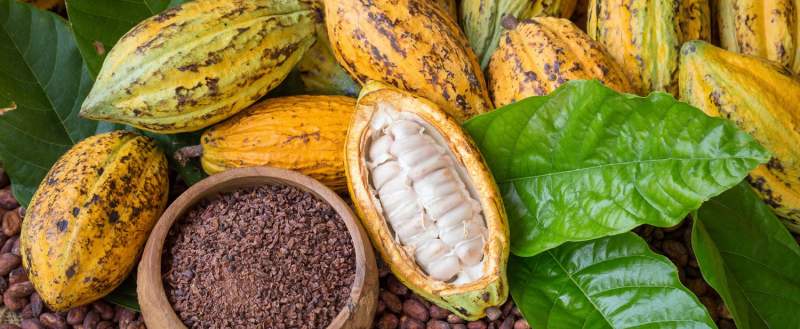

Cocoa is not just a crop in Ghana; it is the lifeline for over 800,000 farming households and the foundation of an industry that has supported our economy for generations. Yet year after year, a familiar storm brews over cocoa prices. Farmers find themselves caught in partisan debates and confusing statistics, while the hard work of their hands earns far too little.
The Ghana Cocoa Board (COCOBOD) defends this season’s price of GH₵3,228.75 per 64 kg bag as the highest in West Africa. They highlight that this surpasses Côte d’Ivoire’s producer price by around GH₵675 per bag, showcasing Ghana’s ongoing commitment to farmer welfare. At first glance, this sounds commendable.
However, many cocoa workers argue that this gain is superficial. The Ghana Civil Society Cocoa Platform (GCCP) expressed this concern, stating that the increase from GH₵3,100 to GH₵3,228.75 per bag represents only a 4.1% gain in real terms, far short of expectations, especially given soaring global prices and earlier promises that farmers would earn 70% of the world market rate.
Similarly, economist Prof. Godfred Bokpin did not hold back. He criticized both the NPP and NDC for decades of “politically driven” pricing models that treat farmers not as partners, but as passive recipients. This criticism gets to the heart of the issue: cocoa pricing has too often prioritized optics and political gain over fairness and sustainability.
Meanwhile, tensions are rising among farmers. Over 300,000 farmers have threatened to prevent COCOBOD officers from accessing their farms. Some are even considering smuggling their harvests across borders to Côte d’Ivoire and Togo, where higher prices are attracting desperate individuals.
The frustration is palpable. Farmers face rising input costs, from fertilizers to labour, while their earnings stagnate. When official pricing fails them, many believe that only illegal options remain. This is not just an economic issue; it is a crisis of dignity and sustainability.
To move forward, Ghana needs fundamental change. Transparency must be the standard, not the exception: farmers need to understand how prices are set, what deductions are made, and why these decisions are made. This clarity fosters trust, and with confidence, genuine partnerships can emerge where farmer voices are integral to policy design and implementation.
Moreover, Ghana must honour its commitments under the Living Income Differential (LID). International buyers and cocoa giants should not continue to profit from a system that leaves farmers in a precarious situation. Better enforcement of LID agreements, along with fairer farmgate prices, can help restore lost equity.
Additionally, independent oversight is essential. Pricing decisions should not be subject to political whims. A farmer-inclusive, bipartisan mechanism, free from partisan interference, would ensure that cocoa pricing remains anchored in productivity and justice, rather than electoral convenience.
Finally, the future of cocoa depends on more than just pricing. Investing in mechanization, extension services, and livelihood diversification can build resilience. Whether through agroforestry, cooperatives, or value-added ventures, the cocoa farmer must be empowered, not held hostage by a broken system.
Cocoa farmers are not asking for charity; they are demanding what is rightfully theirs: dignity, justice, and a fair return for their hard work.
This is a crucial moment. Ghana must choose to protect its farmers not just in words, but through robust, transparent actions. Because when farmers are truly valued, Ghana itself thrives.
Written By: Pearlvis Atsu Kuadey