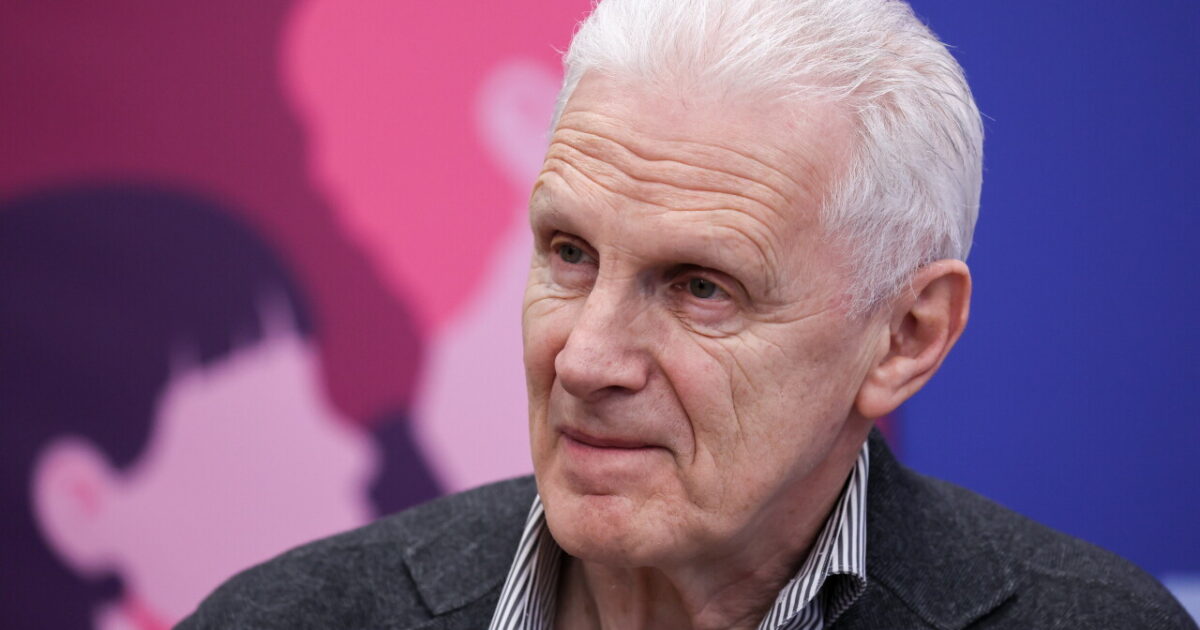
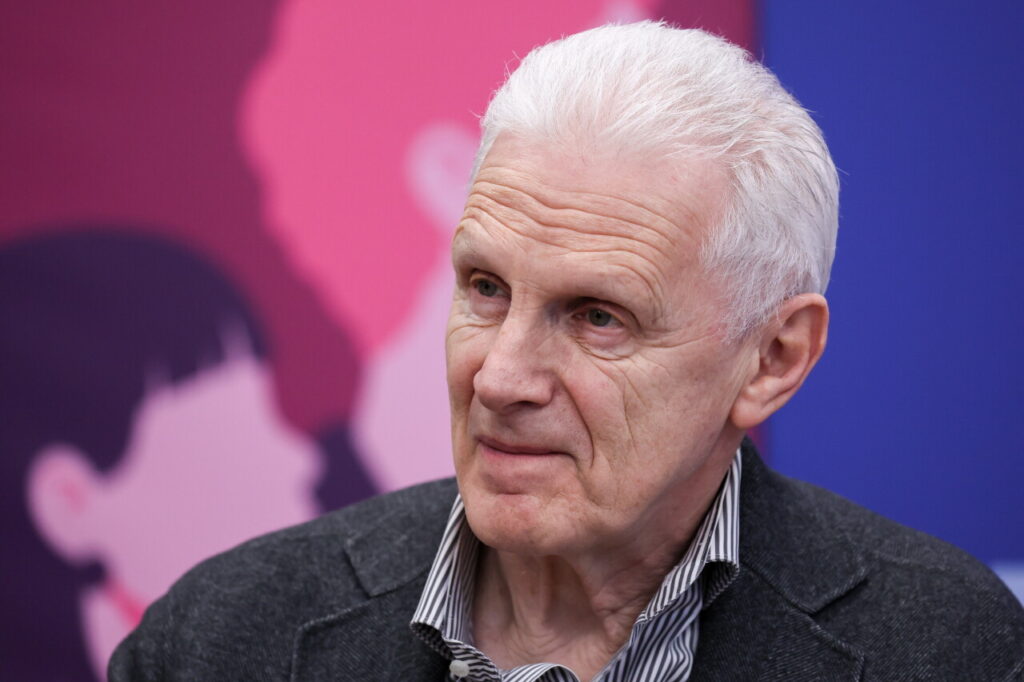
Aide to the President of Russia, Andrei Fursenko, has called for stronger critical thinking and information verification as artificial intelligence and the internet increasingly shape how people consume and assess information.
Speaking on September 15, 2026, at the International Festival of Youth (IFY) in Ekaterinburg, Mr Fursenko said trust and reputation remained crucial safeguards against unreliable information in what has become known as the “post-truth” era.
He made the remarks during a session titled “They Say Online… Verity in the Post-Truth Era”, which brought together academics and education leaders to discuss misinformation, artificial intelligence and the reliability of information.
“We have been discussing for a long time what to do in the post-truth era… and in the course of that discussion, everyone arrived at the same conclusion: the one key tool that allows us to stay within the bounds of reliability, real reliability is a person’s reputation, a scholar’s reputation. In other words, trust,” Mr Fursenko said.
He argued that while artificial intelligence and the internet provide powerful tools for accessing information, users must develop the capacity to critically assess what they encounter.
“I believe that if a person who uses artificial tools and the internet, artificial intelligence has the wisdom to understand and assess what’s there, then that is the main tool for preserving human leadership. Critical thinking,” he said.
Mr Fursenko also cautioned against assuming that digital technologies could fully reproduce every aspect of human experience.
“Our world is analogue, and it is far broader. There are overtones in music that cannot be digitised. Our strength lies in our ability to work with what cannot be digitised,” he said.
Rector of Moscow State Linguistic University, Irina Kraeva, told the session that younger generations increasingly question information rather than accepting it at face value.
She said the tendency to verify information, analyse competing claims and draw independent conclusions should be considered in education and public communication.
“Doubting is always useful for an intelligent, educated person,” she said.
Andrei Loginov, Rector of the Russian State University for the Humanities, also stressed the importance of preserving reliable physical records and archives as artificial intelligence becomes more influential in the production and distribution of information.
He said relations between countries and peoples should be grounded in reliable information backed by objective archival evidence.
“Post-truth is called post-truth for a reason, and this is why it has flourished so unprecedentedly in the age of artificial intelligence and the internet; it distorts this knowledge, this objective knowledge. We need to understand very clearly what boundary we are standing at today,” Mr Loginov said.
He used a hypothetical scenario involving an AI system operating beyond human control to illustrate what he described as the importance of physical libraries, archives and people with specialist historical knowledge.
Mr Loginov argued that preserving books and other physical records could provide an important reference point when digital information is unreliable or contradictory.
Andrey Sorokin, Director of the History and Archival Institute at the Russian State University for the Humanities, described post-truth as a situation in which everyday perceptions can displace professional and specialised knowledge in public discourse.
He said the challenge extended beyond the public sphere and could undermine disciplines and professional methods used to establish reliable knowledge.
The International Festival of Youth is taking place in Ekaterinburg from September 11 to 17, 2026, under the motto “Follow Your Dream.”
According to organisers, the festival has brought together 10,000 young participants from 191 countries, comprising 5,000 Russians and 5,000 international participants.
The event includes representatives from public administration, science and education, media, entrepreneurship, technology, sport, creative industries and civic organisations.
The decree establishing the festival was signed by Russian President Vladimir Putin on December 29, 2025.
DISCLAIMER: The Views, Comments, Opinions, Contributions and Statements made by Readers and Contributors on this platform do not necessarily represent the views or policy of Multimedia Group Limited.
DISCLAIMER: The Views, Comments, Opinions, Contributions and Statements made by Readers and Contributors on this platform do not necessarily represent the views or policy of Multimedia Group Limited.
Source link