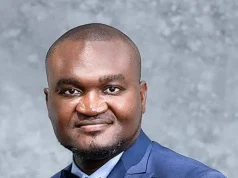

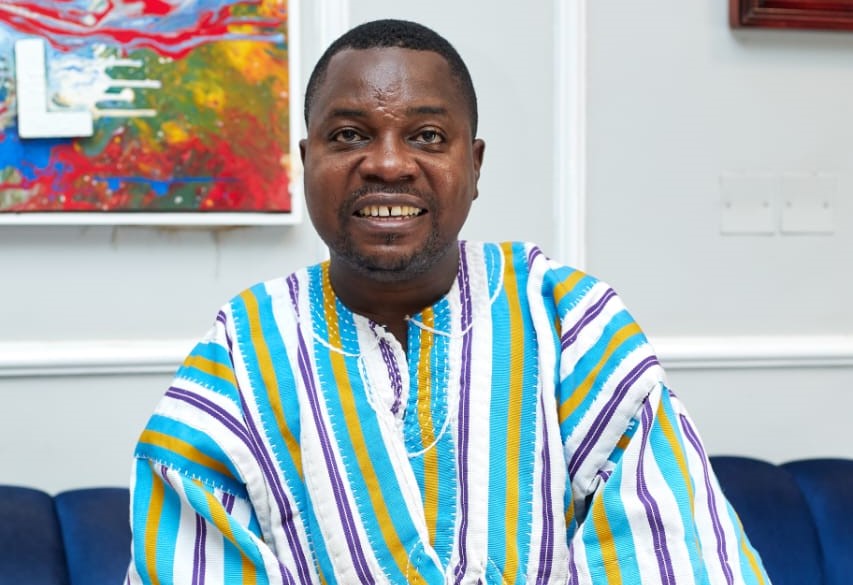
Dr Albert Kobina Mensah is a Research Scientist at the Council for Scientific and Industrial Research Soil Research Institute in Kumasi. He is also an Adjunct Lecturer at the University of Mines and Technology, Tarkwa. His work focuses on soil pollution, environmental risk assessment, and sustainable land restoration, particularly in areas affected by mining activities.
Dr. Mensah specializes in phytoremediation – a specialisation in the use of plants to remove or stabilize contaminants in soil, as well as revegetation strategies for degraded lands. He has contributed to several scientific studies on heavy metal contamination and soil recovery techniques in Ghana and elsewhere.
He is the author of the book Soil Pollution and Remediation: Risk Assessment, Phytoremediation, Revegetation (2025), which provides a comprehensive analysis of soil contamination and practical remediation approaches, combining field research with applied environmental science.
Through his research and publications, Dr. Mensah has been contributing to advancing sustainable soil management and environmental protection in Ghana and beyond.
In this Q & A, he speaks about his life and works.
Can you tell us about your background growing up?
I grew up in Prestea, a mining town in the Western Region of Ghana. Growing up in a community shaped by gold mining gave me an early, firsthand exposure to the environmental and social realities of resource extraction — the dust, the degraded lands, the polluted water bodies. Those childhood experiences planted a seed of curiosity and concern that would eventually define my entire career. Long before I could articulate concepts like ‘heavy metal contamination’ or ‘phytoremediation,’ I was already living in the shadow of mining’s consequences. That context never left me, and in many ways, everything I do professionally is a response to what I witnessed growing up in Prestea.
Take us through your educational background — your high school, university education, positions held, and awards.
My educational journey began right in my hometown. I attended Prestea Senior Secondary Technical School, where I completed my Senior Secondary School Certificate in 2004 — and I am proud to say I graduated as the Best Graduating Student of my year. That recognition affirmed something in me early: that excellence was achievable regardless of where you came from.
I then proceeded to the University of Cape Coast, where I pursued a Bachelor of Science in Agricultural Science, graduating in May 2011. During my national service year (2011–2012), I remained at the University of Cape Coast’s Department of Soil Science, where I organized tutorials, assisted with lectures, and guided undergraduate students in their dissertations. My undergraduate thesis — ‘Can revegetation restore fertility of degraded mined soils? A Review’ — was already pointing toward the research direction that would define my career.
I subsequently pursued a Master of Science in Water Resources and Watershed Management at Kenyatta University in Nairobi, Kenya (2013–2016), funded by a DAAD In-Region Scholarship. My MSc thesis examined the effects of Eucalyptus plantations on soil physico-chemical properties in a Kenyan sub-catchment.
The pinnacle of my formal education came when I was awarded a DAAD–Government of Ghana joint research scholarship for doctoral training at Ruhr-Universität Bochum in Germany. Before beginning the PhD, I completed an intensive German language programme at the Carl Duisberg Centre in Cologne (April–September 2017). I then pursued my PhD in Natural Sciences at the Department of Soil Science and Soil Ecology, Ruhr-Universität Bochum, from October 2017 to December 2021, successfully defending my dissertation on ‘Arsenic contamination from gold mining and remediation of active and abandoned mining spoils in Ghana’ on 21 December 2021.
The pinnacle of my formal education came when I was awarded a DAAD–Government of Ghana joint research scholarship for doctoral training at Ruhr-Universität Bochum in Germany.
How did your educational trajectory impact or shape your career and who you are today?
My educational journey was not linear — it was deliberately purposeful. Every degree, every country, every institution added a distinct layer to my professional identity. My BSc grounded me in agricultural and soil science fundamentals within the Ghanaian context. My MSc in Kenya introduced me to watershed management and broadened my environmental science lens across the African continent. My PhD in Germany gave me world-class laboratory training, rigorous scientific methodology, and exposure to cutting-edge research in soil redox chemistry, arsenic speciation, and phytoremediation.
But beyond the technical training, studying across three countries — Ghana, Kenya, and Germany — shaped me as a person. It taught me adaptability, cross-cultural communication, and the confidence to compete at the highest levels of global science. It also deepened my conviction that African scientists must lead the charge in solving Africa’s environmental problems. I did not go abroad to stay abroad. I went to acquire the best tools available, and I came back to apply them where they are most needed.
But beyond the technical training, studying across three countries — Ghana, Kenya, and Germany — shaped me as a person. It taught me adaptability, cross-cultural communication, and the confidence to compete at the highest levels of global science.
Can you share more about your graduate education experiences outside of Ghana?
My first international graduate experience was in Nairobi, Kenya, at Kenyatta University. The DAAD In-Region Scholarship that funded this was highly competitive, and being selected reaffirmed my academic potential. Studying in Kenya connected me to East African environmental challenges, particularly around water resources and land use. I also earned certificates in SPSS statistical analysis, Participatory GIS, and e-learning curriculum development during this period — investments in methodological competence that have served me throughout my career.
My doctoral experience in Bochum, Germany, was transformative in every sense. I worked under leading scientists in soil science and soil ecology, conducting sophisticated experiments including the novel redox automated microcosm experiments to study arsenic mobilisation dynamics. I presented my work at international conferences across Italy, the United Kingdom, and the United States. I published in some of the world’s most prestigious environmental science journals — including Journal of Hazardous Materials, Environmental Pollution, and Science of the Total Environment. I also designed and taught a university course on Mining and Environmental Protection in Africa at the Institute of Geography, Ruhr-Universität Bochum — making me one of very few African doctoral researchers to independently develop and deliver a course at a German university.
My doctoral experience in Bochum, Germany, was transformative in every sense. I worked under leading scientists in soil science and soil ecology, conducting sophisticated experiments including the novel redox automated microcosm experiments to study arsenic mobilisation dynamics.
Following my PhD, I briefly continued as a Postdoctoral Researcher at Ruhr-Universität Bochum (January–March 2022), during which I completed and submitted two manuscripts for publication within just three months — a testament to the productivity and discipline that my German training instilled in me.
When did you finally return to Ghana and what career direction did you pursue?
I returned to Ghana in November 2021, immediately after defending my PhD, and joined the Council for Scientific and Industrial Research – Soil Research Institute (CSIR-SRI) in Kumasi-Kwadaso as a Research Scientist. The decision was deliberate and values-driven. Ghana needs scientists who have been trained at the highest levels internationally and who are willing to come home and build. I was not interested in a comfortable research career in Europe. My community, my country, and my continent needed what I had acquired.
Since returning, I have been prolific — publishing continuously in high-impact journals, leading field research projects, mentoring young scientists, engaging policymakers, and speaking publicly on the galamsey crisis. I have also expanded into academic leadership, teaching at the University of Cape Coast, the CSIR College of Science and Technology, and most recently as an Adjunct Lecturer at the University of Mines and Technology (UMaT), Tarkwa, from February 2026.
Tell us about your work and role at CSIR and your work as an adjunct lecturer.
At the CSIR-Soil Research Institute, I serve as a Research Scientist with responsibilities spanning research, mentorship, policy engagement, and institutional representation. My core research work involves on-station and on-farm agronomy and remediation trials, rigorous data analysis, manuscript writing, and proposal development for research grants and funding. I supervise graduate students’ theses, mentor younger scientists, and serve as a peer reviewer for several leading international journals including the Journal of Hazardous Materials and Science of the Total Environment.
Beyond individual research, I have played an institutional voice role — authoring the CSIR-SRI press statement on the urgent call to action against galamsey (December 2024) and co-authoring the joint RSA-GAEC press statement on the escalating galamsey crisis (September 2024). I also reviewed two key policy documents for the Ghana Gold Board — their ESG policy and land rehabilitation policy — in December 2025.
Beyond individual research, I have played an institutional voice role — authoring the CSIR-SRI press statement on the urgent call to action against galamsey (December 2024) and co-authoring the joint RSA-GAEC press statement on the escalating galamsey crisis (September 2024).
As Adjunct Lecturer at UMaT, I teach undergraduate and postgraduate courses in soil science, environmental science, and mining-related disciplines, and supervise students’ projects and examinations. I also lecture Research Methods and Statistics for the MPhil programme at the CSIR College of Science and Technology, and have lectured problem soils at the University of Cape Coast’s sandwich programme.
How many books have you written so far? Can you mention them and how many academic articles have you authored?
I have authored five books to date:
- Soil Pollution and Remediation: Risk Assessment, Phytoremediation, Revegetation — De Gruyter, 2025
- Environmental Safety: Techniques for Identifying Soil-Human Health Risks in Mining Site Reclamation — 2024
- Returning to Ghana — After a PhD — 2023
- The Scholar’s Journey: A Practical Guide to Entering Graduate School and Securing Master’s and PhD Funding — 2022
- I Speak of a Better Society — 2021
I also edited the Book of Abstracts for the first DAAD Alumni Conference on Mineral Mining in Ghana and Phytoremediation (2025).
On the academic publications front, I have authored over 50 peer-reviewed journal articles, published in high-impact outlets including the Journal of Hazardous Materials, Environmental Pollution, Science of the Total Environment, Ecotoxicology and Environmental Safety, Environmental Research, Resources Policy, and others. My Google Scholar h-index stands at 14, with over 1,580 citations across 40 research items. My ResearchGate profile records over 67,000 reads and 1,005 citations. In addition, I have authored two book chapters and numerous policy briefs, media articles, and published conference abstracts.
What has been your contribution to Ghana’s development, and what projects have you contributed to and in what capacity?
My contributions to Ghana’s development operate at multiple levels — scientific, policy, educational, and public. On the scientific front, my research has directly addressed Ghana’s most pressing environmental challenges, particularly the devastation caused by illegal small-scale gold mining (galamsey). My work on arsenic contamination, heavy metal pollution, phytoremediation, and soil remediation in mining-impacted communities provides the evidence base that policymakers, regulators, and practitioners need to act responsibly.
On the policy front, I have reviewed ESG and land rehabilitation policies for the Ghana Gold Board, authored institutional press statements calling for urgent action on galamsey, and contributed to national dialogues on small-scale mining reform. I have appeared on Joy FM, Citi TV, LUV FM, Angel TV, GBC Radio, and international platforms including Star Radio UK, consistently offering evidence-based perspectives on Ghana’s environmental governance challenges.
Key projects I have led or contributed to include the EcoReclaim – Amansie Central Project (as Project Coordinator), a major land reclamation initiative targeting 2,000 hectares of galamsey-degraded lands in the Amansie Central District; a collaborative IFDC-SRI proposal on reversing mining impacts on Ghana’s farmlands and water bodies; the flooding-induced mobilisation of potentially toxic elements study that has produced three peer-reviewed papers; and a study on the human health risks of geophagic clay consumption among women in Ghana. I also organised the first DAAD Alumni Conference on Mineral Mining in Ghana and Phytoremediation (June 2025), funded by an 11,000 EUR DAAD grant.
What are some initiatives or projects you are currently working on?
Several important workstreams are currently active. The EcoReclaim – Amansie Central Project, which commenced in September 2025, is ongoing, with the ambitious goal of restoring 2,000 hectares of galamsey-degraded land. I am also pursuing a scholarly paper on galamsey framed around an Akan proverb, arguing for a proactive, just, and people-centred policy framework that critiques both institutional inaction and misdirected enforcement.
I have manuscripts in final stages of preparation and review, including work on geochemical fractionation and metal mobilisation in abandoned mine soils, and research on the use of compost, iron oxide, and manure to improve uptake of potentially toxic elements by ryegrass in contaminated mining tailings. My adjunct lecturing at UMaT and continued supervision of MPhil and PhD students also form active ongoing commitments. Through AK Centre, I continue to run scientific writing seminars and mentorship programmes for young scientists across Africa.
What is your philosophy in life?
I believe deeply in authenticity, self-advocacy, and the rejection of false modesty. Too many Africans — and Ghanaians in particular — have been conditioned by culture and circumstance to minimise their achievements, to wait for validation, and to shrink themselves in spaces where they fully belong. I refuse that conditioning, and I encourage others to refuse it too.
I believe that knowing your worth is not arrogance — it is responsibility. It is a responsibility to yourself, to your community, and to the generation that is watching you. My life has been a demonstration that a young man from a mining town in Prestea, with the right preparation, the right mindset, and an unrelenting work ethic, can publish in the world’s best journals, earn degrees from Germany and Kenya, stand before international audiences, and still come home to serve his csountry.
I believe deeply in authenticity, self-advocacy, and the rejection of false modesty. Too many Africans — and Ghanaians in particular — have been conditioned by culture and circumstance to minimise their achievements, to wait for validation, and to shrink themselves in spaces where they fully belong. I refuse that conditioning, and I encourage others to refuse it too.
I also believe in speaking truth — to power, to institutions, and to the public. My media engagements, policy critiques, and books like I Speak of a Better Society and Returning to Ghana — After a PhD reflect my conviction that scientists must not stay locked in laboratories. We must speak, write, advocate, and lead.
What are some changes you would love to see in environmental science education?
Environmental science education in Ghana must become more problem-centred, field-based, and policy-connected. We cannot continue to train environmental scientists primarily through textbooks when the environmental crises demanding solutions — galamsey, heavy metal contamination, soil degradation, flooding-induced toxin mobilisation — are literally happening in our backyards.
First, I would like to see stronger integration between university curricula and real field problems. Students should be studying Ghana’s mining communities, our contaminated water bodies, and our degraded soils as primary learning laboratories. Second, we need more investment in laboratory infrastructure and analytical capacity so that our researchers do not have to travel abroad to run basic environmental analyses. Third, environmental science education must be more deliberately connected to policy processes — students should understand how science informs governance, and institutions should create structured pathways for researchers to engage with regulators and policymakers.
Finally, I believe we must celebrate and retain our best scientists within Ghana. The brain drain is real, and it is costly. We need funding structures, career pathways, and institutional cultures that make it genuinely attractive for world-class Ghanaian scientists to come home and stay home — as I chose to do. The solutions to Ghana’s environmental challenges will be built by Ghanaians, on Ghanaian soil, with Ghanaian commitment. Our education system must produce scientists who believe that.