

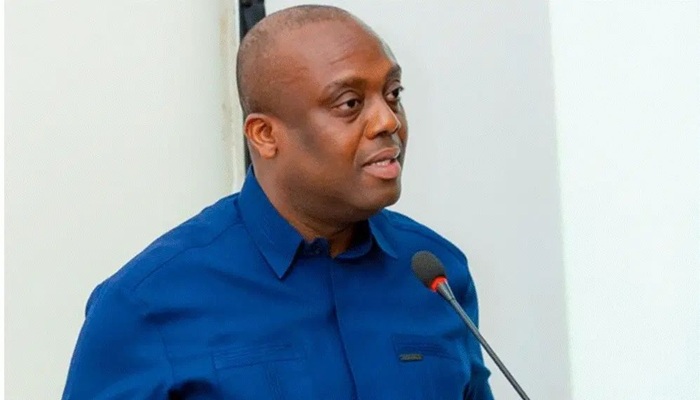

Government’s efforts to strengthen domestic revenue collection and improve fiscal sustainability is yielding some results, as the tax-to-GDP ratio increased to about 14 percent in 2025 from roughly 12.3 percent a year earlier.
Deputy Finance Minister Thomas Nyarko Ampem ascribed this to gains from ongoing tax administration and public financial management reform.
Government is seeking to boost domestic revenue as it works on preserving macroeconomic stability following completion of its International Monetary Fund-supported economic recovery programme.
Stronger tax collection has become a key pillar of efforts to reduce reliance on borrowing and support long-term economic growth.
Mr. Ampem made this observation during the opening of a high-level visit by a Ghanaian delegation to South Korea under the Ghana Tax Modernisation Project.
In spite of this improvement, Ghana’s tax performance remains below that of countries with comparable levels of development. Hence, the gap highlights a need for continued reforms aimed at reducing revenue leakages, broadening the tax base, improving efficiency and strengthening voluntary compliance.
Modern and integrated revenue administration systems, stronger institutional capacity, greater use of technology and enhanced collaboration among public institutions will be critical to sustaining gains in tax collection.
The Ghana Tax Modernisation Project – supported by the Korea International Cooperation Agency, Korea Institute of Public Finance and other partners – is designed to overhaul the country’s tax administration system through technology upgrades, institutional reforms and capacity-building initiatives.
The initiative will culminate in a Tax Modernisation Master Plan intended to guide future reforms and create a more efficient and transparent revenue administration framework.
Additionally, the project aims to strengthen public trust in the tax system and support Ghana’s broader development objectives through a more technology-driven and citizen-focused approach to tax administration.
Ghana’s tax-to-GDP ratio remains below the sub-Saharan African regional average of roughly 16.1% to 17% and falls short of government’s 2027 18% to 20% target.
To address this gap, government implemented a Medium-Term Revenue Strategy (MTRS) overseen by the Ministry of Finance.
Post Views: 62
Discover more from The Business & Financial Times
Subscribe to get the latest posts sent to your email.