

An educational innovation organization has moved forward with operationalizing a partnership with Ghana’s leading scientific research institution, targeting early introduction of structured research methods into basic education.
The African Progressive Research and Innovations (APRIL-STEM) announced internal arrangements are underway to translate a Memorandum of Understanding (MOU) with the Council for Scientific and Industrial Research College of Science and Technology (CSIR-CST) into practical programs across Ghana. The partnership agreement, signed late last year, establishes frameworks for curriculum integration, research collaboration, innovation development and access to research facilities.
Dwomoh Doyen Benjamin, President of the African Chamber of Content Producers and co founder of APRIL, characterized the partnership as presenting opportunities to introduce structured research methods at much earlier learning stages. The organization intends embedding research thinking at basic school level among affiliated institutions, emphasizing that research forms the foundation of science, inquiry and meaningful learning rather than being reserved exclusively for higher education.
Professor Mark Appiah, President of CSIR-CST who led the signing ceremony for his institution, reaffirmed personal and institutional commitment to the partnership. He expressed determination to leverage his experience and the depth of expertise within CSIR to support improvements in Ghana’s education and development at every possible level. He described the collaboration as aligned with CSIR’s mandate linking research directly to national development and innovation.
Louis Nana Asiedu, Project Coordinator of APRIL-STEM, disclosed that plans are far advanced to roll out several flagship programs during the year ahead as part of MOU execution. Among them is the Schools Agritech Project, described as a practical pathway for advancing Education 4.0 by linking classroom learning to real world agricultural challenges through technology, innovation and student led experimentation.
The Chief Executive Officer of APRIL-STEM stated the collaboration will allow the organization to implement its Science, Mathematics, Engineering and Technology (SMET) education model at scale. The model, emphasizing practical problem solving, has been published on international academic platforms including Global Scientific Journals, Academia.edu and ResearchGate, with institutions in different parts of the world piloting its recommendations. The next phase aims to firmly ground these approaches in Ghana and extend them across Africa.
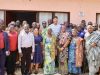
The signing ceremony was witnessed by senior CSIR-CST members including Registrar Baa Koranteng, College Accountant Joshua Zogbla and administrative officers Adriana Frempong, Hilda Mensah and Patience Klu. APRIL-STEM representation included David Adofo, Chief Research Officer and co founder, alongside board members Mawuko Kuadzi and Nana Nketia.
The partnership positions both organizations to reshape how science and innovation are taught, moving learners beyond memorization toward inquiry, invention and practical impact aligned with Education 4.0 and 5.0 goals in Ghana and the wider African context. Education 4.0 refers to integrating technology driven learning, personalized education and real world problem solving into curricula, while Education 5.0 extends this through emphasizing sustainability, innovation and societal impact.
APRIL-STEM has established track record implementing transformational programs in numerous public and private schools across Ghana. The organization holds accreditation from Ghana’s National Teaching Council (NTC), demonstrating tangible and positive impact on the educational landscape. The comprehensive approach encompasses co development of future ready curricula, continuous professional development for teachers on Education 4.0 and 5.0 methodologies, and specialized student training in critical fields like robotics, artificial intelligence and design thinking.
To ensure sustainable impact, the organization also constructs state of the art Science, Technology, Engineering and Mathematics (STEM) Labs and Makerspaces while distributing localized instructional materials, providing essential infrastructure for hands on learning. The infrastructure investments address critical gaps in Ghana’s education system, where research indicates fewer than 10 percent of schools own necessary science equipment and labs needed for practical STEM education, with over 60 percent of public schools lacking electricity access limiting digital equipment efficacy.
The CSIR represents the foremost national science and technology institution in Ghana, mandated to pursue implementation of government policies on scientific research and development, coordinate research and development activities in CSIR and other science and technology institutions nationwide, and assist government in formulating science and technology policies for national development. The institution is further required to commercialize appropriate technologies in partnership with private sector and other stakeholders while encouraging scientific and industrial research of importance for developing agriculture, health, medicine, environment, technology and other service sectors.
Established in its present form by National Liberation Council Decree 293 of October 10, 1968 and re established by CSIR Act 521 of November 26, 1996, the Council traces ancestry to the erstwhile National Research Council established by Research Act 21 of August 1958, little over a year after independence, to organize and coordinate scientific research in Ghana providing necessary platforms for accelerated development.
CSIR research programs cover wide ranging activities including Industry, Agriculture, Agro processing, Fisheries, Forestry, Water Resources, Human Settlement Infrastructure, Environment, Health, Natural and Social Sciences. The institution’s expertise provides critical foundation for APRIL-STEM’s ambitions scaling practical, research driven education models across Ghana’s school system.
The partnership arrives amid growing recognition of practical STEM education’s potential to empower Ghana’s next generation and upskill the workforce for future demands. Despite significant progress in Ghana’s education system over past decades, adoption of practical STEM education remains low. Key barriers include resource and material shortages, inadequate teacher training in practical teaching methods, and unclear implementation plans for practical STEM focused curricula.
Research indicates 38 percent of Junior High School teachers reportedly never do practical activities with students, while a further 37 percent only conduct practical activities up to three times per term. Very few STEM teachers are trained in practical teaching methods. Rote learning and lecturing remain the most common teaching methods in Ghana, with limited practical learning and opportunity for student enquiry and questioning.
The APRIL-STEM model emerged from a two year pilot project in the Oti Region of Ghana, where the innovative STEM curriculum focused on practical experience over theoretical learning achieved remarkable results. Within just one year, the region transformed into a leading STEM center with students developing functional solutions for their communities. The organization’s mission centers on scaling this successful model throughout Africa, providing young people with skills and knowledge needed to thrive in the 21st century.
The initiative emphasizes experiential learning prioritizing hands on activities and projects to develop critical thinking and problem solving skills, community engagement working closely with local communities to identify needs and tailor programs accordingly, plus collaboration and partnerships with governments, educational institutions and businesses to create sustainable solutions.
Ghana’s Human Capital Index value for 2020 was 0.44, suggesting the country’s next generation of workers is expected to be 44 percent productive compared to benchmark of complete education and full health. The Government of Ghana has invested substantial resources into education sector in recent years, resulting in youth literacy rates now exceeding 92 percent. The government also recognizes importance of digital and STEM education, reflected in significant policy commitments, though implementation barriers have limited success of these policies.
The APRIL-STEM and CSIR-CST partnership creates institutional framework for addressing these challenges through combining APRIL’s practical curriculum innovations with CSIR’s research capabilities and institutional credibility. The collaboration provides both organizations with platforms for demonstrating that African institutions can lead in educational innovation while maintaining authentic approaches suited to local contexts and needs.
Future expansion plans include rotating programs featuring local innovators, curated educational programming and expanded partnerships with Ghanaian entrepreneurs through collaborative ventures. The vision remains consistent: creating educational environments inspiring the next generation of African leaders while offering research driven, practically oriented learning experiences preparing students for modern economic demands.
Industry observers note the partnership model allows educational innovators accessing established institutional infrastructure and credibility while enabling research institutions extending impact beyond traditional academic boundaries into primary and secondary education systems. This hybrid approach appeals to stakeholders seeking educational transformation without abandoning proven institutional frameworks.
The collaboration adds to Ghana’s growing ecosystem of STEM education initiatives supporting the nation’s human capital development strategy. As Ghana continues building knowledge economy capabilities and competing effectively with established African education leaders, quality STEM instruction becomes increasingly critical for sustaining development momentum and preparing workforces for technology driven industries.