By Kobina Yeboah OKYERE
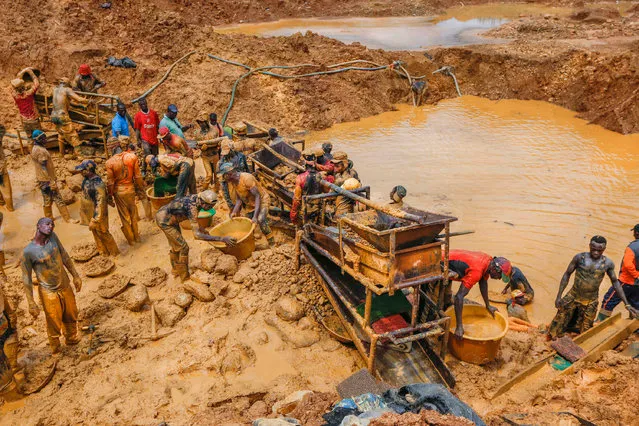
Illegal small‑scale mining (galamsey) has evolved into one of Ghana’s most entrenched governance and development challenges. While the sector contributes significantly to Ghana’s revenue and provides income opportunities for many impoverished households, the unregulated and informal nature has created conditions that foster environmental destruction, weakened institutional oversight, and the systematic exploitation of vulnerable populations – most notably children.
The continued involvement of children in illegal mining activities represents not only a human development crisis but also significant gaps in policy implementation, law enforcement, and social protection systems.
At its core, child participation in illegal mining contradicts Ghana’s constitutional values, domestic legal framework, and international obligations. Mining is expressly recognised under Ghanaian law as hazardous work and is therefore prohibited for persons under the age of eighteen.
Experiences in Compassion International Ghana (CIGH) assisted communities in mining‑affected districts across the Ashanti, Western, Eastern, Central, and Bono regions show that, children are routinely found digging pits, carrying heavy ore, processing gold with mercury, and performing other life‑threatening tasks.
There are observations of children abandoning schools to engage in illegal mining, sometimes in the full view of law enforcement agencies and adults who should be caring parents. These practices persist despite the clarity of the law, revealing that legislation alone is insufficient without deliberate enforcement, community engagement, and socio‑economic alternatives.
A sustainable policy response must therefore move beyond reactive crackdowns and adopt a coordinated, right-based approach that addresses both the immediate protection of children and the structural drivers of their exploitation.
Strengthening enforcement and accountability remains a necessary starting point. Existing child labour and mining laws provide ample legal authority for intervention; however, implementation is often undermined by limited resources, fragmented institutional mandates, and inconsistent political will.
Establishing well‑resourced, district‑level task forces that bring together labour officers, social welfare personnel, environmental regulators, and law enforcement agencies would significantly enhance detection and response. Regular inspections of high‑risk mining zones, coupled with the consistent prosecution of adult offenders who employ or facilitate child labour, would send a strong deterrent signal and reinforce the rule of law.
Yet enforcement alone cannot succeed in contexts of deep poverty. The experience of CIGH show that, children’s involvement in illegal mining is a survival. Expanding access to quality education in mining‑affected communities is therefore a critical pillar of any effective policy response.
Schools must not only be available but genuinely accessible and attractive to vulnerable families. School feeding programmes, scholarship schemes, and second‑chance education pathways for children withdrawn from mining sites can significantly reduce dropout rates and incentivise sustained attendance.
Equally important is the role of communities themselves in protecting children. Policy efforts that overlook traditional authorities, opinion leaders, and civil society actors are unlikely to achieve sustained impact. Community‑based child protection systems offer a culturally grounded mechanism for identifying at‑risk children, reporting violations, and challenging social norms that normalise child labour.
When chiefs, religious leaders, and community groups are actively involved in protection efforts, enforcement is reinforced by local legitimacy rather than external coercion alone. Public education campaigns conducted in local languages can further reshape perceptions by emphasising the long‑term costs of child mining and the value of education.
Reforming the governance of the mining sector itself is also essential. Illegal mining flourishes in regulatory vacuums, where informality obscures accountability and enables exploitation. Formalising artisanal and small‑scale mining through licensing, training, and environmental regulation can significantly reduce the incidence of child labour.
A regulated sector creates traceable operations, enforces age restrictions, and allows for meaningful monitoring. At the same time, adult miners must be offered skills training and alternative livelihood opportunities, ensuring that the removal of children from mining does not simply shift economic desperation elsewhere.
Finally, effective coordination and data‑driven policy making are critical to sustaining progress. Fragmented interventions, poor data collection, and limited inter‑agency cooperation have historically weakened Ghana’s response to child labour.
Establishing an integrated national database on child labour in mining, supported by regular reporting and cross‑ministerial coordination, would improve policy coherence and accountability. Transparent monitoring frameworks would also enable Parliament, civil society, and development partners to assess progress and identify implementation gaps.
In conclusion, the elimination of child involvement in illegal mining in Ghana is both an achievable and necessary policy objective. The legal foundations already exist; what remains is the political and administrative commitment to enforce them in ways that protect children while addressing the underlying conditions that place them at risk.
A comprehensive strategy that combines enforcement, education, social protection, community engagement, and mining sector reform offers the most viable path forward. Protecting children from illegal mining is not merely a compliance exercise—it is an investment in Ghana’s human capital, social stability, and long‑term sustainable development.
Post Views: 33
Discover more from The Business & Financial Times
Subscribe to get the latest posts sent to your email.