


By Dansowaa Sanaa
At a time when education systems and labour markets across the world are grappling with deepening learning and skills crises, the Africa Dyslexia Organization (ADO) is advancing a different narrative—one that positions dyslexia not as a deficit, but as a distinct cognitive profile with the potential to shape leadership, creativity, and innovation.
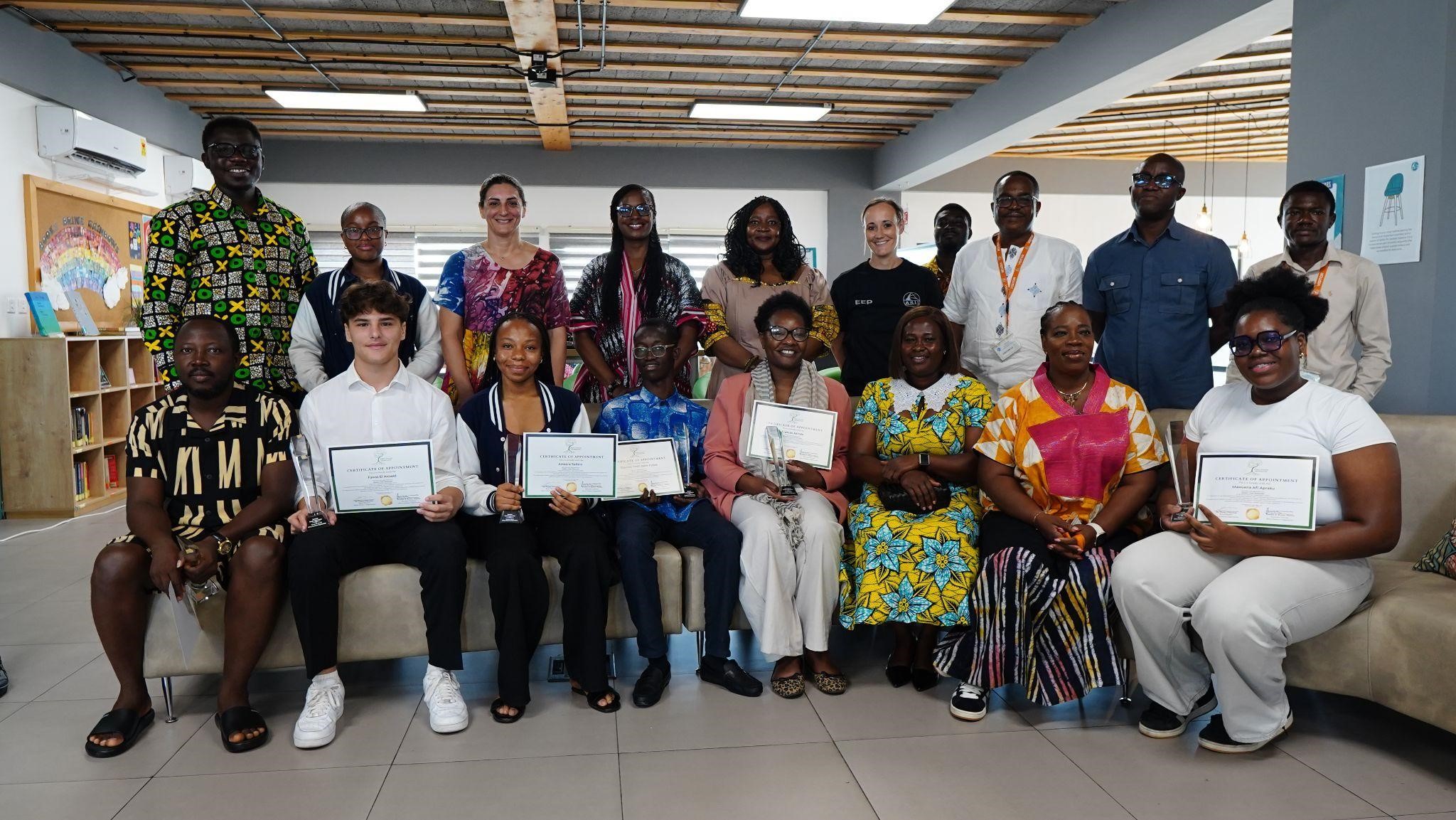
On 10th April 2026, ADO formally expanded its Ambassador Program in Accra, inducting a new cohort of Dyslexia Youth Ambassadors alongside strengthening its network of International Dyslexia Ambassadors. The initiative reflects a broader strategic shift: placing lived experience at the centre of how societies understand human potential.
The newly appointed Youth Dyslexia Ambassadors Dominic Yoofi-Hene Pobee, Abriana Atswei Adjoor Ablorh, Fawaz El Assaad, Hammond Appiah-Kusi Kwaku, Ameera Sedzro, Imara Agyepong Mtunga, and Mawuena Afi Mensah Apreku represent a generation navigating systems that often fail to recognise how they learn, yet demonstrating resilience, adaptability, and emerging leadership.
They join a growing network of International Dyslexia Ambassadors, including Frances Akinde, Aaron Dante Phillips, Surama King, and Ama Asamoah, whose work spans professional, entrepreneurial, and advocacy spaces across the diaspora.
Together, they reflect a critical but under-recognised reality: individuals with dyslexia are often highly creative, systems thinkers, problem-solvers, and leaders, yet remain overlooked within education systems and workforce structures that prioritise narrow definitions of intelligence.
Beyond Education: Dyslexia and the Global Skills Crisis
Globally, education systems are under pressure to deliver foundational literacy at scale, while economies face a growing skills mismatch crisis, where traditional academic pathways fail to produce adaptable, innovative talent.
Within this context, dyslexia sits at the intersection of two systemic failures; under-identification and misinterpretation in education systems, underutilisation of cognitive diversity in the workforce.
Speaking at the induction, ADO Executive Director Rosalin Abigail Kyere-Nartey challenged long-standing assumptions, stating: “Dyslexia is not a limitation of potential. It is a difference in how individuals process, think, and solve problems. Yet systems continue to misread that difference as inability.”
Drawing from her own journey, she underscored the consequences of this misinterpretation: “I began reading properly at the age of 17. What changed my trajectory was not the system, but understanding how I learn. The question is, how many others are still being left behind because systems fail to see them?”
From Lived Experience to Leadership Capital
Unlike traditional awareness models, the ADO Ambassador Program is structured as a leadership and influence platform.
It recognises individuals not simply for having dyslexia, but for how they navigate and overcome systemic barriers, develop alternative ways of thinking and problem-solving, and use their experiences to influence others and reshape prevailing narratives.
“This is not about recognition for its own sake,” the organisation emphasised. “It is about positioning lived experience as leadership capital.”
For youth ambassadors, the platform builds early leadership capacity. For adult ambassadors, it strengthens influence across education, workplaces, and global systems.

A System That Ends at the School Gate
Also speaking at the event, Dr. Fatma Odaymat, Director of Al-Rayan International School and ADO Board Member, highlighted a deeper structural gap: “We are making progress within schools, but the system often ends at the school gate. Beyond that, society is still not ready.”
She pointed to the lived realities of learners navigating beyond education: “Many individuals with dyslexia continue to face emotional, social, and professional barriers not because of their ability, but because systems are not designed to recognise them.”
Drawing from both personal and generational experience, she reinforced the need for broader alignment: “Inclusion must move beyond classrooms into communities, workplaces, and policy. Otherwise, we prepare students for systems that are not prepared for them.”
Dyslexia remains one of the most under-recognised contributors to learning difficulties globally, particularly in African contexts where awareness and structured support are still emerging.
The consequences are systemic: learners disengage early from education, potential is misclassified as an inability, and workforce systems fail to capture diverse cognitive strengths.
By elevating both youth and adult ambassadors, ADO is building a multi-level ecosystem of influence in connecting lived experience to public narrative, and public narrative to institutional change.
Shifting the Narrative: From Deficit to Advantage
The expansion of the Ambassador Program signals a broader repositioning:
Dyslexia is not only a learning difference to be supported. It is also a cognitive advantage to be understood and harnessed.
As global conversations increasingly focus on innovation, adaptability, and leadership, the ability to think differently is no longer peripheral; it is central.
Through its growing network of ambassadors, the Africa Dyslexia Organization is advancing a continental and global agenda aligning education, workforce development, and policy with a more accurate understanding of human potential.
In doing so, it is not only addressing a hidden learning crisis, but also confronting a deeper question: Who gets to be seen as capable, and on what terms?
Post Views: 1
Discover more from The Business & Financial Times
Subscribe to get the latest posts sent to your email.