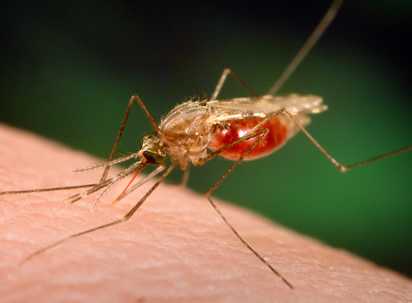

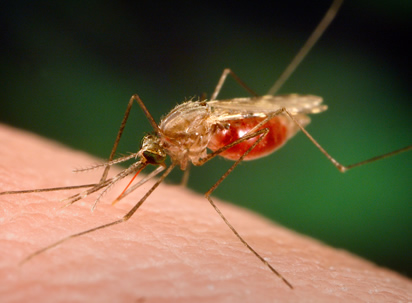
Target Malaria, a non-profit research consortium based at Imperial College, London, is exploring a genetic technology that could reduce mosquito populations and help curb malaria transmission across Africa.
The approach, known as Gene-Drive, aims to genetically modify malaria-carrying mosquitoes so their populations decline over time, and ultimately reduce the spread of the malaria parasite.
Dr Federica Bernadino, a researcher at the Department of Life Sciences at Imperial College, London, said malaria remained both preventable and treatable, yet progress against the disease had stalled in recent years.
She explained that the gene-drive technology was being explored in response to growing resistance to insecticides and anti-malarial drugs, and the urgent need for sustainable control strategies.
“We are trying to identify genes responsible for mosquito reproduction and disrupt them so that mosquitoes become sterile. By modifying these genes, we hope to reduce mosquito populations or limit their ability to spread malaria,” she said.
Dr Bernadino said this when journalists from Ghana and Nigeria visited the Department as part of a media training programme on Science, Technology, and Innovation reporting.
She noted that reducing female mosquito populations could significantly cut malaria transmission, since female mosquitoes bite humans and required blood to produce eggs.
Explaining how the gene-drive technology works, she said under normal genetic inheritance, modified genes passed to about 50 per cent of offspring.
“Gene-drive technology increases that inheritance rate to nearly 100 per cent, allowing the genetic modification to spread rapidly through mosquito populations,” she said.
She added that when genetically modified male mosquitoes’ mate with wild females, the resulting offspring inherited the modification and may become sterile, gradually reducing mosquito populations over time.
In controlled cage studies involving about 600 mosquitoes, scientists observed that the genetic modification spread rapidly across multiple generations.
As the modified gene increased in frequency, mosquito reproduction declined until populations collapsed after several generations, Dr Bernadino said.
“These results suggest we could significantly reduce mosquito populations over time,” she said.
Dr. Bernadino noted that Africa hosted more than 700 mosquito species, but only a few, including members of the Anopheles gambiae complex, were responsible for most malaria transmission.
She explained that the gene-drive approach targeted only malaria-carrying species, limiting potential environmental impact.
Studies are also underway to assess ecological risks, including whether other species could fill ecological roles if malaria-carrying mosquito populations decline.
One advantage of gene-drive technology, she said, was that only small numbers of modified mosquitoes may need to be released, unlike conventional methods that require repeated large-scale releases, gene-drive mosquitoes spread the genetic modification naturally through mating.
In Ghana, Target Malaria is conducting environmental and entomological studies to better understand mosquito populations and ecosystems, researchers are also engaging policymakers, local communities, and stakeholders to raise awareness about the technology.
Dr Bernadino noted that no gene-drive mosquitoes had been released anywhere in the world yet, and that extensive regulatory approvals, environmental assessments, and public consultations would be required before any release.
“The gene-drive mosquitoes could complement existing malaria control strategies, including bed nets, insecticides, and medication, this technology is still under development, and safety assessments are ongoing,” she said.
The goal of the technology was not simply to alter mosquito behaviour, but to reduce mosquito populations to levels too low to sustain malaria transmission.
“If mosquito populations drop significantly, the malaria parasite cannot survive, and transmission could be interrupted,” Dr Bernadino said.
Source: GNA