
After years of agricultural exchange, relationship building and cross-border collaboration, leaders from Ghana and Nebraska have formalised a major international partnership aimed at modernizing livestock systems, strengthening food security, expanding agribusiness infrastructure, and creating long-term economic opportunities between West Africa and the American Midwest.
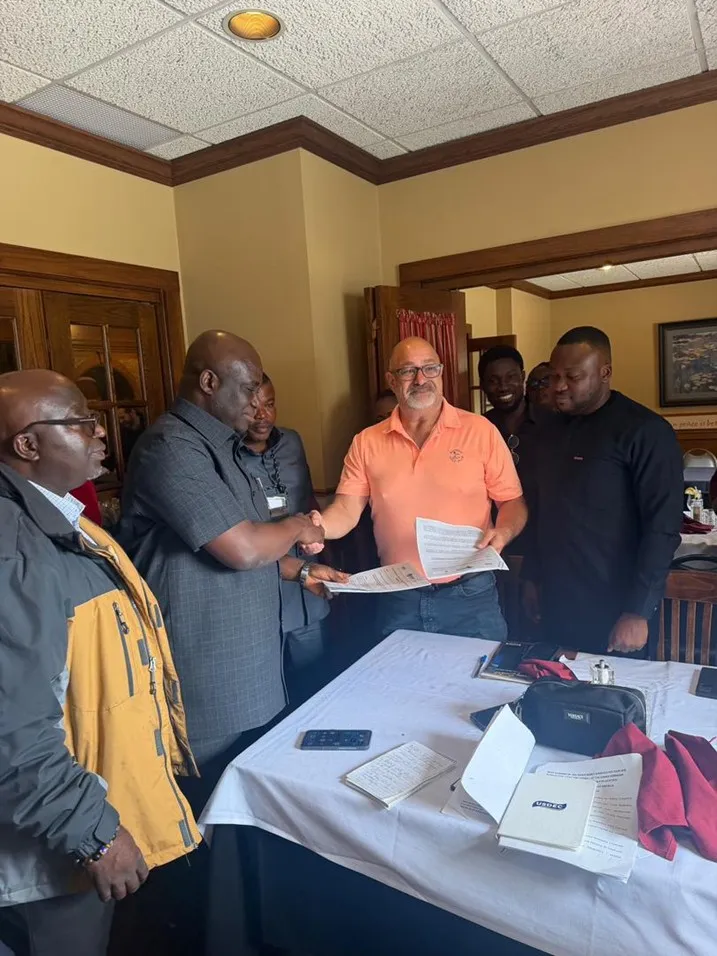
The Ghana–Nebraska Cooperation Agreement was signed this week during the Ghana-Nebraska Spring Livestock Modernization Partnership Tour in Nebraska by the Ministry of Food and Agriculture of the Republic of Ghana (MOFA), EcoSyntra LLC, the Ghana-Nebraska Agribusiness Growth and Trade Relations Chamber (GNEBCham), and the Agrihouse Foundation.
The livestock modernization tour, organized by EcoSyntra and GNEBCham, brought a 23-member Ghanaian delegation to Nebraska led by Ghana’s Minister for Food and Agriculture Eric Opoku for meetings with livestock producers, agribusiness leaders, universities, researchers, and agricultural innovators across the state.
The agreement establishes a 10-year framework for cooperation focused on livestock modernisation, dairy development, agricultural infrastructure, workforce training, academic exchange, climate-resilient agriculture, and agribusiness investment.
The partnership also identifies priority pilot initiatives, including modernisation of the Tulaku Cattle Market, development of the proposed Amrahia Dairy Processing Center, livestock traceability systems, demonstration dairy farms, technical training hubs, and expanded feed and grazing infrastructure.
The partnership comes as countries worldwide face growing pressure to strengthen food security, modernise agricultural infrastructure, and build more resilient agricultural supply chains.
“This livestock modernisation partnership program is more than an exchange of knowledge. It is a partnership between two regions determined to advance livestock development,” Opoku said. “Together, Ghana and Nebraska can demonstrate how
International cooperation strengthens food security, empowers agribusinesses, and builds resilient agricultural systems.”
The Ministry of Food and Agriculture has identified livestock modernisation as a national priority as the country works to reduce food imports, strengthen domestic production, and expand agricultural investment opportunities.
According to Mr Opoku, Ghana currently imports nearly $100 million annually in live animals and frozen meat, while dairy imports meet approximately 95% of national demand.
“This reliance underscores the urgent need for bold interventions to strengthen local production,” Opoku said.
Nebraska was selected as a strategic partner because of its international leadership in livestock production, feed systems, animal genetics, veterinary science, water management, meat processing, and agricultural research.
“The expertise that exists across Nebraska’s agricultural economy is globally respected,” said former Nebraska State Sen. Ken Schilz, co-founder of EcoSyntra and GNEBCham. “This agreement creates a long-term implementation framework connecting Nebraska innovation, producers, researchers, and agribusiness leaders with one of Africa’s fastest-growing agricultural economies.”
Schilz said the agreement represents the culmination of years of foundational work between Ghanaian and Nebraska leaders, universities, producers, agribusiness organisations, and policymakers.
“What began as agricultural exchange has evolved into a serious long-term partnership focused on implementation, investment, infrastructure, workforce development, and measurable economic impact,” Schilz said.
The agreement establishes pathways for Nebraska-based experts, universities, researchers, and technical teams to collaborate directly with Ghanaian institutions and agricultural stakeholders through training programs, demonstration projects, research partnerships, and technical exchanges.
The partnership also aligns with Ghana’s broader Feed Ghana Programme, which focuses on improving livestock production, expanding feed access, strengthening veterinary systems, modernizing husbandry practices, and supporting dairy and meat processing infrastructure.
“As the gateway to Africa and home to the African Continental Free Trade Area Secretariat, Ghana provides access to a $3.4 trillion market,” Opoku said. “We invite Nebraska businesses to seize this opportunity.”
Alberta Nana Akyaa Akosa, co-founder of GNEBCham and founder of Agrihouse Foundation, said the agreement reflects years of sustained collaboration between stakeholders in Ghana and Nebraska.
“This agreement reflects the depth of trust, shared purpose, and long-term commitment that has been built between our teams and institutions,” Akosa said. “We are creating a platform designed to deliver practical outcomes for farmers, agribusinesses, researchers, and future generations.”
The Ghana delegation’s visit to Nebraska is part of a broader effort to establish a long-term agricultural and economic partnership connecting Nebraska’s globally recognised expertise in livestock, water, feed, genetics, veterinary science, and agribusiness with Ghana’s rapidly growing agricultural economy and regional trade opportunities across West Africa.
Post Views: 1
Discover more from The Business & Financial Times
Subscribe to get the latest posts sent to your email.