By Alex Adi, GBC News, Antalya
Ghanaian farmers are expected to benefit from a new partnership between the African Agribusiness Consortium (AAC) and Türkiye-based ChitoGlobal Biotechnology to introduce climate-smart biotechnology into the country’s agricultural sector.
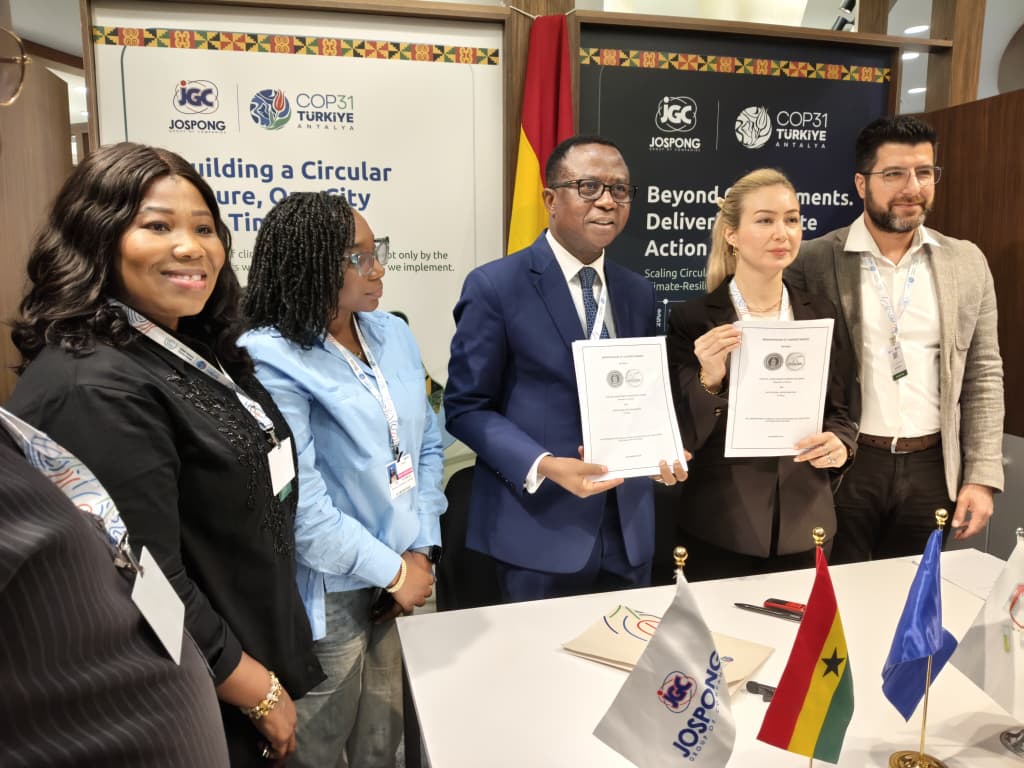
The partnership, formalised in Antalya, Türkiye, will focus on converting marine waste into environmentally sustainable crop enhancers.
At the centre of the initiative is chitin-chitosan, a natural biopolymer extracted from the shells of shrimp and crabs. The substance is used as a biostimulant to help plants strengthen their natural defences against fungal pathogens, repel pests and conserve water during extended dry periods.
The technology comes at a time when Ghanaian farmers are grappling with increasingly erratic rainfall patterns, rising input costs and declining soil quality.
Its expected benefits include improved crop yields, better soil health and reduced dependence on imported chemical fertilisers and pesticides.
Dana Abourahma, Sales and Technical Support Manager at ChitoGlobal Biotechnology, said the partnership would combine local agricultural knowledge with scientific expertise.
“This collaboration brings together extensive local knowledge with cutting-edge scientific capabilities,” she said.
The AAC, led by its Chief Executive, Dr Adelaide Araba Siaw Agyepong, operates in Ghana’s commercial rice, maize and soybean sectors, providing farmers with support in mechanisation, financing and market access.

ChitoGlobal, headquartered in Antalya, has more than a decade of experience in developing biopolymers for agricultural and medical applications.
Speaking at the signing of the agreement, Noah Gyimah, Chief Investment Officer of the Jospong Group, outlined the plans for implementing the partnership.
“Our joint efforts will transition this technology from research and development to practical application. We will commence with collaborative research and field trials in Ghana, followed by technology transfer and full-scale commercial production,” he said.
The memorandum of understanding marks a collaborative effort between Ghana and Türkiye to apply scientific innovation to agricultural challenges while creating economic value from marine by-products.
Through the proposed introduction of the technology, the AAC aims to help reduce farmers’ production costs, strengthen Ghana’s food security and promote a more sustainable and resilient agricultural sector.