
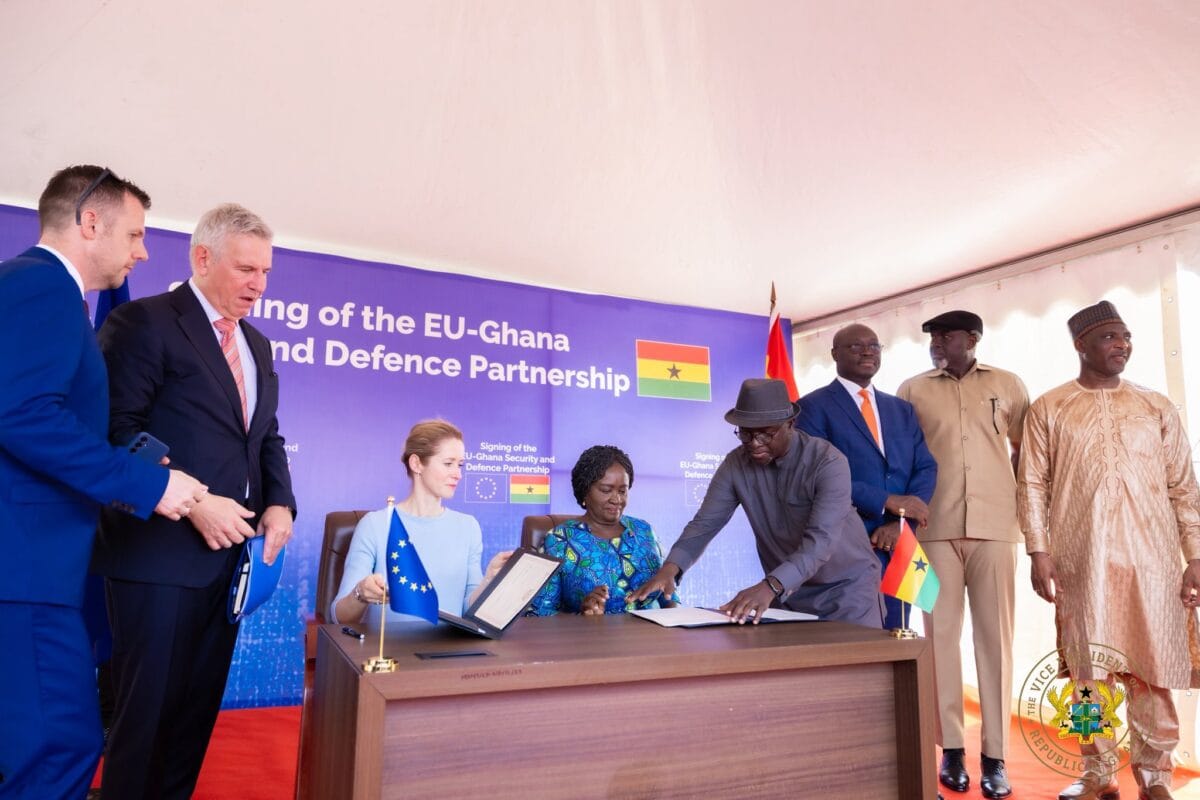
Ghana has taken a significant step in advancing its security architecture and international cooperation following a high-level engagement between Vice President Jane Naana Opoku-Agyemang and Kaja Kallas, the High Representative of the European Union for Foreign Affairs and Security Policy.
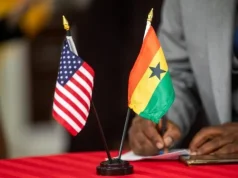
The official visit by the European Union representative marked a major milestone in Ghana’s diplomatic and security relations, culminating in the signing of a landmark Ghana-European Union Security and Defence Partnership.
This agreement positions Ghana as the first African country to enter into such a strategic arrangement with the EU, aligning it with global partners including the United Kingdom, Canada, Japan, and Norway.
The partnership is expected to deepen cooperation in critical areas such as conflict prevention, counterterrorism, border security, maritime protection, and cybersecurity.
These areas have become increasingly important in light of evolving security threats across West Africa and the broader Sahel region.
A key highlight of the engagement was the European Union’s continued support through initiatives such as the European Peace Facility and the EU Security and Defence Initiative.
Over the years, these frameworks have contributed to more than 30 security-related projects in Ghana, strengthening the country’s institutional capacity to respond to both internal and external threats.
As part of the visit, the EU handed over advanced security equipment to Ghana’s security agencies. The assets included Explosive Ordnance Disposal (EOD) vehicles, counter-drone systems, motorcycles, and drones.
These tools are expected to significantly enhance operational efficiency, improve surveillance capabilities, and support rapid response efforts in addressing emerging threats.
Speaking during the engagement, Vice President Opoku-Agyemang emphasized the importance of sustained international collaboration, particularly at a time when the sub-region faces rising security concerns.
She referenced recent incidents affecting Ghanaian nationals abroad as a reminder of the urgent need for stronger partnerships to ensure safety and stability.
The agreement underscores Ghana’s commitment to maintaining peace and security as a foundation for national development. It also reflects the European Union’s strategic interest in supporting stable and resilient partners in Africa.
Ultimately, the Ghana–EU Security and Defence Partnership represents a forward-looking approach to tackling modern security challenges through cooperation, innovation, and shared responsibility.