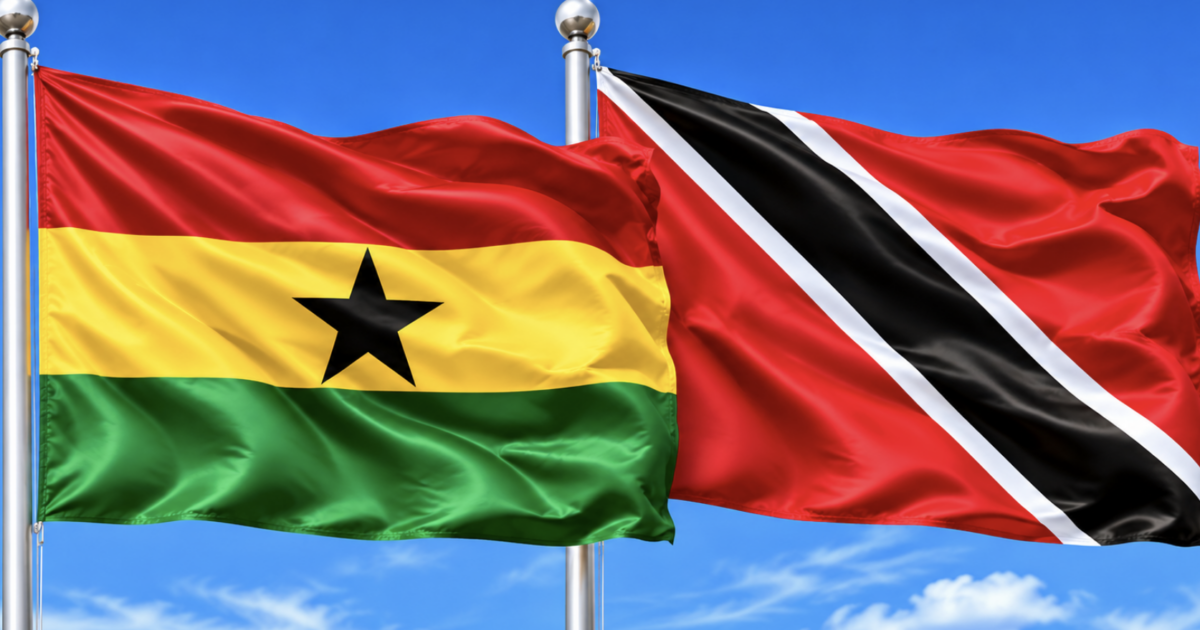

Ghana and Trinidad and Tobago are exploring the establishment of a dedicated mechanism, potentially co-chaired by the African Union (AU) and the Caribbean Community (CARICOM), to advance the reparatory justice agenda and facilitate structured engagement with the United Kingdom (UK).
The proposal was discussed at a bilateral meeting between Mr Samuel Okudzeto Ablakwa, Ghana’s Minister of Foreign Affairs, and his Trinidad and Tobago counterpart, Mr Sean S.M. Sobers, on the sidelines of the 2026 Commonwealth Heads of Government Meeting in Antigua and Barbuda.
The discussions focused on strengthening bilateral relations, deepening Africa-Caribbean cooperation and advancing their shared campaign for reparatory justice.
The two Ministers observed that existing platforms, including the Commonwealth Foreign Affairs Ministers Meeting, might be too broad to accommodate focused and sustained discussions on reparatory justice.
They, therefore, underscored the need for a dedicated platform to provide a more coordinated approach to engagement with the UK and other relevant international partners.
They stressed that reparatory justice should extend beyond financial compensation to include acknowledgement of historical injustices, reconciliation, guarantees of non-repetition and efforts towards a fairer international order.
The Ministers also highlighted the need to leverage the current UK administration’s reported openness to the issue while safeguarding the fundamental principles of the reparatory justice agenda.
The Trinidad and Tobago delegation proposed development-oriented interventions as part of the reparatory process, including expanded scholarship opportunities, support for healthcare infrastructure and hospital development, and improvements in educational facilities.
Climate-related cooperation was also identified as a potential area for consideration under the broader framework.
The proposed mechanism comes against the backdrop of Ghana’s growing international campaign for reparatory justice, which recorded a significant diplomatic milestone in March 2026 following the adoption of a resolution by the United Nations General Assembly.
On March 25, 2026, the UN General Assembly adopted Resolution A/RES/80/250, recognising the trafficking of enslaved Africans and racialised chattel enslavement as the gravest crime against humanity.
The resolution, spearheaded by President John Dramani Mahama in his capacity as the AU Champion on Reparations, received 123 votes in favour, three against and 52 abstentions.
The adoption marked a significant step in Ghana’s efforts to elevate historical injustices into a global conversation on accountability, healing and reparative action.
Subsequently, Ghana hosted a High-Level Consultative Conference on the Next Steps to the UN Resolution in Accra from June 17 to 19, 2026, bringing together international stakeholders to develop a practical roadmap for advancing the reparations agenda.
President Mahama also announced the establishment of three international panels: the Global Advisory Panel on Reparatory Justice, the Expert Panel on the Restitution of Cultural Artefacts and the Global Legal Panel on Reparatory Justice, to provide strategic, technical and legal support for the process.
Ghana has also developed a draft five-year action plan focusing on diplomatic engagement, reparative financing and reforms to the global financial architecture to move the campaign from advocacy to implementation.
The latest discussions with Trinidad and Tobago follow renewed diplomatic engagement with the UK.
On November 3, 2026, Mr Ablakwa commended the UK for its reported willingness to consider a formal apology and structured dialogue on reparatory justice.
He described the development as an important step towards healing, reconciliation and addressing the enduring consequences of the transatlantic slave trade.
He said Ghana, together with its partners in the AU, CARICOM and the wider international community, was prepared to work with the UK towards genuine reconciliation, restitution and reparations.
On bilateral and multilateral cooperation, the Ministers reaffirmed their commitment to sustaining the longstanding bonds of solidarity between the two countries.
They identified Ghana’s anticipated leadership role within the AU in 2027 and Trinidad and Tobago’s forthcoming chairmanship of CARICOM in January 2028 as strategic opportunities to strengthen Africa-Caribbean relations and advance the reparatory justice agenda.
The meeting also discussed prospective high-level exchanges, including an invitation to Mr Ablakwa to visit Trinidad and Tobago in 2027 to formally commission the relevant diplomatic mission.
The proposed visit would also provide an opportunity to commemorate the 60th anniversary of the establishment of diplomatic relations between the two countries.
The Ministers expressed satisfaction with the discussions and reaffirmed their commitment to deepening bilateral relations, strengthening Africa-Caribbean cooperation and pursuing shared interests through multilateral engagements, particularly on reparatory justice.
DISCLAIMER: The Views, Comments, Opinions, Contributions and Statements made by Readers and Contributors on this platform do not necessarily represent the views or policy of Multimedia Group Limited.
DISCLAIMER: The Views, Comments, Opinions, Contributions and Statements made by Readers and Contributors on this platform do not necessarily represent the views or policy of Multimedia Group Limited.
Source link