

How September’s Pan African AI Summit amplifies Ghana’s AI ambitions
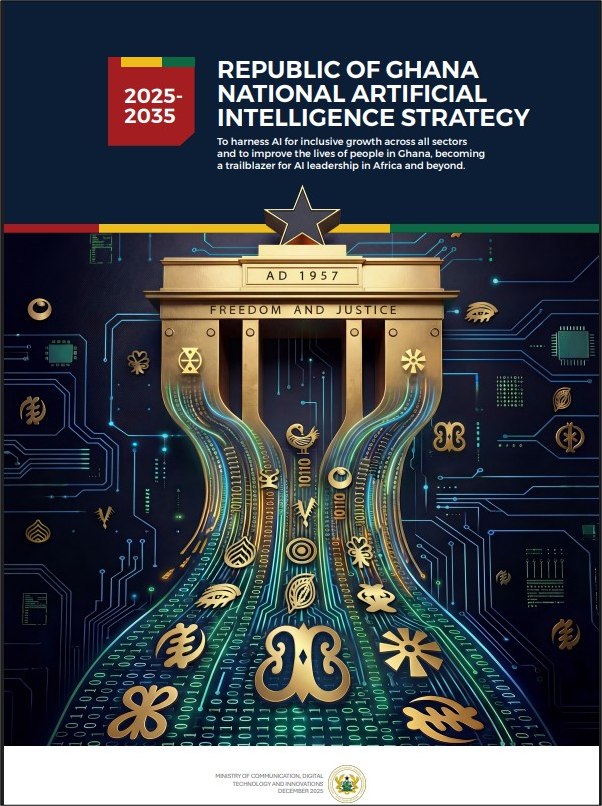
On April 24th, 2026, President John Dramani Mahama launched Ghana’s National Artificial Intelligence Strategy (2025–2035) in Accra. Five months later, on 22–23 September, the Kempinski Hotel will host the second Pan African AI Summit (PAAIS), where Hon. Samuel Nartey George, Minister for Communication, Digital Technology and Innovations, will deliver the keynote.
These dates appear coincidental, but they follow a sequence. The first is the policy. The second is the proof, and both deserve acknowledgement.
A strategy with substance
Most African digital strategies have been long on rhetoric and short on resourcing. Ghana’s plan reads differently in three respects.
- It is funded. The government has committed $270 million up front: $250 million for a national AI computing centre and $20 million for short-to-medium-term implementation. A proposed National AI Fund will be seeded at GHC 5 billion over its first five years. A sovereignly operated computing centre is the difference between training models on Ghanaian data and renting compute from abroad. Infrastructure is policy made tangible.
- It is specific. The strategy targets one trillion tokens of curated Ghanaian-language data by 2030, the introduction of AI, coding, robotics and electronics into the basic school curriculum before the end of 2026, and 300,000 Ghanaians trained this year alone under the One Million Coders Programme. A Responsible AI Office, modelled on Singapore’s National AI Office and the UK’s Office for AI, will provide oversight. “Aku,” the multilingual assistant unveiled at launch, already speaks English, Ga, Twi, Dagbani, Ewe and Gonja. Sovereignty starts with language.
- It is candid. The strategy concedes that 4G penetration sits at 41 percent in rural areas against 88 percent urban areas, and that Ghana ranks 72nd globally and 6th in Africa on the Global AI Index. A plan that refuses to flatter the country it is written for is more likely to deliver than one that does.
For these reasons, the Strategy deserves the commendation it has begun to receive. Not as a finished product, but as a credible starter for ten.
Why the Pan African AI Summit (PAAIS) matters no
Strategies need ecosystems: investors to write cheques, researchers to build benchmark solutions, civil servants to procure responsibly, founders to scale, and ethicists to hold the whole programme to account. PAAIS is where these constituencies are deliberately convened in one room.
Themed Scaling Africa’s Ethical AI Ecosystem: Youth Empowerment, Policy, Partnerships, and Skills, the 2026 edition is structured around focus areas that map almost directly onto gaps the Ghanaian strategy itself identifies:
youth masterclasses and mentorship, ministerial policy roundtables, investment partnerships, and practical skills transfer.
With over 2,000 delegates, participation remains free. A deliberate design choice that keeps the door open to the founders, public servants and academics for whom paywalled conferences are an exclusion.
A two-way opportunity
The benefit runs in both directions. For Ghana, the Summit is a stress test and a showcase. A strategy launched in April becomes more credible when, five months later, the responsible Minister can stand before a continental audience of investors, regulators and builders and answer specific questions about the National AI Fund, the computing centre’s procurement timeline, the Responsible AI Office’s mandate, and the dataset curation pipeline. Public commitments to peers are harder to walk back than launch-day speeches.
For the rest of Africa, Ghana’s plan gives the Summit a concrete artefact to interrogate. Continental AI conversations have suffered from abstraction. With Ghana’s plan now public, delegates from Nairobi, Kigali, Lagos, Cairo and Cape Town can move past abstractions and ask which choices are right, which trade-offs are replicable, and which to avoid.
For the AfCFTA, headquartered in Accra, the implications are larger. A continent-wide free trade area without harmonised approaches to data governance, cross-border AI services and digital sovereignty will not deliver the digital trade dividend its architects promised. PAAIS 2026, underpinned by a national plan, will begin the harmonisation.
What success looks like
For the business community, September is a window for investors arriving in Accra with capital allocations. It means policymakers from neighbouring states showing up with their own draft strategies in hand, ready to negotiate interoperability rather than compete. It means universities and research labs, KNUST’s Responsible AI Lab and their counterparts using the Summit to lock in collaboration agreements, shared datasets and joint doctoral programmes. It means founders treating the Summit as a capital-raising and customer-acquisition opportunity.
And it means holding both the Strategy and the Summit to their own stated standards: 10 Ghanaian AI unicorns by 2035, 1 million AI-ready youth by 2033, a National AI Fund that actually disburses at scale, and a Responsible AI Office with real powers to measure outcomes. The test, ultimately, is in the procurement notices, the budget line items, the curricula adopted, and the infrastructure switched on.
Ghana has taken the pen. The Pan African AI Summit is where it will be unpacked. The continent — and especially its business community — should turn up to read it, and to add a few paragraphs of its own.
The Pan African AI Summit takes place 22–23 September 2026 at the Kempinski Hotel, Accra. Ghana’s National AI Strategy (2025–2035) was launched on 24 April 2026.
More information at panafricanaisummit.com.
Post Views: 40
Discover more from The Business & Financial Times
Subscribe to get the latest posts sent to your email.