By Nana Karikari, Senior Global Affairs Correspondent
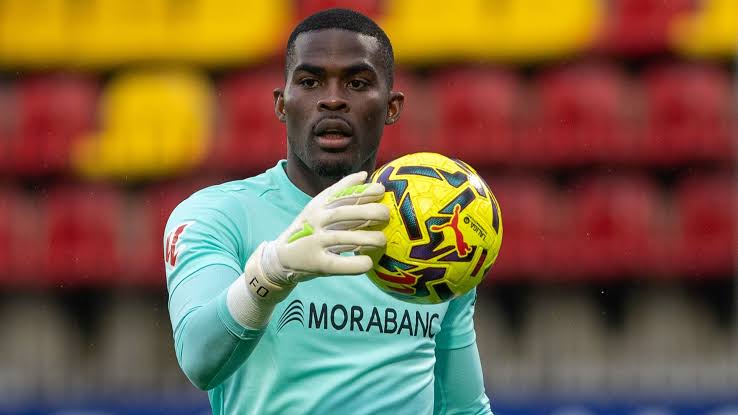
Spanish football officials have imposed a 12-match suspension on FC Andorra goalkeeper Jesus Owono following an on-field collision that led to the death of Tenerife striker Jesus de Miguel. The disciplinary ruling addresses the fatal challenge during a second-tier match earlier this month, while league authorities simultaneously confirmed the abandoned fixture will not be completed.
Disciplinary ruling and official findings
The Spanish football federation’s disciplinary committee issued the maximum penalty after reviewing the match official’s documentation from the Nov. 2 contest. Owono, 25, received a red card in the final moments of the match after colliding with the 30-year-old forward, who died the next day.
In explaining its verdict, the committee stated it had to base its decision “on the facts expressly recorded in the referee’s report.” That official document noted the goalkeeper “was sent off for ‘violently striking an opponent in the chest with his leg, using excessive force, while the ball was in play’.”
The panel acknowledged the broader reality surrounding the case, noting that “the tragic outcome of the incident, resulting in the death of Jesus de Miguel Alameda, is public knowledge.” Ultimately, officials concluded that the “nature of the conduct described and the accompanying circumstances” meant that “the maximum sanction, a 12-match suspension, is justified.”
Match result declared final without replay
Alongside the individual suspension, federation authorities resolved the competitive status of the interrupted match. Officials halted play seven minutes into stoppage time immediately following the collision, with the scoreboard locked at 2-2.
A separate federation committee ruled that the fixture will not be replayed, allowing the 2-2 draw to stand as the official result. Authorities explained that ending the match permanently “avoids having to resume play from the precise moment at which the tragic
incident occurred.” The committee described finalizing the draw as the “most respectful course of action, given the extraordinary and tragic circumstances of this case.”
Uncertain future for Owono
The psychological toll of the tragedy has left Owono’s playing career in doubt. On Nov. 4, FC Andorra released a statement on behalf of the Equatorial Guinea international, revealing he was enduring “the most difficult days” of his life and felt “enormous pain” over De Miguel’s passing.
Speaking on Thursday, FC Andorra manager Carles Manso confirmed that Owono has stepped away to be with his family and remains undecided about returning to the sport. Manso emphasized that the club is placing no pressure on the keeper during his absence.
“What we have to do is support him in every way and be close to him,” Manso said. “We will give him space so that he feels completely free to make any decision, whether he wants to return, when, or if he does not want to return.”
Manso added that the timeline rests entirely with the player. “When he feels it is appropriate and when he feels genuinely ready to take a decision like that, he will do so,” the manager said.
Broader context and balancing perspective
Incidents of this magnitude remain extraordinarily rare within professional European league fixtures, prompting broader institutional discussions regarding player safety protocols and on-field officiating thresholds. Legal and sports administration experts note that while disciplinary frameworks exist to penalize excessive physical force, navigating the intersection of athletic liability and tragic human loss presents unprecedented challenges for governing bodies worldwide. As the sports community continues to process the profound loss felt by Tenerife supporters and De Miguel’s loved ones, observers emphasize that the dual imperatives of competitive integrity and mental health support must remain paramount in guiding future federation responses.