

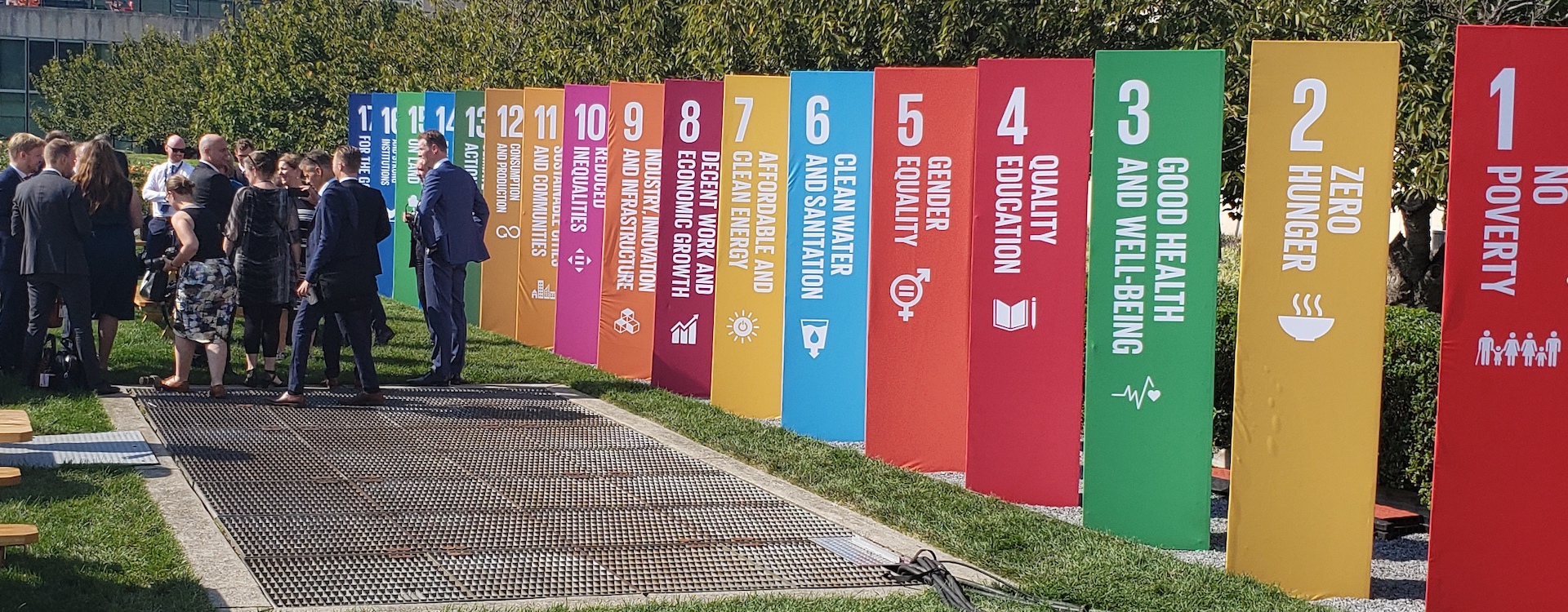

Africa’s uneven progress toward the Sustainable Development Goals (SDGs) is shaped not simply by the absence of institutions, but by how governance capacity functions in practice, a new continent-wide research report has revealed.
The research work Co-authored by Prof Kingsley Opoku Appiah of Kwame Nkrumah University of Science and Technology, Kumasi, published in the Sustainability Accounting, Management and Policy Journal, covered 46 African countries between 2015 and 2022, and challenges the conventional assumption that stronger governance structures automatically translate into better development outcomes.
Instead, it shows that governance-SDG relationships are conditional, goal-specific, and regionally embedded, with outcomes depending critically on coordination capacity, multi-actor collaboration and policy integration.
According to the findings, Africa is neither uniformly falling behind nor leading on the SDGs. Progress has been comparatively stronger in climate action, environmental sustainability, and global partnerships, while outcomes remain weak and inconsistent in poverty reduction, health, education, and inequality sectors that require intensive, execution-driven service delivery.
The research further shows that governance capacity delivers the stronger SDG gains in areas characterized by high coordination intensity. These include quality education (SDG 4), gender equality (SDG 5), climate action (SDG 13), and partnerships for development (SDG 17).
“These are areas where success depends on how well governments work across ministries, engage local authorities, and collaborate with communities, businesses, and international partners,” the study explains.
In contrast, persistent underperformance in poverty, health, and inequality reflects what the study identifies as a governance–delivery gap. While policies and institutions may exist, implementation often breaks down due to fragmented service delivery systems and weak coordination at the frontline.
A key insight from the study is that strong governance scores do not always translate into strong development outcomes. In some African regions, particularly parts of Central Africa, relatively high governance indicators coexist with low SDG performance.
This apparent paradox highlights a decoupling between formal institutional quality (de jure governance) and effective implementation capacity (de facto governance), emphasizing that rules on paper are insufficient without functional coordination systems, institutional trust, and delivery capacity.
Regional patterns reinforce this heterogeneity. North and Southern Africa demonstrate more consistent SDG progress, supported by relatively integrated governance systems and stronger coordination capacity. West and Central Africa, however, continue to lag on several social SDGs despite economic growth and increased investment inflows, reflecting structural coordination challenges and fragmented governance arrangements.
For Ghana and other West African countries, the findings provide important policy lessons. The study argues that improvements in transparency and democratic governance must be implemented by stronger coordination across ministries, local governments, and non-state actors.
In particular, education reform, gender inclusion, and climate resilience emerge as high-impact entry points where strengthened governance networks can accelerate SDG progress. However, the study cautions that increased spending or foreign investment alone will not close development gaps unless governance systems are able to coordinate effectively and translate resources into outcomes.
The authors conclude as Africa enters the final stretch toward the 2030 deadline, the study calls for a shift in policy thinking from pursuing generic governance reforms to building fit-for-purpose, collaborative governance systems capable of delivering results in coordination-intensive sectors.
About the Authors
Prince Gyimah, University of Skills Training and Entrepreneurial Development, Kumasi, Ghana, Kingsley Opoku Appiah, School of Business, KNUST, Ghana Kwadjo Appiagyei, School of Business, KNUST,
Post Views: 1
Discover more from The Business & Financial Times
Subscribe to get the latest posts sent to your email.