

By Joshua Worlasi AMLANU & Ebenezer Chike Adjei Njoku
Government is considering launching a sovereign bond buyback programme as part of a broader strategy to manage external debt and gradually re-enter international capital markets.
The proposal, outlined in the 2025 Mid-Year Budget Review, marks a shift in tone from crisis-era restructuring to proactive debt management.
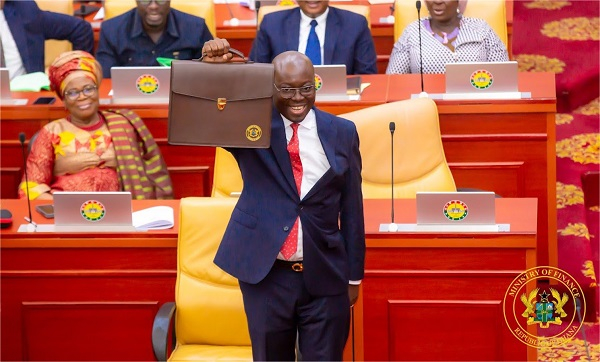
Finance Minister Dr. Cassiel Ato Baah Forson told parliament the Ministry of Finance will assess market conditions to determine the viability of buybacks, particularly for Eurobonds currently trading at a discount.
“In line with our medium-term debt strategy and improving macroeconomic conditions, we will explore the possibility of conducting bond buybacks as market conditions permit,” Dr. Forson said.
While the budget document does not detail timelines or execution frameworks, the move could serve as a confidence-building signal to creditors and investors.
Ghana defaulted on most of its external debt in late 2022 and remains in negotiations with official and private creditors under the G20 Common Framework. The country faces its first major Eurobond maturity in 2026, with over US$1billion due.
According to the Ministry of Finance, the objective is to reduce nominal external debt, ease near-term redemption pressures and improve the maturity structure of Ghana’s debt portfolio. Market participants note that repurchasing bonds at discounted prices could reduce future debt service costs, but caution that execution will require adequate foreign exchange reserves and policy coordination.
As of June 2025, Ghana’s gross international reserves stood at US$4.4billion, equivalent to 1.9 months of import cover excluding encumbered assets. The increase in reserves has been supported by IMF disbursements, improved gold export performance and a decline in public sector FX demand.
Kofi Kyei Busia, Head of Pension Management at Merban Capital, said the move, if followed through, would be a logical step toward restoring investor trust.
“We are expecting bond tenors between three to seven years, but this could change depending on government’s funding strategy,” he said.
Mr. Busia also highlighted the need for bond proceeds to be channeled into productive, revenue-generating projects. “That’s how bonds are meant to work: projects should pay for themselves. Otherwise, we risk falling back into another debt restructuring situation,” he said.
He added that inflation and interest rate trends had created a more stable investment climate. “With inflation around 13 percent and short-term Treasury yields between 14 percent and 15 percent, the real return is marginal. Investors want better inflation protection.”
Mr. Busia noted government’s plan to reopen the domestic bond market in August and the selection of new bookrunners as standard practice. “It’s not unusual for a new administration to change financial partners. The choice tends to reflect comfort levels more than fixed criteria.”
He noted that lower Treasury yields are possible if fiscal discipline is maintained. “The Bank of Ghana has already signalled a long-term goal of bringing the monetary policy rate below 10 percent. That would support broader macroeconomic stability.”
Analysts believe a successful buyback programme, if transparently managed, could narrow spreads and pave the way for a phased return to global capital markets.
Post Views: 207