

On Thursday, 19 March 2026, Greater Accra Regional Minister Linda Ocloo stood before a group of schoolgirls in Accra and announced that over one million free sanitary pads would be distributed to vulnerable institutions across Ghana this year, backed by GH¢292.4 million allocated in the national budget and delivered through a partnership between the Office of the Vice President and Softcare.
It was, by any honest measure, a significant policy announcement one that builds on the six million pads already distributed to girls in basic and secondary schools in 2025 and extends the programme to special schools, Islamic basic schools, female correctional facilities, and psychiatric hospitals. Vice President H.E Naana Jane Opoku Agyemang, who has championed the initiative, framed it for what it is, a direct intervention in one of the most quietly devastating crises facing Ghanaian girls today.

The response on social media was instructive. Not gratitude. Not relief. Mockery. Men and it was overwhelmingly men flooded the comment sections of pages across Ghana asking what happened to street lights and jobs. Men joking that the National
Democratic Congress (NDC) has no legacy beyond distributing pads. Men typing, apparently without irony, that sanitary products are “not a priority.” If you want to understand how deep Ghana’s ignorance about period poverty runs, you need look no further than those comment sections. They are not an aberration. They are a mirror.
Let us be honest about what that contempt reveals. It reveals a profound, almost wilful ignorance about what the absence of a sanitary pad actually means in the life of a girl in this country. It reveals the ease with which men dismiss the health and education of women and girls when the subject matter makes them uncomfortable. And it reveals, most damningly, a national culture that has for decades treated menstruation as something shameful, secret, and certainly not worth spending public money on. The men in those comment sections are not outliers. They are the logical product of a society that never taught them that a girl’s period is not a personal failing but a public health concern with measurable, devastating consequences. To understand why this programme matters, one must first understand the scale of what we are dealing with.
Ghana has some of the highest effective tax rates on menstrual products in the world. Sanitary pads are classified as “finished goods,” making them subject to a 20% import duty and a 15% value added tax a combined burden that pushes the cost of a single packet to between 11 Ghs and 15 Ghs. For a woman earning daily wages in the informal economy, that price is not trivial. It is, on some days, the entirety of what she has. A study conducted across rural communities found that school absenteeism among girls due to the inability to manage menstruation safely reaches as high as 95% in some areas. Not 9.5%. 95%. Nearly every girl in certain rural schools, at some point each month, stays home because she cannot safely attend school whilst menstruating.
The consequences of this do not stay neatly within one month’s absence. They compound with terrifying speed. A girl who misses five days a month misses sixty days a year. Over the course of a six-year secondary education (JHS -SHS), that is the equivalent of nearly an entire academic year of lost instruction. The gender gap in educational attainment in Ghana is not entirely explained by this, but it is substantially worsened by it. When girls fall behind, they are more likely to drop out. When they drop out, they are more vulnerable to early marriage, early pregnancy, and economic dependence. The sanitary pad is not a luxury item. It is, in the cold arithmetic of development economics, a determinant of a girl’s entire future.
And yet even this framing the economic argument, the education argument lets Ghana off too easily, because it makes the case for menstrual products contingent on their utility to society rather than on the simple, irrefutable dignity of the girl herself. The human cost goes further than absenteeism. Consider Abena, fifteen, from a fishing community outside Elmina. Her story is not unique; it has been documented in various forms by researchers, by NGOs, and by social workers across this country. When her period arrived each month, she would approach male relatives, sometimes strangers, sometimes older men she had reason to fear, asking for money to buy pads.
The transaction was not always clean. It was not always free. In some cases, the price she paid for a packet of sanitary towels was her safety. This is not a metaphor. UNICEF and multiple civil society organisations working in Ghana have documented cases where girls enter what researchers carefully term “transactional relationships” with older men specifically in order to obtain money for sanitary products. We are talking about children being sexually exploited because the state did not consider it a priority to ensure they had access to basic hygiene.
For girls who do not or cannot enter those arrangements, the alternative is rags. Old cloth. Toilet paper rolled thick and tucked. Newspaper. These are not hypothetical alternatives they are the documented reality for millions of Ghanaian girls. A survey by a coalition of health organisations found that a significant proportion of girls in low-income households across the country use improvised materials during menstruation. The medical consequences include recurrent vaginal infections, urinary tract infections, and in severe cases, complications that require clinical intervention.
The social consequence is a shame so profound that many girls describe being unable to concentrate during the days they do manage to attend school, forever anxious that the rag will shift, that someone will notice, that they will become the object of precisely the kind of ridicule that grown men on social media demonstrate so casually when they mock government programmes designed to help these children.

It is against this backdrop exploitation, infection, shame, and the slow erasure of a girl’s educational prospects that Vice President Nana Jane Opoku Agyemang deserves genuine, unambiguous commendation. Her championing of the free sanitary pad programme is not a gimmick. It is an acknowledgement, rare in Ghanaian political discourse, that the bodies and dignity of girls and women are a legitimate concern of state. This is a Vice President who has looked at the data, understood what it means, and chosen to act. That deserves to be said plainly and loudly, this initiative will keep girls in school. It will protect them. It will, for some of them, change the entire trajectory of their lives.
It is equally worth noting that period poverty in Ghana, as the Borgen Project has highlighted, sits at the intersection of multiple crises poverty, gender inequality, inadequate sanitation infrastructure, and a healthcare system that does not routinely engage with menstrual health. Organisations such as World Vision Ghana have attempted to fill the gap through community pad banks, and social enterprises like Kodu Technology are producing biodegradable pads from banana and plantain stems, manufacturing products that are both affordable and locally sourced. These are admirable, necessary initiatives. But they underscore rather than undermine the argument for government leadership, no NGO or social enterprise can substitute for a state that takes responsibility for the welfare of its girls.
Which makes the mockery of this initiative all the more worth examining for what it actually does. When men joke that free sanitary pads are not a real policy achievement, they send a message to every girl who has ever stayed home bleeding onto a rag that her suffering does not register as a legitimate political concern. They send a message to women in parliament, in cabinet, in the Vice President’s office, that gender-responsive budgeting will be treated as a joke rather than governance. And they send a message to the next generation of Ghanaian boys that women’s health is comedy material. The damage of that message is incalculable and long-lasting.
The “more pressing issues” argument deserves to be confronted directly, because it does not withstand scrutiny. Street lights, apparently, are a more urgent priority than the sexual exploitation of children seeking money for sanitary products. Jobs rank above the education of girls who are missing school each month. This hierarchy, stated plainly, is grotesque. It is also false. Period poverty is an economic issue, a health issue, an education issue, and a labour issue simultaneously. A girl who stays in school because she can manage her menstruation safely is, twenty years from now, a doctor or an engineer or an entrepreneur contributing to the tax base that funds those street lights that matter so very much to certain people in the comment sections.
This brings us to the structural problem that distribution alone, however welcome, cannot solve, price. The current taxation regime 20% import duty plus 15% VAT on menstrual products is a government-imposed burden on girls and women for the biological fact of being female. There is no coherent public health logic for taxing sanitary pads as though they were luxury goods. Neighbouring countries and several African nations have begun removing these taxes precisely because the evidence linking menstrual product access to educational attainment and women’s economic participation is overwhelming.
Ghana’s government must go further than free distribution to a subset of the population. It must remove the taxes that make these products unaffordable for every woman and girl who does not live near a distribution centre, who is not enrolled in a targeted school, who does not fit the administrative definition of “vulnerable.” Every Ghanaian girl who menstruates is, by virtue of living in a country that taxes her biology, already vulnerable.
So, what can be done and by whom? The answer is, more than most of us are currently doing. Citizens who care about this issue can write to their Members of Parliament demanding that the budget review include a full tax exemption on menstrual products not a reduction, a removal. Readers can support organisations already doing this work on the ground, World Vision Ghana’s community pad banks, Kodu Technology’s locally manufactured biodegradable products, and the coalition of NGOs calling for systemic menstrual health policy reform. Those with platforms journalists, educators, faith leaders, and yes, the men on social media who have so much to say can choose to use their voices to educate rather than humiliate. Schools can integrate menstrual health into their curricula so that the next generation of Ghanaian boys grows up understanding what a period is, why it matters, and what it costs a girl when her country treats it as a joke. None of this is complicated. All of it requires only the willingnaess to believe that girls matter.
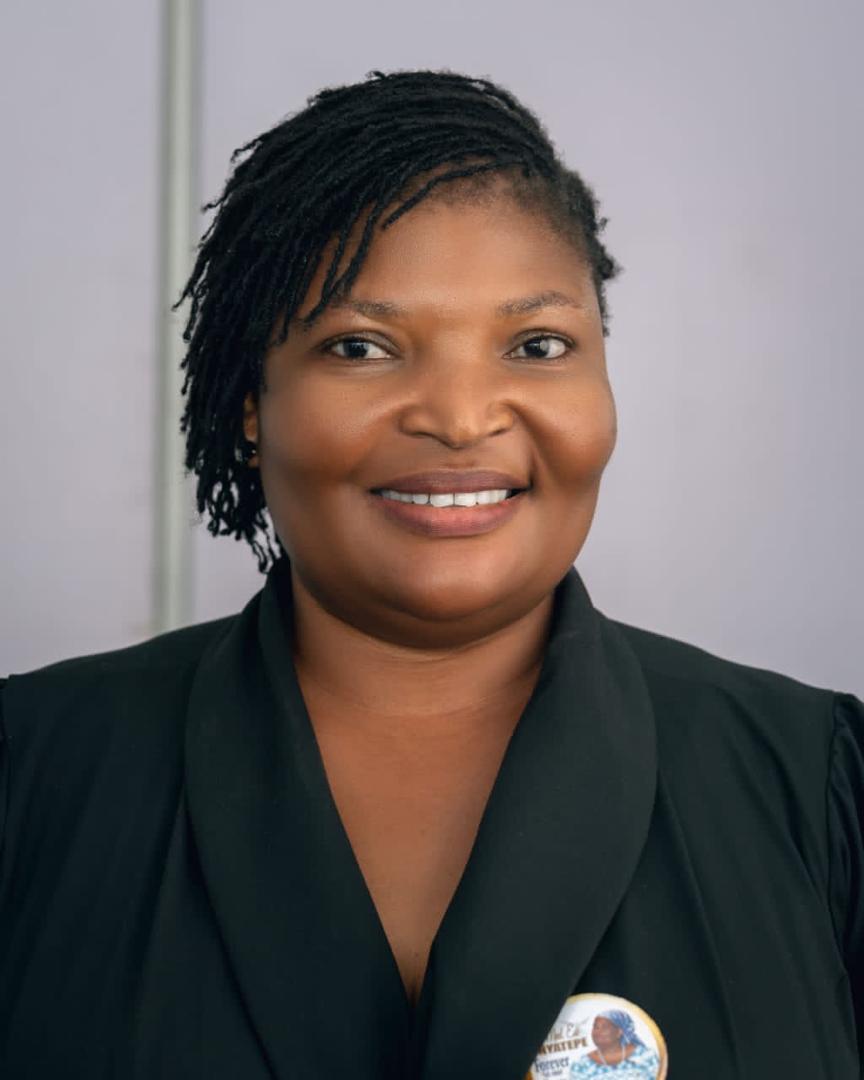
Bridget Mensah is a PR, Marketing & Communications professional and General Secretary of the Network of Women in Broadcasting (NOWIB). A dedicated feminist and advocate for women in media, she champions workplace excellence whilst empowering voices and building bridges across the industry. Bridget is passionate about amplifying women’s stories and driving positive change in Ghana’s media. She can be reached via email at [email protected]
Image 1 Source: Peoples Dispatch
Image 2 Source: UNICEF -Kodu Technology a startup producing biodegradable pads made from banana & Plantain waste
Post Views: 10
Discover more from The Business & Financial Times
Subscribe to get the latest posts sent to your email.