

There is a quiet revolution happening on the other side of the world, and if Africa is not paying attention, it is making a very costly mistake.

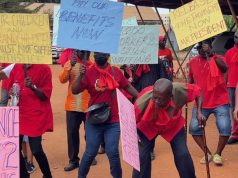
Photo credit.The Courier Journal
In South Korea, one of the most educated, technologically advanced societies on the planet, women have stopped. Not stopped marching. Not stopped tweeting. Not stopped arguing in comment sections or drafting petitions or waiting to be understood. They have stopped entirely. No marriage. No sex with men. No childbirth. No dating. This is the 4B movement, named after four Korean words each beginning with “Bi,” meaning “without”: Bihon, Bisekseu, Bichulsan, Biyeonae. Four complete, deliberate withdrawals from the social contract that was never truly mutual to begin with.
Before anyone reaches for the word “radical,” it is worth pausing to understand what pushed these women there.
Korean women were not sitting idle. They were educated to the highest standards, often outperforming their male peers academically. They secured jobs, built careers and contributed to the remarkable economic engine that is modern South Korea. And then, quietly and reliably, the system asked them to put all of that down. Get married. Leave the workforce. Raise children largely alone while husbands remained emotionally absent. Endure a culture that ranked women by age, fertility and physical appearance as though they were produce at a market stall. They were groped on subways and filmed without consent. They were passed over for promotions and told, simultaneously, to smile about it. They had been dismissed so thoroughly, for so long, that when they finally chose silence, an entire nation felt the foundations shake.
South Korea’s birth rate is now the lowest in the world. The government, which spent decades treating women as reproductive utilities, is now in full panic mode. It is a crisis entirely of its own making.
Now, with respect and with genuine affection for this continent and for Ghana in particular, let us ask the uncomfortable question: are we paying attention?
Because the story of the Korean woman is not a foreign story. It is a story told in different languages across every African city and village, from Accra to Nairobi, from Lagos to Johannesburg. The African woman is expected to be educated, yes, Ghana now has more women than men in university, but not too educated. Ambitious, certainly, but not more so than her husband. She may build a career, provided she does not allow it to interfere with her primary duty: the home. She raises children, often with minimal emotional or practical support. She is told her worth is tied to her womb, her willingness, and her silence. And when she gently pushes back, she is accused of being “westernised,” of having been “spoiled by feminism,” of forgetting where she comes from.
In Ghana, a woman who earns her degree is “too proud.” A woman who sets a boundary is “a feminist,” and not in the complimentary sense. A woman who chooses herself is told that Western influence has corrupted her. A woman who remains single past a certain age becomes a cautionary tale at family gatherings. A woman who speaks her mind is told, with raised eyebrows, to lower her voice. At what point, one must genuinely ask, does she get to simply exist?
The 4B women of Korea were not women who hated men. That is the lazy interpretation, and it is wrong. These were women who had been ground down by a thousand small indignities, accumulated over years, until the weight of it became unbearable. They were not angry so much as they were exhausted. There is a profound difference between the two, and it is a difference that African societies would do well to understand before mistaking one for the other.
What makes the 4B movement so significant is not its conclusions but its method. These women did not march. They did not demand. They did not try to fix or educate or reform the men who had failed them. They simply left the table. And that collective, deliberate silence proved more powerful than any protest placard ever could. When women withdraw from the systems that depend on them, those systems do not quietly adjust. They collapse.
Africa is not South Korea. The cultural, religious and socioeconomic contexts are vastly different, and no one is predicting a carbon-copy 4B movement. But the conditions that create it, exhaustion, disrespect, being needed but not heard, are already here. The resentment of being needed but not respected, of being celebrated as a mother but ignored as a human being, of being valued for what one produces rather than who one is: these are universal experiences.
And young African women are watching. They are connected, educated and increasingly unwilling to accept the terms of a contract they never agreed to sign. They see their Korean counterparts not as radicals but as women who finally, after everything, decided they had had enough. That is not a warning to be dismissed. It is a mirror to be taken seriously.
The question for Africa, and for Ghana specifically, is not whether a 4B movement will arrive on these shores. The question is whether African societies are willing to examine, honestly and without defensiveness, what it is that they are asking of women. Whether they are prepared to acknowledge that the exhaustion is real, that the grievances are legitimate, and that a society which grinds its women down is not a society that can afford to be surprised when something, eventually, gives. This is not a question for women. We live the answer daily. It is a question for the men who love us, the governments that need us, and the institutions built on our unpaid labour.
The Korean women did not wake up one morning and decide to be extreme. They were pushed there. Slowly. Painfully. Over years of being dismissed, diminished and gaslit by a system that needed them desperately but respected them minimally.
Africa, the conversation is already underway. The only choice left is whether to have the conversation honestly, or to wait until silence is the only answer left.
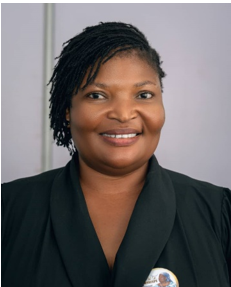
Bridget Mensah believes the right story, told well, can change everything. A communications strategist and gender equality advocate with 10+ years in Ghana’s media industry, she uses words as tools for accountability and amplification particularly for women. She leads communications for the Network of Women in Broadcasting (NOWIB), She is the Head of Corporate Affairs at Ghana Digital Centres
Post Views: 40
Discover more from The Business & Financial Times
Subscribe to get the latest posts sent to your email.