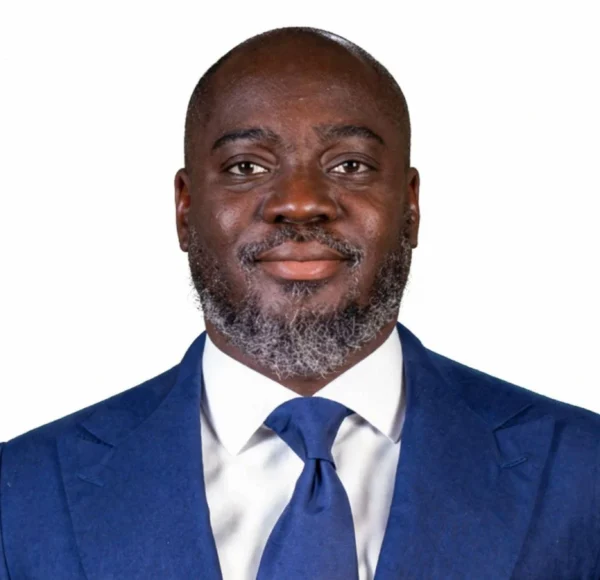
Freshly returned from a forum in Luxembourg, Edmond Boateng wants a more coordinated network of part-time envoys – and a ‘landmark’ legacy project to show for it
By Daniel Kojo HOLLIE
Fresh from a diplomacy forum in Luxembourg, Edmond Boateng is in little doubt about where the energies of Ghana’s honorary consuls should be directed. “Economic diplomacy is one of our most important responsibilities,” says the newly elected secretary of the Honorary Consular Corps Ghana (HCCGH), a body whose members straddle the worlds of commerce and statecraft.
His election comes as Ghana, having recently brought a long run of International Monetary Fund programmes to a close, courts foreign capital with renewed urgency. For Hon. Boateng, the corps, a network of locally resident envoys who represent foreign governments in a part-time, largely honorary capacity, is an under-used instrument in that effort.
Unlike career diplomats posted from abroad, honorary consuls are typically prominent residents of the host country, appointed to advance a foreign state’s commercial and cultural interests. Their value lies less in protocol than in local knowledge and connections, assets the new secretary intends to marshal more systematically.
A corps built on connection
His pitch is built on connection. Hon. Boateng wants “a more connected, coordinated and professionally engaged consular community,” knit together by stronger communication and active participation among members. Coordination, he says, is the first of his strategic priorities: deepening the flow of information and collaboration across a corps whose members otherwise operate largely in isolation, each tending the interests of a different country.
The second priority is engagement, members to network, interact professionally and take a more active part in the corps’s work, while building what he calls “constructive partnerships” that broaden diplomatic reach. The ambition, in his words, is a body that is “responsive, connected and forward-looking.”
Asked which values will anchor his tenure, Hon. Boateng reaches first for professionalism, which he frames as the bedrock of credible representation, alongside mutual respect. He pairs it with inclusiveness, arguing that members should be drawn into decision-making rather than handed conclusions. “When we come together to discuss issues, we should be able to reach a unified position,” he says, describing a corps that approaches matters “with a common purpose and shared vision.”
“We must promote trade, investment, culture and diplomatic relations… By doing so, we contribute meaningfully to economic growth and international cooperation.”
Where the openings lie
It is on trade and investment that his agenda is most concrete. Honorary consuls, he argues, have a duty to connect the countries they represent with opportunities inside their jurisdictions, and to channel those opportunities back the other way.
The Luxembourg forum, which examined how to align diplomacy with economic engagement, hardened that conviction. “That discussion reinforced my belief,” he says, casting the corps as a conduit for the cross-border deal-making Ghana’s recovery will require.
Where, then, do the openings lie? Hon. Boateng begins not with an industry but with the machinery of the state. Institutions such as the ministries of foreign affairs and finance are, in his telling, the indispensable stakeholders whose backing any cross-border initiative requires.
Beyond the seat of government, he points to health, education, infrastructure and social development as fields ripe for international collaboration, before adding, with characteristic breadth, that “every sector plays an important role in Ghana’s development agenda, and all deserve attention and support.”
That catholic view of opportunity is at once a strength and a question. It signals openness to partners across the economy; it also leaves open where a part-time corps, stretched across dozens of represented countries, might concentrate its limited firepower to greatest effect.
Challenges, motivation and a legacy
On the obstacles ahead, Hon. Boateng is more guarded. Like any human institution, he says, the corps will meet challenges; the discipline lies in identifying them early and putting mitigation measures in place. He declines to itemise them, preferring to frame difficulty as something to be managed rather than dramatised. “Once challenges are properly understood,” he says, “it becomes much easier to achieve the collective vision and objectives of the organisation.”
His own path to the secretaryship, he says, was prompted by others. Encouraged by stakeholders who saw in him the “qualities, character and strengths” the role demanded, he consulted widely before standing. “Sometimes, as individuals, we may not fully appreciate our own potential until others point it out,” he reflects. He credits his management experience, and the networks accumulated over a career of professional engagements, as the foundations he will build on. “By the grace of God, I was elected,” he adds, “and I am committed to living up to the expectations that come with this responsibility.”
What he most wants to be remembered for is something tangible. Subject to the approval of the corps’s leadership, Hon. Boateng hopes to champion what he describes as a “landmark initiative” a lasting, visible project that would stand as a symbol of the corps’s contribution, benefit future generations and, in his phrase, “bring smiles to people’s faces.” The specifics remain deliberately open, but the aspiration is clear: a legacy measured in something built, not merely convened.
For now, his message is one of continuity and partnership. To fellow consuls he offers encouragement to “continue the excellent work” and to operate “as one family” in pursuit of a shared vision for the corps, Ghana and the countries they represent. To the wider public, government, business and civil society alike, he issues a broader call to see themselves as partners in national development, deploying their “positions, influence and resources for the benefit of society.”
It is an expansive vision for a body that operates mostly out of public view. Whether the Honorary Consular Corps Ghana can convert goodwill and good intentions into the investment flows, and the landmark project, Hon. Boateng envisages will be the measure of his tenure.
Post Views: 92
Discover more from The Business & Financial Times
Subscribe to get the latest posts sent to your email.