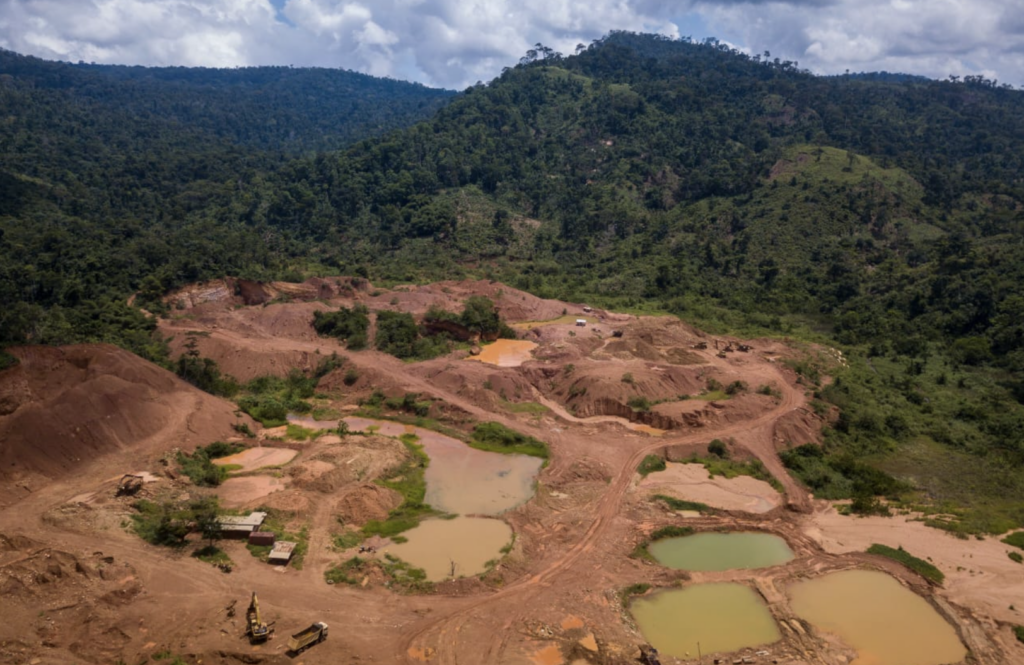
Dr Prince Mawutor, a researcher at the Centre for Plant Medicine Research, has warned that illegal mining and toxic chemicals are threatening medicinal plants and public health.
He said the destruction of forests and contamination of soil and water bodies are reducing the availability, quality and safety of medicinal plants used in healthcare.
Dr Mawutor, who raised the concern in Accra, said many medicinal plants and pharmaceutical products derived their active compounds from forest resources, most of which grew naturally in undisturbed ecosystems.
“Our forest reserves are the natural habitat for many of these medicinal plants. Once these ecosystems are disturbed through mining activities, the conditions necessary for their growth are altered, and their availability declines,” he said.
Dr Mawutor said illegal mining in forest reserves caused deforestation and disrupted ecological conditions required for plant survival.
“Some plants require shade while others need sunlight. When forests are cleared, these ecological balances are destroyed, making it difficult for many medicinal plants to survive,” he said.
Dr Mawutor said mining introduced harmful chemicals such as mercury, lead, acids and selenium into the soil, displacing essential nutrients needed for plant growth.
He said such contamination affected phytochemicals, the active compounds responsible for medicinal properties.
“As a result, plants from mining areas often show signs of stress such as yellowing leaves and poor development, which reduces their quality and effectiveness,” he said.
Dr Mawutor said polluted water sources further compounded the problem as plants absorbed heavy metals that accumulated in their tissues.
“These metals end up in the leaves, bark, and roots, the very parts used for medicine. This reduces the beneficial compounds and increases harmful substances, making them unsafe for human use,” he stated.
Dr Mawutor warned that consumption of contaminated herbal medicines posed serious health risks.
“Exposure to heavy metals like mercury and lead can lead to complications including developmental abnormalities, birth defects, and other adverse pregnancy outcomes,” he cautioned.
He said prolonged exposure could also damage vital organs such as the kidneys and liver.
Dr Mawutor said the Centre had instituted strict quality control measures, including laboratory testing to detect heavy metals, with contaminated materials rejected.
“Samples are then tested in advanced laboratories to detect heavy metals. Any material that exceeds permissible limits is rejected and not used for production,” he said.
Dr Mawutor warned that the spread of illegal mining could limit access to safe raw materials for herbal medicine production.
“If this continues, farmers will lose their livelihoods, and we may struggle to obtain uncontaminated plants for medicine production,” he said.
Dr Mawutor called for investment in the cultivation of medicinal plants such as Khaya senegalensis, Morinda lucida, Monodora myristica and Clausena to ensure sustainable supply.
He urged strict enforcement of laws against mining in forest reserves and intensified public education on its long-term effects.
Dr Mawutor warned that failure to act could cost Ghana its forests and the foundation of both herbal and orthodox medicine.
He cautioned that continued environmental degradation could lead to food insecurity, water shortages and rising healthcare costs, and called for collective action to protect the environment.
Source: GNA