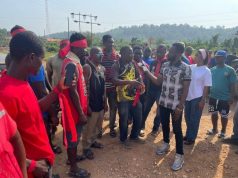

The Ghana Immigration Service (GIS) has interdicted six officers for gross misconduct after a viral video showed them verbally assaulting a superior officer at the Offinso Inland Checkpoint in the Ashanti Region on November 25, 2025, marking one of the most public breaches of discipline in the Service’s recent history.
In a statement issued on Thursday, November 28, 2025, the Service said the officers’ conduct was a clear breach of the Ghana Immigration Service Code of Conduct and fell far below professional standards. The superior officer, identified as a Deputy Commissioner of Immigration (DCOL), was travelling as a passenger on a commercial vehicle when the incident occurred.
The behaviour captured in the video marked by verbal assault, lack of civility, and open disrespect toward a superior officer falls far below the standards expected of personnel of the Service, the GIS stated. It described the conduct as unacceptable, particularly given the emphasis on professionalism and discipline in the execution of official duties.
The video, which circulated widely on social media platforms, captured officers stationed at the checkpoint confronting the Deputy Commissioner in what observers described as an unprecedented display of insubordination. The footage sparked immediate public outcry and calls for accountability within the uniformed service.
The Service added that the Comptroller General of Immigration has reiterated that professionalism, respect for authority, and civility remain core values of the Service, warning that any behaviour undermining these values will be met with swift and decisive action. The interdicted officers will face further internal investigations.
GIS emphasized its ongoing commitment to promoting professionalism and proper conduct in dealing with travellers and performing official duties. The Service apologized for any embarrassment caused to the public and assured Ghanaians of its continued dedication to discipline, professionalism, and accountability.
The Comptroller General reaffirmed that respect for authority and integrity are core principles of the Service. He warned that any behaviour undermining these values will face swift and firm disciplinary action, signaling zero tolerance for misconduct regardless of rank or circumstance.
Interdiction, a standard disciplinary measure in Ghana’s uniformed services, suspends officers from active duty pending investigation and potential prosecution. During interdiction, officers typically receive reduced pay and lose certain privileges while authorities examine allegations against them.
The six officers will undergo internal investigation procedures established under the Immigration Service Regulations, 2016 (Legislative Instrument 2245). These procedures provide for thorough examination of facts, opportunity for defendants to present their case, and recommendations for appropriate sanctions if misconduct is established.
Possible outcomes of the investigation range from exoneration if circumstances warrant, to penalties including reprimand, demotion, dismissal from service, or referral to law enforcement for criminal prosecution depending on the severity of findings. The interdiction ensures officers cannot interfere with investigations while proceedings unfold.
The incident at Offinso Inland Checkpoint raises questions about command structure, discipline enforcement, and morale within the Immigration Service. Observers note that such open disrespect toward a Deputy Commissioner, one of the Service’s highest ranking officers, suggests potential systemic issues requiring attention beyond punishing individual offenders.
Some commentators have called for investigation into what precipitated the confrontation. While the video clearly shows improper conduct by junior officers, questions remain about context, whether the Deputy Commissioner identified himself appropriately, and what exchanges occurred before recording began.
The GIS operates multiple inland checkpoints across Ghana to monitor movement of persons, detect irregular migration, and enforce immigration laws away from border posts. These checkpoints occasionally generate controversy when officers allegedly engage in unprofessional conduct or harassment of travellers.
Offinso Inland Checkpoint, located in the Ashanti Region, serves as a control point along major transit routes. Officers stationed there routinely check passengers on commercial vehicles, verify identification documents, and detain persons suspected of immigration violations.
The checkpoint has previously featured in public complaints about officer behavior. Civil society organizations monitoring security service conduct have documented alleged cases of bribery solicitation, unlawful detention, and discourteous treatment of passengers at various immigration checkpoints nationwide.
The Comptroller General of Immigration, Kwame Asuah Takyi, has prioritized discipline and professionalism since assuming leadership. Under his tenure, the Service has taken action against officers involved in various infractions including recruitment fraud, visa scams, and misconduct toward the public.
In January 2024, GIS interdicted 27 officers including three senior officers for alleged recruitment and visa fraud that tarnished the Service’s reputation. The cases involved violations of Immigration Service Regulations requiring thorough investigation before appropriate legal actions against those found guilty.
In March 2025, the Comptroller General recalled 78 personnel who had been on interdiction, signaling commitment to resolving disciplinary matters expeditiously. The recall demonstrated the administration’s resolve toward due process while ensuring that disciplinary issues would no longer be prolonged unnecessarily.
GIS has also issued warnings about fraudulent recruitment schemes, cautioning the public against falling victim to scammers impersonating immigration officials. The Service maintains that all legitimate recruitment exercises are publicly advertised through official channels with transparent processes.
The Service recently began operations targeting undocumented migrants in Accra and other urban centers. These enforcement actions, while within GIS mandate, have generated debate about implementation methods and treatment of foreign nationals lacking proper documentation.
Immigration officers have also faced violence in the line of duty. The Comptroller General previously visited an officer injured during an attack at the Gbintri checkpoint, highlighting dangers personnel encounter while executing duties at remote locations.
Public reaction to the Offinso incident has been mixed. Many Ghanaians condemned the junior officers’ behavior, arguing that regardless of circumstances, disrespecting a superior violates military style discipline expected in uniformed services. Others called for investigation into whether the Deputy Commissioner acted appropriately.
Some social media users questioned why a Deputy Commissioner would travel on a commercial vehicle rather than official transport, suggesting this might have contributed to confusion at the checkpoint. However, GIS regulations do not prohibit officers from using public transportation during personal travel.
The incident underscores tensions inherent in hierarchical organizations where junior officers wield authority at operational levels while senior officers retain ultimate decision making power. Effective command and control requires mutual respect, clear communication, and adherence to established protocols.
Looking ahead, the investigation’s outcome will signal how seriously GIS treats breaches of discipline and whether the Service can maintain standards amid pressures facing officers at checkpoints. The case may prompt review of training programs, supervision mechanisms, and grievance procedures.
The viral video’s role in triggering accountability demonstrates social media’s power in exposing misconduct that might otherwise go unreported. Citizens increasingly document interactions with law enforcement and security personnel, creating public record that compels institutional responses.
For the interdicted officers, the investigation represents a career defining moment. If found guilty of gross misconduct, they face possible dismissal from a service that provides stable employment, pension benefits, and social status. Their futures depend on investigation findings and recommendations.
The Deputy Commissioner involved has not made public statements about the incident. Standard protocol typically requires senior officers to channel complaints through official channels rather than engaging publicly while internal investigations proceed.
The GIS statement emphasized that the Service remains committed to upholding its mandate of regulating and monitoring entry, residence, employment, and exit of non Ghanaians while maintaining border security. Professionalism in executing this mandate requires officers at all levels to demonstrate courtesy, respect, and adherence to law.
As investigations continue, the incident serves as a reminder that public service demands high standards of conduct, particularly from uniformed personnel who represent government authority. The Immigration Service’s response will influence public confidence in its ability to police itself and maintain discipline.