

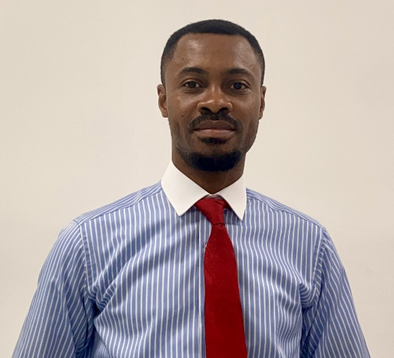

Desmond Isaac Addo
Email: [email protected]
The Ministry of Finance has announced that government has formally applied to the Bank of Ghana for a licence to establish the proposed Women’s Development Bank. This marks an important step in one of its flagship financial inclusion initiatives. It also means the idea has moved from policy discussion into regulatory engagement, where the practical design is now being reviewed.
The announcement has reopened a familiar debate. Some see it as a long overdue intervention to improve access to finance for women entrepreneurs. Others question whether Ghana needs another bank at a time when the financial sector already has many institutions.
But beneath this debate is a more important question. What exactly is a Women’s Development Bank, and why is Ghana pursuing it?
To answer that, we first need to understand the economy it is meant to serve.
Women and the Structure of Ghana’s Economy
Women make up just over half of Ghana’s population, about 50.8%. But their role in the economy goes far beyond population figures. Across markets, farms, workshops, and small businesses, women are a major force in the informal economy that keeps daily life running in both urban and rural areas.
These include traders in places like Makola and Kejetia, food vendors who sell from early morning, farmers in rural communities, hairdressers, seamstresses, and small shop owners. Many of these businesses are informal, but they are central to how goods, services, and money move in the country.
Small and medium-sized enterprises contribute about 70% of GDP and more than 80% of jobs in Ghana. A large share of these businesses are owned or operated by women. This means that when we talk about economic growth, we are also talking about whether women can access the finance they need to expand.
Long before entrepreneurship became something taught in classrooms, Ghanaian women were already doing it at scale.
At Makola, Kaneshie, Agbogbloshie, Kejetia, Suame, and Bantama, women have built strong businesses through experience. They manage credit without formal contracts, move goods without consultants, and run complex trading systems under constant pressure.
The Financing Gap Is More Than Just a Lack of Money
One of the biggest challenges facing women entrepreneurs in Ghana is not a lack of effort or ideas. It is what is known as the financing gap. This is the difference between what businesses need to grow and what they are able to access from financial institutions.
Across the country, many women run profitable businesses, employ workers, and support local economies. But they still struggle to get financing because the financial system is built around a different type of business model.
Real-World Constraints Behind the Gap
To make this clearer, here are real-life examples that reflect the challenges many women face in accessing finance.
- Lack of Acceptable Collateral
Meet Naa Aku.
She is a commodity aggregator in the Northern Region. Every harvest season, she buys maize, soybeans, and groundnuts from farmers, stores them in warehouses, and supplies processors and exporters in Accra and Tema. Her business is profitable but seasonal. She needs large amounts of money at harvest time when prices are low.
When she applies for a loan, the bank tells her she needs land or a house in her name as collateral. But she does not own these assets. Her real business assets are warehouse receipts, stock, and supply contracts. These have real economic value, but most banks do not accept them as collateral. So, her loan is rejected, not because her business is weak, but because it does not fit the traditional lending model.
- Informality and Limited Financial Records
Meet Delphina.
She runs two cold stores in Tema and Takoradi and wants to build a cold-chain facility in Accra to store and distribute perishable goods like tomatoes and fish. The idea is strong because Ghana loses a lot of food after harvest due to poor storage systems. But even though her business is profitable, it is informal. She keeps handwritten records, uses cash for most transactions, and does not have audited accounts. Because of this, the bank cannot properly assess her business performance and considers the project too risky.
Her problem is not failure. It is that her success is not visible in the format banks require.
- Limited Financial Literacy and Business Translation Capacity
Meet Mooley, a tomato market queen.
She has spent more than twenty years moving tomatoes from farming communities to urban markets. She understands pricing, transport, and seasonal supply better than many trained professionals. But when she wants to expand, she is asked to provide audited accounts, cash flow statements, and a full business plan.
She has never been trained to prepare these documents. So even though she understands her business deeply, she cannot easily translate it into the formal language banks require. Her challenge is not business skill. It is translation into financial documentation.
- The High Cost of Borrowing
Meet Ewuraesi.
She wants to build a private basic school in a growing community called Mayera. But schools take time before they become profitable. You must build classrooms, hire teachers, and wait for enrolment to grow. The loan she if offered comes with high interest rates and immediate repayment obligations. When she adds up all the costs, the project no longer makes financial sense. So, she drops the idea because borrowing money is too expensive for the nature of the project.
- Financial Products That Do Not Match Business Realities
Meet Emefa at Makola Market.
She has traded for more than fifteen years. Her income changes depending on seasons, demand, and exchange rates. But when she goes for a loan, she is given a standard product with fixed monthly repayments. The bank assumes she earns the same amount every month. But her business does not work that way. Some months are strong, others are slow. So, the problem is not her business. It is that the loan structure does not match how she earns her income.
Although these women run very different businesses, they all face the same underlying challenge. The financial system was not designed around the realities of how they and many women in Ghana actually do business. A Women’s Development Bank seeks to change that by designing financial solutions around the entrepreneur, instead of expecting the entrepreneur to fit the system.
What a Women’s Development Bank Actually Does Differently
This is where the Women’s Development Bank becomes different from a normal commercial bank. It is not just about who it serves. It is about how it understands business, how it gives loans, and how it supports growth.
In practical terms, a Women’s Development Bank would function as a development finance institution with both wholesale and retail lending capacity.
- It expands what counts as bankable
Instead of only looking at land or buildings, it also accepts things like warehouse receipts, inventory, supply contracts, mobile money records, and business relationships.
This means someone like Naa Aku can access financing using the real assets of her business, even without owning property.
- It uses real business performance to give loans
Instead of relying only on formal documents, it looks at how money flows in the business, who the customers are, and how income behaves over time.
This allows people like Delphina and Mooley to access financing even without audited accounts.
- It matches repayments to real business cycles
Instead of fixed monthly repayments, it allows repayment to follow how the business earns money.
For example, traders and farmers can repay after harvest or during peak trading periods. This means someone like Ewuraesi can repay her loan after the school begins generating income, instead of struggling with repayments before the business has had time to grow.
- It reduces risk by sharing it instead of avoiding it
Instead of rejecting applicants because they are seen as risky, it spreads risk using guarantees, blended funding, and insurance support.
This allows people like Emefa to access financing even when their income is not consistent every month.
- It builds stronger businesses, not just gives loans
It also trains entrepreneurs in bookkeeping, business planning, and formal registration.
It helps people move from informal trading into structured businesses that can grow and eventually access mainstream banking.
The Global Shift Toward Women’s Financial Inclusion
Globally, institutions such as the World Bank, the International Finance Corporation (IFC), the African Development Bank, the International Monetary Fund (IMF), and the United Nations increasingly view women’s financial inclusion as an economic growth strategy rather than simply a social intervention.
Their research consistently shows that when women-owned businesses gain better access to finance, they invest more, create more jobs, increase productivity, and contribute to stronger and more resilient economies. Programs such as We-Fi and AFAWA have been built around this understanding.
Why Ghana Is Pursuing a Women’s Development Bank
Ghana is aligning with this global shift.
The goal is not to create another bank for the sake of it. The goal is to fix a part of the financial system that does not fully serve a large and productive segment of the economy.
It is about directing capital to where real economic activity is already happening but not fully supported.
What This Means for Ghana
In practical terms, this proposal signals a shift in how Ghana is thinking about financial inclusion and development finance. It suggests a move away from a one-size-fits-all banking model toward a more targeted system that recognizes how different parts of the economy actually operate.
If properly structured, a Women’s Development Bank would not replace commercial banks, but work alongside them to extend credit into segments they typically cannot serve effectively. It would sit within the broader financial system, under Bank of Ghana oversight, while using development finance tools to absorb higher risk, support informal enterprises, and help viable businesses transition into the formal economy.
In simple terms, it is about widening the financial system so that more productive economic activity can be financed, not excluded.
Final Thought
A Women’s Development Bank is not just another financial institution. It is an attempt to correct a mismatch between how the financial system works and how a large part of Ghana’s economy actually functions.
In Ghana, economic activity does not only happen in offices and boardrooms. It happens in markets, farms, transport systems, and small businesses where women play a central role every day. The question has now shifted from whether Ghana needs a Women’s Development Bank to how it will be designed, governed, and made effective.
Ultimately, the success of the Women’s Development Bank will not be measured by the number of loans it gives. It will be measured by the number of women-owned businesses it helps grow into stronger businesses, larger employers, and greater contributors to Ghana’s economy.
Post Views: 55
Discover more from The Business & Financial Times
Subscribe to get the latest posts sent to your email.