


By Joshua Worlasi AMLANU & Ebenezer Chike Adjei NJOKU
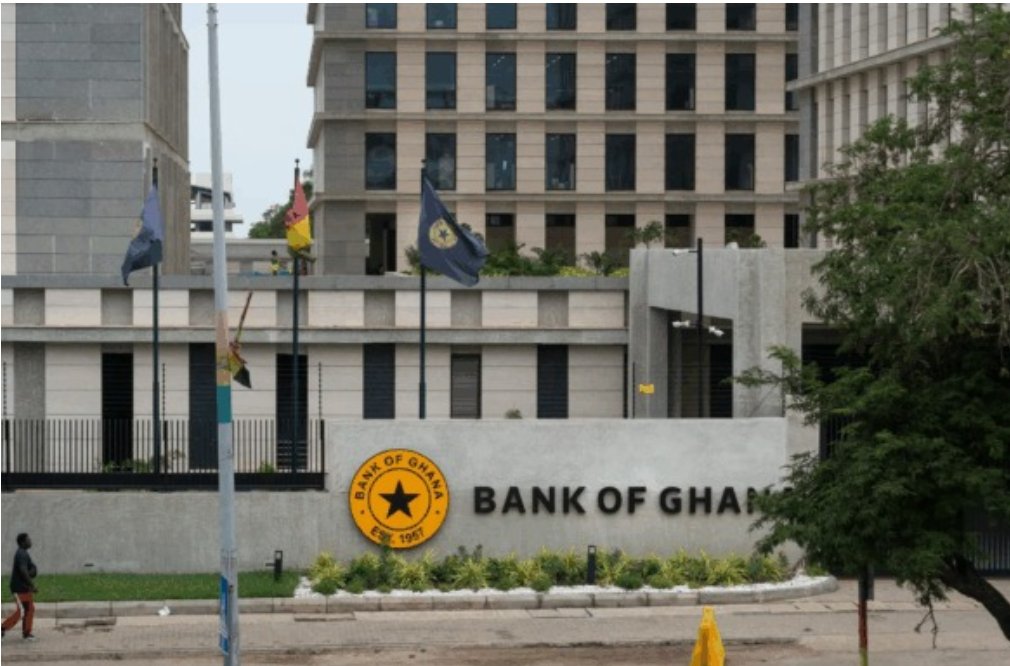
The Bank of Ghana’s intensifying use of open market operations (OMO) to absorb excess liquidity is emerging as a central pressure point on its balance sheet, with sterilisation costs now the largest single expense line and set to remain elevated as the stock of interest-bearing liabilities expands.
At the core of the issue is the scale of liquidity mop-up required to sustain recent macroeconomic gains. The central bank’s OMO stock reached GH¢93.56billion in 2025, nearly tripling within a year, on account of aggressive sterilisation to anchor inflation and stabilise the currency.
While the policy stance has delivered measurable results, including a sharp disinflation trend and improved external balances, it has also created a structural cost burden that is expected to weigh on the Bank’s finances through 2026 and 2027.
The rise in OMO liabilities is closely tied to legacy effects of the Domestic Debt Exchange Programme (DDEP), which impaired the Bank’s balance sheet through a GH¢35.67billion haircut on government securities. Three years after the restructuring, parliamentary approval for that haircut remains pending – leaving a significant governance and legal overhang that has yet to be resolved.
Against this backdrop, the central bank’s 2025 financial and operational outcomes present strong macroeconomic stabilisation on one hand and mounting quasi-fiscal costs of monetary operations on the other.
Disinflation achieved, but at a cost
The domestic inflation trajectory shifted decisively in 2025 with headline inflation declining to 5.4 percent in December 2025 from 23.8 percent a year earlier, supported by tight monetary policy, fiscal consolidation and currency appreciation. Core inflation, which strips out energy and utility prices, also eased; indicating a broad-based moderation in underlying price pressures.
Monetary aggregates, similarly, reflected this restrictive stance. Reserve money growth slowed sharply to 12.5 percent from 47.8 percent in 2024 while broad money supply growth declined to 16.5 percent from 31.9 percent. These outcomes were driven, in part, by intensified liquidity sterilisation through OMO and structural reserve measures.
The transmission of policy easing also became evident in financial conditions as the 91-day Treasury-bill rate fell to 11.08 percent in December 2025 from 27.73 percent a year earlier, while average lending rates declined to 20.45 percent from 30.25 percent. This supported a recovery in real private-sector credit growth to 13.1 percent, up from 2 percent in 2024.
However, the disinflation gains were not without cost. The same liquidity management operations that helped compress inflation have expanded the central bank’s interest-bearing liabilities, increasing its operating expenses and raising questions about the current framework’s sustainability.
OMO as the dominant sterilisation tool
Open market operations have become the primary instrument for managing excess liquidity. By issuing short-term securities, the central bank absorbs surplus funds from the banking system – aligning market rates with its policy stance.
But this approach carries a direct financial cost. Unlike reserve requirements – which are non-interest-bearing – OMO instruments require the Bank to pay interest, creating a recurring expense that grows with the stock of sterilisation.
With OMO liabilities now at GH¢93.56billion, the scale of these costs is no longer marginal. Instead, they are shaping the Bank’s income statement and limiting its financial flexibility.
The expansion in OMO reflects both cyclical and structural factors. On the cyclical side, liquidity conditions improved sharply in 2025 driven by strong external inflows, fiscal consolidation and increased confidence in the domestic economy. On the structural side, legacy liquidity from earlier macroeconomic imbalances continues to require active management.
The central bank’s decision in May 2025 to maintain its policy rate at 28 percent while introducing changes to its liquidity management framework gave a pointer to the balancing act. The Monetary Policy Committee indicated that holding the rate steady was necessary to “reinforce disinflation momentum and anchor stability in the face of global uncertainties and elevated domestic inflation”.
At the same time, the Bank adjusted its dynamic cash reserve ratio (CRR) framework to enhance structural liquidity absorption.
Shift toward structural tools
In May 2025, BoG revised the CRR framework, which was a strategic attempt to reduce reliance on costly OMO operations. By tying reserve requirements to banks’ loan-to-deposit ratios and enforcing currency-matched reserves, the policy increases the volume of funds held at the central bank without incurring interest expenses.
Under the framework, banks with lower loan-to-deposit ratios face higher reserve requirements: 25 percent for ratios below 40 percent, 20 percent for ratios between 40 percent and 55 percent and 15 percent for ratios above 55 percent. Additionally, foreign currency deposits must now be backed by reserves in the same currency.
This reform has already contributed to higher reserve balances and helped absorb excess liquidity. It also aligns with broader policy objectives by discouraging excessive investment in government securities and encouraging lending to the private sector.
From a balance sheet perspective, the shift toward structural tools offers a potential pathway to reduce sterilisation costs. By substituting part of the OMO burden with non-interest-bearing reserves, the central bank can limit the growth of its interest expenses while maintaining effective liquidity control.
However, the transition requires careful calibration. Over-reliance on reserve requirements could tighten credit conditions and disrupt interbank market functioning. The challenge is to strike a balance between cost efficiency and policy effectiveness.
Fiscal, external buffers provide support
The central bank’s policy efforts have been reinforced by improved fiscal and external conditions. Fiscal consolidation remained on track in 2025, with the overall deficit narrowing to 0.5 percent of Gross Domestic Product (GDP) – well below the target of 3.5 percent. The primary balance recorded a surplus of 2.8 percent of GDP, exceeding expectations.
Public debt declined to 45.5 percent of GDP at end-November 2025 from 63.1 percent a year earlier, reflecting the combined effects of restructuring and disciplined fiscal management.
The external sector also strengthened significantly. Ghana recorded a current account surplus of US$9.1billion – up from US$1.5billion in 2024, driven by strong gold exports, increased private transfers and moderated outflows. The balance of payments posted a surplus of US$3.98billion while gross international reserves rose to US$13.8billion, equivalent to 5.7 months of import cover.
These developments supported the cedi, which appreciated by 40.7 percent against the US dollar in 2025 – reversing a 19.2 percent depreciation in the previous year. The currency has remained relatively stable in early 2026, reflecting improved fundamentals and effective liquidity management.
One-off gains mask underlying pressures
The Bank’s financial position in 2025 was also boosted by a significant but non-recurring factor, a US$3.6billion gold sale – the largest single income item in its history.
While this windfall strengthened the Bank’s income statement, it does not address the underlying structural challenges. The reliance on OMO and the associated cost burden remain persistent issues that will not be offset by one-off revenues in future periods.
This raises important questions about sustainability of the current policy mix. Without adjustments the cost of sterilisation could continue to rise, eroding the Bank’s financial position and potentially constraining its policy options.
Policy trade-offs and strategic implications
According to some market observers, the central issue is not whether liquidity should be sterilised but how it should be managed efficiently. The current framework, heavily reliant on OMO, has proven effective in achieving price stability but at a growing financial cost.
A more balanced approach would involve greater use of structural tools such as the CRR to absorb persistent liquidity, while reserving OMO for short-term adjustments and signalling purposes.
This strategy offers two key advantages. First, it reduces the direct cost of sterilisation by shifting part of the burden to non-interest-bearing instruments. Second, it reinforces incentives for banks to expand private-sector lending, supporting economic recovery.
However, the transition must be gradual and data-driven. Tightening reserve requirements too aggressively could dampen credit growth and undermine the recovery of private-sector lending observed in 2025.
There is also a broader institutional dimension. The unresolved parliamentary approval of the DDEP-related haircut continues to cast a shadow over the Bank’s balance sheet – highlighting the need for clearer governance and accountability frameworks.
Managing the cost of stability
The trajectory of OMO costs will be a critical determinant of BoG’s financial sustainability. With the stock of sterilisation liabilities already elevated, the focus is likely to shift toward optimising the mix of policy tools.
If inflation remains anchored and external conditions stay favourable, the central bank may have room to gradually reduce its reliance on high-cost sterilisation. However, this will depend on maintaining fiscal discipline, sustaining reserve accumulation and preserving confidence in the currency.
A reversal in capital flows, renewed exchange rate pressures or fiscal slippages could reintroduce liquidity pressures, requiring continued intervention.
In that context, the evolving balance between OMO and structural reserve tools will be central to policy design. The objective is not to replace one instrument with another but to achieve cost-efficient complementarity.
Post Views: 85
Discover more from The Business & Financial Times
Subscribe to get the latest posts sent to your email.