
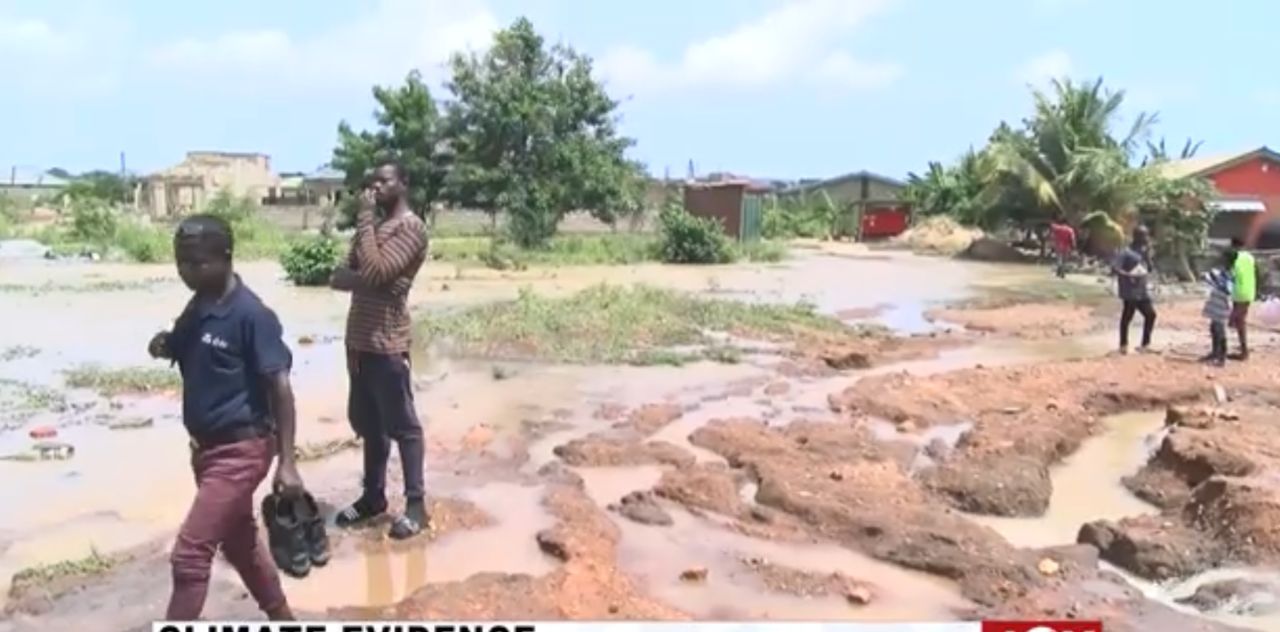
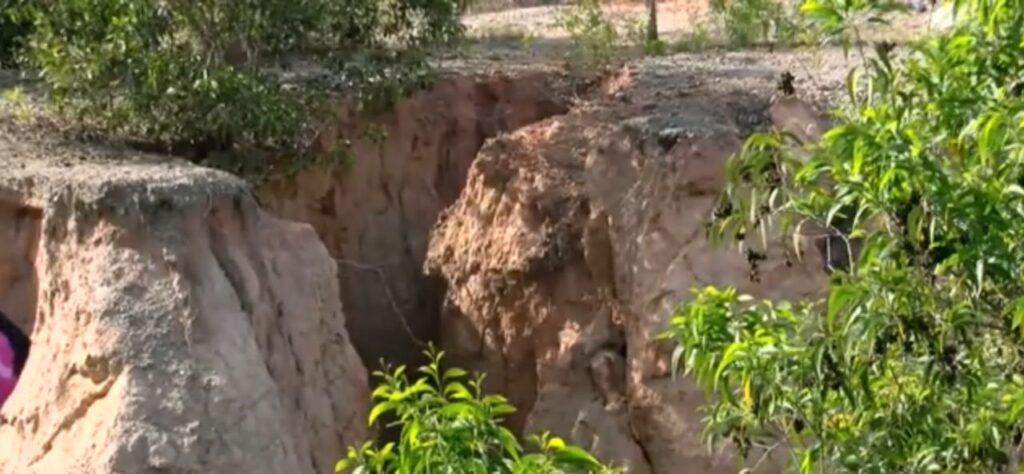
Residents living along the hillsides of Kasoa are raising concerns over increasing soil erosion as heavier and more unpredictable rainfall linked to climate change continues to threaten homes and livelihoods.
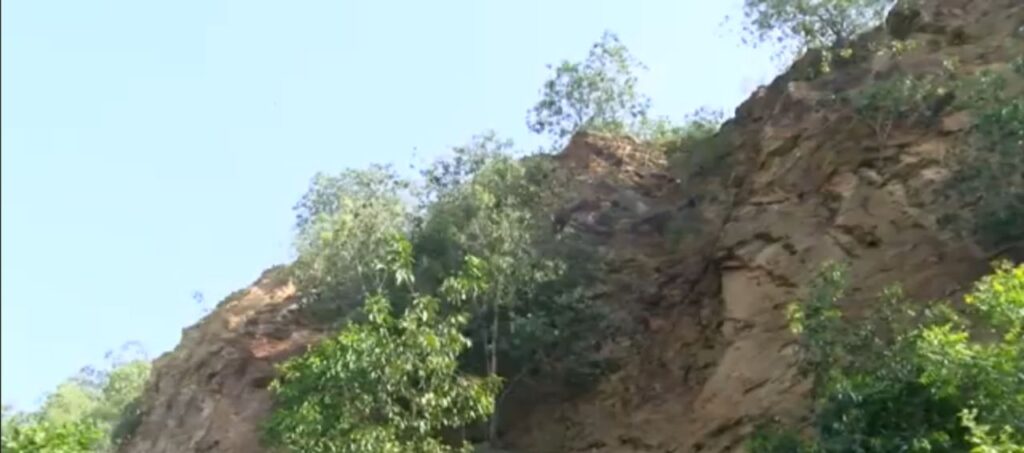
People in several hillside communities say what used to be manageable seasonal rains have now become intense downpours that wash away soil, create deep gullies, and weaken the foundations of buildings.
They blame rapid construction on slopes, poor drainage systems, and the removal of trees for worsening the problem. According to residents, each heavy rainfall now leaves fresh signs of destruction and fear.
Esther, who has lived in one of the affected communities for nearly 30 years, says the situation has become more worrying in recent times.
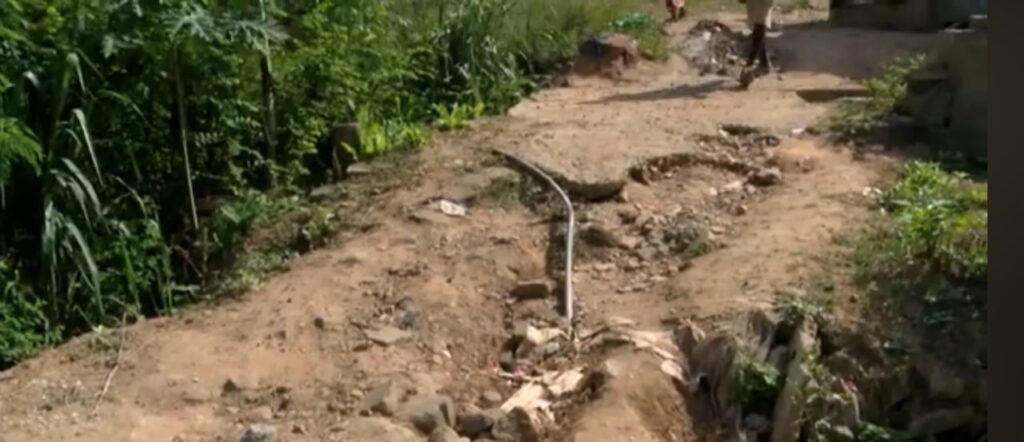
“Anytime the rains come heavily, we become scared because the water keeps removing the soil around our houses. We don’t know whether one day the land will collapse,” she said.
Across many parts of Kasoa, houses continue to expand uphill, often without proper drainage or erosion-control systems. Environmental experts warn that such developments significantly increase the risk of erosion during extreme rainfall events.
They note that vegetation plays a key role in protecting land, with studies showing that trees and plant cover can reduce soil erosion by holding soil particles together and slowing the movement of surface water.
Climate scientists say extreme rainfall events are becoming more frequent across West Africa.
The Intergovernmental Panel on Climate Change (IPCC) has indicated that even in areas where annual rainfall totals remain stable, storms are now delivering larger volumes of rain within shorter periods, increasing the risk of flooding, erosion, and landslides.
Local mason Enock Asumadu says the effects are becoming more visible after every heavy storm.
“The water now cuts through the land very fast. Every heavy rain leaves new holes in the ground, and that shows the soil is becoming weaker,” he said.
He added that the removal of trees has reduced the land’s natural ability to withstand erosion.
“When trees were here, the roots helped hold the land. Now many trees are gone, so the water washes the soil away easily. We need to plant more trees again,” he said.
Emergency management officials say the fears being expressed by residents are valid. The National Disaster Management Organisation (NADMO) says it is stepping up awareness creation and community education in vulnerable areas to help reduce disaster risks.
“Climate change is contributing to stronger rainfall events, and communities living in fragile areas must take precautions to reduce disaster risks,” an official said.
Meanwhile, the Ghana Hydrological Authority is calling for urgent interventions to prevent future destruction.
Officials say stronger drainage infrastructure, improved land-use planning, and strict enforcement of building regulations are essential to reducing erosion and landslide risks in hillside communities.
They also advocate large-scale tree planting and restoration of vegetation cover to help stabilise the soil.
As climate change continues to intensify rainfall patterns, residents in Kasoa say communities built on vulnerable hillsides face growing uncertainty. Without urgent action, they fear the next heavy downpour could cause even greater damage.
DISCLAIMER: The Views, Comments, Opinions, Contributions and Statements made by Readers and Contributors on this platform do not necessarily represent the views or policy of Multimedia Group Limited.
DISCLAIMER: The Views, Comments, Opinions, Contributions and Statements made by Readers and Contributors on this platform do not necessarily represent the views or policy of Multimedia Group Limited.
Source link