
By Nana Karikari, Senior Global Affairs Correspondent
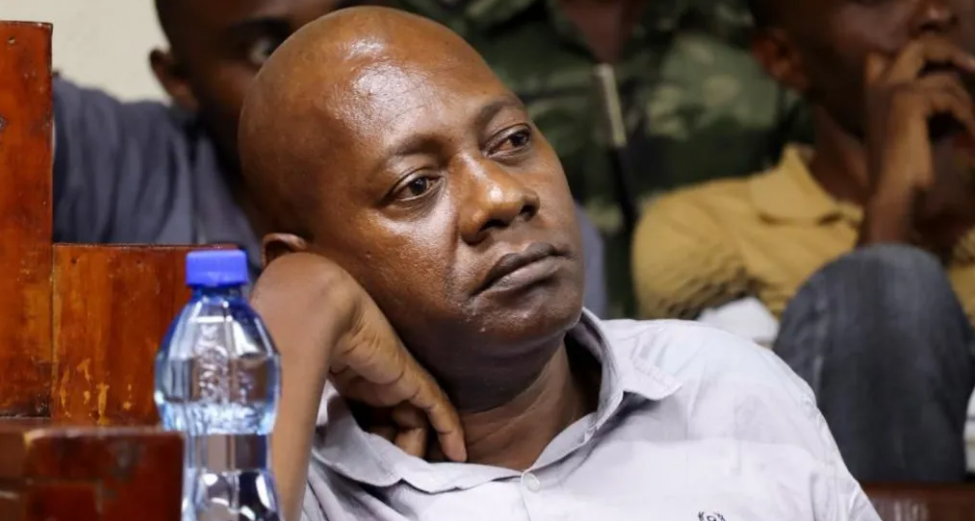
A Kenyan court on Friday convicted self-styled pastor Paul Mackenzie of manslaughter for the starvation deaths of 123 adult followers in a coastal forest. Presiding Magistrate Alex Ithuku delivered the ruling, concluding the primary criminal trials into one of the deadliest cult tragedies in modern history.
The Mombasa court found Mackenzie guilty of orchestrating a deadly starvation campaign between January 2021 and September 2023 in Shakahola forest. Earlier this month, judges handed the doomsday preacher a 200-year prison sentence after convicting him of murdering 191 people, nearly all of them children, during the same mass killing. In Friday’s judgment, the court also acquitted Mackenzie of manslaughter in the deaths of 115 other victims due to evidentiary gaps.
Mackenzie had pleaded not guilty to the manslaughter charges. Sentencing will take place after the court receives pre-sentence probation reports and hears mitigation arguments. According to Reuters news agency, one of his defense lawyers announced plans to appeal the conviction immediately following sentencing.
Co-Defendants Convicted and Acquitted
Alongside Mackenzie, the court convicted 29 accomplices for their roles in the manslaughter. Among those found guilty was Mackenzie’s wife, Rhoda Mumbua Maweu.
The bench acquitted 60 other defendants due to insufficient evidence. Kenya’s Office of the Director of Public Prosecutions swiftly indicated that state lawyers would file an appeal challenging those acquittals.
A Deadly Hierarchy of Starvation
Prosecutors argued that Mackenzie and his co-defendants engineered a collective suicide pact designed to starve followers to death so they could “meet Jesus”. During the trial, the defense team contended that the adult victims had voluntarily chosen to fast of their own free will.
Judges rejected that argument. In a Friday statement, the Office of the Director of Public Prosecutions noted the court found Mackenzie had “systematically persuaded his followers to fast until they died.” Prosecutors hailed the ruling as “the final conviction” in the sprawling legal cases against the cult leader.
“Children were to go first, then women and then men, with Mackenzie himself meant to die last,” the prosecutor’s office stated.
Escalating Terrorism and Abuse Charges
Friday’s verdict caps a week of compounding legal defeats for Mackenzie. Earlier this week, the court convicted him of assault causing actual bodily harm and five counts of cruelty to a child.
Judges also found him guilty of engaging in organized criminal activity, radicalization, and facilitating the commission of a terrorist act. Additionally, he was convicted of possessing an article connected with an offense under Kenya’s Prevention of Terrorism Act of 2012.
From Television Sermons to Forest Isolation
Mackenzie originally established his Good News International Ministries in 2003. Over the next 16 years, the congregation expanded rapidly, drawing thousands of devotees to branches across Kenya. From his base in the resort town of Malindi, Mackenzie broadcast his fiery sermons on a television channel called Times TV.
His apocalyptic teachings regularly relied on dark conspiracy theories. He preached to his congregation that formal education was “evil,” modern healthcare went “against the doctrine,” and government digital identity cards represented “the mark of the devil.” Witnesses testified that he also banned basic ornaments as sinful.
After authorities shut down his main church in 2019, Mackenzie retreated deep into the Shakahola forest near the Indian Ocean coast and urged followers to join him. Devotees built scattered mud houses across the vast woodland.
“We lived a quiet normal life, fasting for a few days then having a small meal,” recalled survivor Peter Shukrani, who was rescued from the compound after falling severely ill. However, court records from his earlier murder trial revealed a brutal enforcement regime inside the forest, where followers who opposed his extreme teachings were beaten to death.
Grim Discoveries in Shallow Graves
Police arrested Mackenzie in April 2023 after tips led investigators to more than 400 bodies buried in shallow graves across the Shakahola wilderness. The scale of the deaths ranks alongside the world’s worst modern cult atrocities, including the 2000 mass killings in Uganda that left over 700 dead and the 1978 Jonestown tragedy in Guyana. Authorities hired local men for the harrowing task of exhuming the decomposing remains.
“Every grave we found had at least three bodies,” James, one of the gravediggers,told local media. “Some of the remains were of children as young as a few weeks old.”
The scale of the burials overwhelmed the recovery teams. “We once found 12 bodies of children in a line inside a grave,” James said. “It was massive, the bodies were arranged like clothes. One on top of another.”
Gravediggers also reported finding young victims with their “hands and legs tied and bodies wrapped in bedsheets.” Subsequent post-mortem examinations confirmed that while many victims died of acute starvation, other remains were too skeletal to establish an exact cause of death.
Bereaved Families and National Reckoning
For surviving relatives, the consecutive convictions offered a measure of closure. Stephen Mwiti, 48, lost all six of his children to the Shakahola compound. His former wife was among the accomplices convicted of murder alongside Mackenzie last month.
“I’m a happy man, that all persons have been convicted,” Mwiti told local media outside the courthouse following the earlier verdict. “All six of my children died in Shakahola forest. I only found and buried the remains of my son Samuel.”
The tragedy has forced an urgent national reckoning in Kenya over the lack of state oversight regarding rogue religious movements. Seeking answers into how the mass deaths went undetected for years, President William Ruto established a special commission of inquiry, though Kenyan courts later struck down the panel as unconstitutional.
A Continental Debate Over Faith and State Oversight
The Shakahola verdicts reverberate far beyond Kenya’s borders, reigniting a fierce continental debate over how African governments should regulate fast-growing independent churches without infringing on religious freedom.
Across East, West, and Southern Africa, authorities have struggled to police self-styled prophets who exploit economic hardship and weak rural oversight. In Kenya, where Attorney General Dorcas Oduor noted that roughly 60 new churches register every month, regulators have deregistered Mackenzie’s ministry alongside several other controversial congregations.
Lawmakers are also weighing the proposed Religious Organisations Bill, which would mandate stricter state registration, steep fines for non-compliance, and formal vetting by established umbrella bodies. However, human rights groups and minority faith leaders warn that heavy-handed legislation risks excluding smaller congregations and indigenous African belief systems, leaving governments walking a delicate line between protecting vulnerable citizens and safeguarding constitutional rights.
While Friday’s verdict closes a landmark chapter in Kenya’s judicial history, hundreds of unidentified remains still await forensic matching, leaving bereaved families and lawmakers grappling with the lasting scars of Shakahola.