

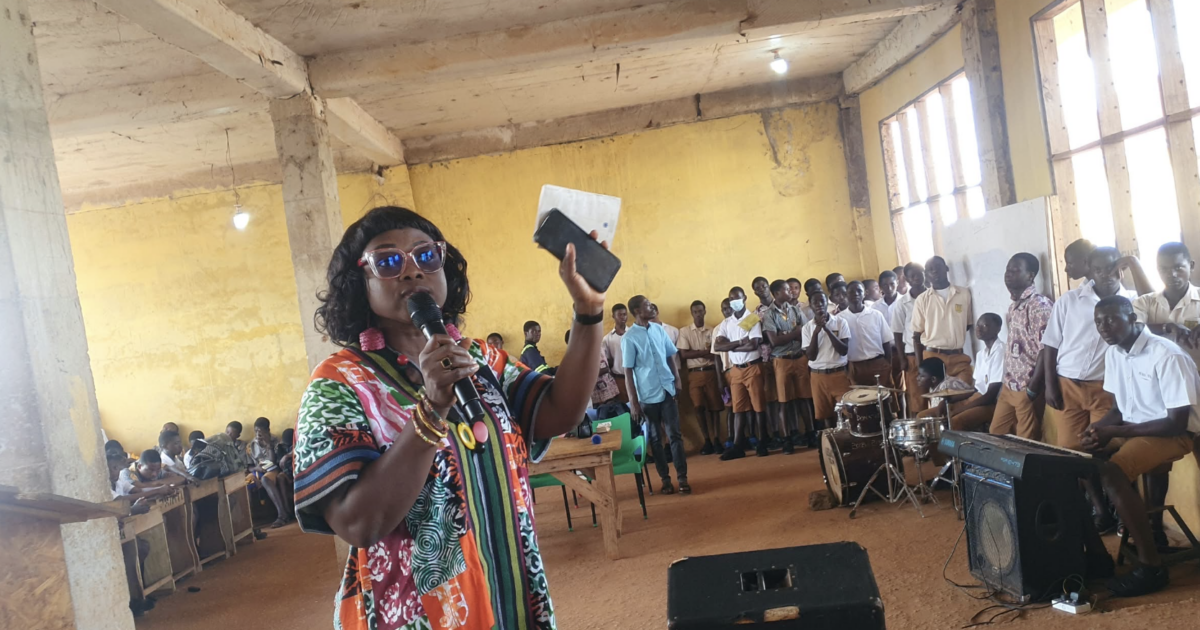

The Kwadaso Municipal Directorate of the National Commission for Civic Education (NCCE) has engaged students of two senior high schools in the municipality to promote constitutional awareness and responsible citizenship among the youth.
The schools were Prempeh College and Methodist Technical School.
The engagement brought together students, teachers, and NCCE officials to discuss the relevance of the 1992 Constitution and citizens’ role in safeguarding Ghana’s democracy.
Ms Mavis Achiaa, the Kwadaso Municipal Director of NCCE, addressed the students and described the Constitution as the supreme law of the land and the foundation of the country’s democratic governance.
Speaking on the theme, “Upholding Our Constitution in the Digital Age: Our Collective Responsibility,” she urged the students to demonstrate responsible behaviour both online and offline.
She said the 1992 Constitution guarantees citizens’ fundamental human rights and freedoms while outlining their civic duties and responsibilities.
Ms Opoku noted that the Constitution remained relevant in guiding national conduct and governance, particularly in an era of rapid technological advancement that had transformed communication, access to information, and civic engagement.
She said that although digital platforms had expanded access to information and improved communication, they had also created challenges, including misinformation, cybercrime, online abuse, identity theft, and digital fraud.
She warned that the irresponsible use of digital platforms, particularly social media, could threaten national cohesion and democratic stability.
Students actively participated in the interactive session, raising questions about online safety, cyberbullying, and responsible use of digital platforms.
Facilitators provided practical guidance on how young people could protect themselves online while contributing to good governance and national development.
Some teachers who attended the programme commended the NCCE for the initiative and urged the Commission to sustain such educational engagements in schools. At the end of the programme,
The schools established Civic Education Clubs to promote continuous civic learning and encourage students to become responsible citizens.
The students thanked the NCCE for the engagement and pledged to apply what they learned in their academic and personal lives.
DISCLAIMER: The Views, Comments, Opinions, Contributions and Statements made by Readers and Contributors on this platform do not necessarily represent the views or policy of Multimedia Group Limited.
DISCLAIMER: The Views, Comments, Opinions, Contributions and Statements made by Readers and Contributors on this platform do not necessarily represent the views or policy of Multimedia Group Limited.
Source link