By: Nana Karikari, Senior International Affairs and Political Analyst
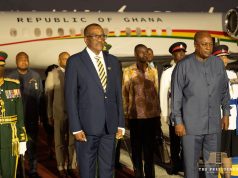
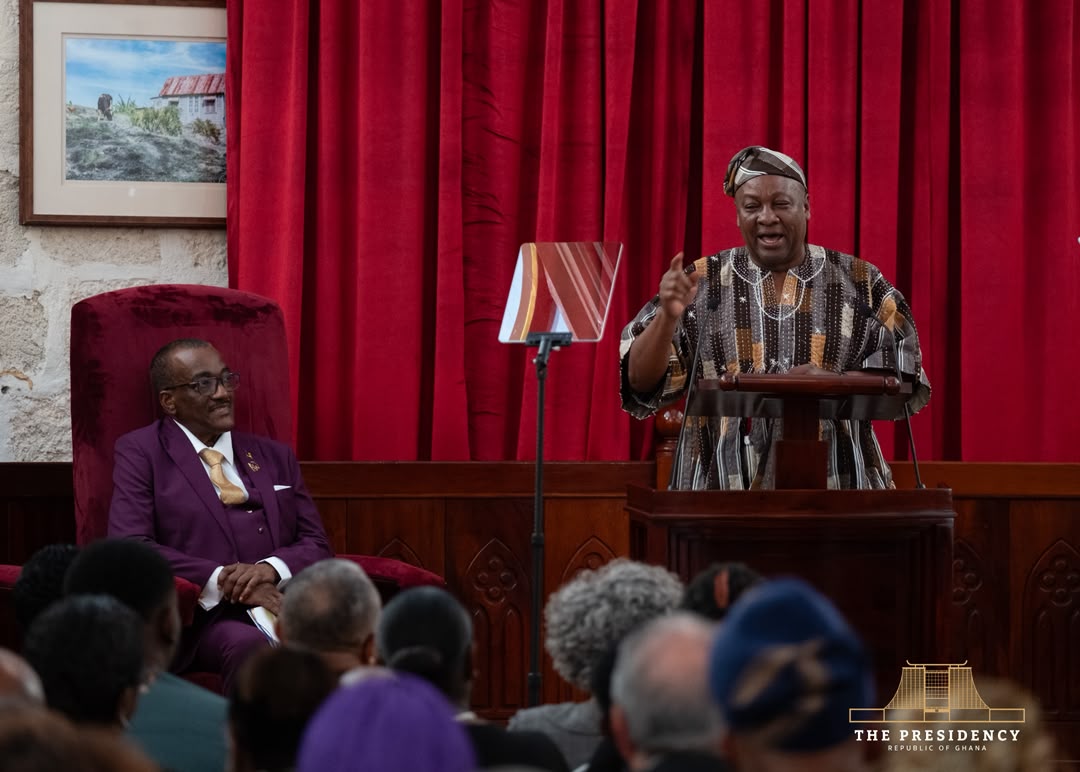
President John Dramani Mahama has become the second Ghanaian head of state to address a joint sitting of Barbados’ Parliament, marking a major diplomatic milestone between West Africa and the Caribbean.
The speech coincided with Barbados celebrating 60 years of independence and five years as a republic.
Mahama follows former President Nana Akufo-Addo, who became the first Ghanaian leader to receive the parliamentary honor when he addressed the chamber in 2019. In remarks released after the session, Mahama framed the visit as a deep convergence of two nations bound by ancestry, rather than mere diplomatic protocol.
“Standing in Barbados’ Parliament as the nation marks 60 years of independence and 5 years as a republic, I experienced more than ceremony; I witnessed history,” Mahama said.
Reclaiming Shared Cultural Roots
During his speech, Mahama emphasized the historical links uniting Accra and Bridgetown. Centuries of separation, he noted, have failed to erase the cultural imprint connecting West Africa to the Eastern Caribbean.
“As the second Ghanaian President to address a Joint Sitting of Parliament, I felt this reflected the enduring connection between Accra and Bridgetown,” he stated.
The Ghanaian leader pointed to daily cultural markers—including family names, music, and food—as living proof of this kinship. He urged both populations to draw upon these common roots to build stronger modern partnerships, invoking a traditional Ghanaian concept of historical reflection.

“Our ancestors, names, music, food, and enduring hope are part of a shared history. As we say in Ghana, Sankofa: go back and fetch what you left behind,” he said.
To turn cultural affinity into direct geopolitical cooperation, Mahama called for closer regional ties. “The Atlantic should now serve as a bridge rather than a barrier,” he added. Direct air links, trade agreements, and visa-free travel policies have increasingly anchored recent diplomacy between the two regions.
Advancing the Reparatory Justice Agenda

A central pillar of Mahama’s address focused on the global push for reparations over the transatlantic slave trade. He pledged Ghana’s firm diplomatic backing for Barbados and the wider Caribbean Community, known as CARICOM, in seeking redress for the enslavement of Africans.
Mahama clarified the intent behind the reparations movement, arguing that the campaign seeks moral reckoning rather than revenge. Genuine progress, he stressed, requires truth, human dignity, accountability, and collective healing.
To ground these principles in policy, the president highlighted established diplomatic roadmaps. He cited the CARICOM Ten-Point Plan and the Accra Next Steps as vital frameworks for confronting the lasting legacies of slavery. CARICOM’s 10-point plan outlines demands ranging from formal apologies to debt cancellation, while the Accra framework coordinates joint African-Caribbean advocacy.


Honoring Ancestral Sacrifices
Mahama also paused to recognize historical figures and communities who resisted enslavement on the island. He paid tribute to King Cuffie, an enslaved leader executed after a thwarted 1675 rebellion in Barbados, alongside the 570 enslaved Africans buried at Newton.
Commemorating these lives demands active engagement with modern inequities rather than passive remembrance, the president argued.
“Honouring King Cuffie, the 570 at Newton, and all our ancestors requires transforming memory into moral courage,” he said.
Continental Resonance and Diaspora Diplomacy
For the wider African continent, Mahama’s address carries weight far beyond bilateral ceremony. The African Union has designated the global African diaspora as the continent’s sixth region, making Caribbean engagement a central pillar of Pan-African foreign policy.
In Ghana, where heritage tourism initiatives like the Year of Return and Beyond the Return have drawn thousands of Afro-Caribbean visitors and investors, the speech reinforces Accra’s position as a gateway for diaspora reconnection. Meanwhile, African leaders and Caribbean governments increasingly coordinate on global financial reform, climate finance, and trade diversification under the African Continental Free Trade Area framework.
A Shared Future Across the Atlantic
Concluding his visit, Mahama congratulated the Barbadian people on six decades of sovereignty. He affirmed that while grief and survival forged the initial bond between Ghana and the Caribbean, their future partnership must be defined by shared prosperity, mutual respect, and justice.
As both regions navigate shifting global trade dynamics and climate pressures, diplomatic alignment between Accra and Bridgetown offers a strategic model for broader South-South cooperation.