By: Nana Karikari, Senior Global Affairs Correspondent
Ghana stands at a crucial juncture in its footballing history. The national men’s football team faces back-to-back make-or-break 2027 Africa Cup of Nations qualifiers against Somalia over the next week. The Black Stars lost their first two Group C fixtures last month against Ivory Coast and The Gambia.
Those results triggered the swift departure of manager Carlos Queiroz and plunged the national setup into renewed uncertainty. Women’s national team coach Kim Bjorkegren, who has managed the Black Queens since January 2025, now steps in as temporary head coach for the men’s squad.
The Impact of Leadership Turnover
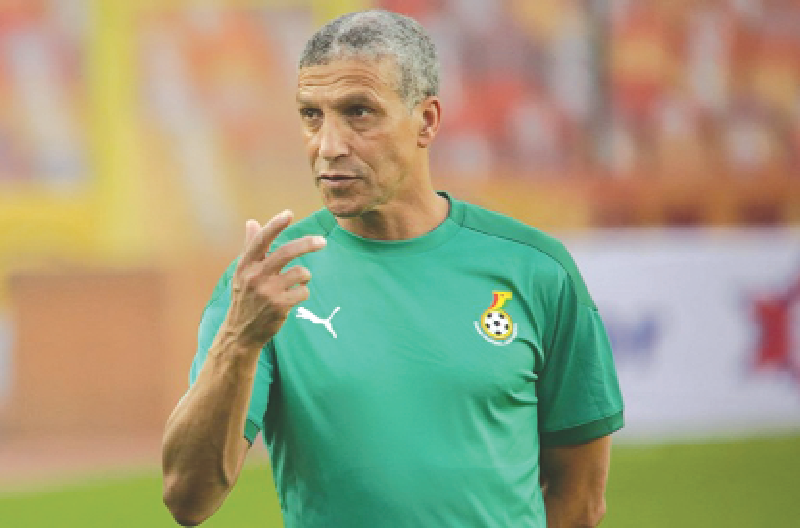
Former Ghana head coach Chris Hughton believes constant managerial “inconsistency” severely undermines squad stability and player performance. The West African powerhouse has appointed five different head coaches over the past six years. Charles Akonnor, Milovan Rajevac, Otto Addo, Chris Hughton, and Carlos Queiroz have all rotated through the position. Addo and Queiroz served two separate stints each during this turbulent stretch.
“When you have inconsistency in the amount of time when a manager is staying, it’s never good,” Hughton told BBC Sport Africa in an interview following the departure of Carlos Queiroz ahead of Ghana’s upcoming AFCON qualifiers. “You want that consistency in the players [and] the players want that consistency in what they see in the manager.”
Hughton noted that frequent dismissals alter player mindsets within the national team environment. Players adapt to a volatile leadership dynamic by expecting short coaching lifespans. Hughton admits that regular sackings can create an “attitude” within a squad, with players knowing that “if he (the coach) doesn’t do well then he won’t be there”.
Long-term managerial stability has eluded the Black Stars for decades. Kwesi Appiah lasted 33 months during his second tenure between April 2017 and January 2020. That period represents the longest continuous managerial reign for Ghana since Fred Osam-Duodu in the late 1970s and early 1980s.
The Chaotic Tenure of Carlos Queiroz
The recent departure of Carlos Queiroz highlights the ongoing instability within the Ghana Football Association. The 73-year-old former Manchester United assistant coach initially took charge in April. He led Ghana to the last 32 of the FIFA World Cup, holding England to a goalless draw in the group stage. Queiroz announced his departure shortly after Colombia eliminated Ghana 1-0 in the knockout round.
The Ghana Football Association reappointed Queiroz in early September, praising his extensive international experience across South Africa, Egypt, Portugal, Iran, Colombia, Qatar, and Oman. His second tenure lasted less than a month. Ghana suffered a 2-0 defeat against Ivory Coast in Bouake and a 4-2 loss to The Gambia in Accra.
Hughton reflected on Ghana’s World Cup campaign under Queiroz’s initial leadership. “What I saw in the World Cup is that they represented the country very well, particularly the England game,” said Hughton. “And although it was very much a defensive outfit, there were opportunities to score.”
Structural Challenges and Grassroots Investment

Ghana faces severe structural challenges alongside managerial changes. The nation risks missing a second consecutive AFCON tournament. Hughton attributes these struggles to under-investment and escalating regional competition.
“Many years ago Ghana were at a level that was, if not the best team in Africa, certainly right up there,” said the 67-year-old Hughton. “You’ve seen the emergence of so many other good African nations that have made the competition levels that much higher. Some of these countries have so many other problems, but I do think that there needs to be an injection of government money into the structure and into the system.”
Domestic football infrastructure requires urgent modernizing attention to rebuild the talent pipeline. “In Ghana, the local game that used to produce so many good players, the support level is not there,” he said. “They’re playing on pitches that are not of a great level and the supporters are not coming. The supporters in Ghana love the Black Stars most, first and foremost, and of course the Premier League is massive there, but there isn’t that support for the local game that there used to be. I think the government needs to do more as regards putting money into the infrastructure.”
Hughton experienced Ghana’s high-pressure management environment firsthand. Appointed as technical director in February 2022, he became head coach in February 2023. The GFA dismissed him in January 2024 after Ghana failed to advance from the group stage at the 2023 AFCON in Ivory Coast. His tenure, like many before his, underscored how rapidly high expectations can give way to structural impatience.
Contrast Between World Cup and Continental Performance
Ghana maintains a stark contrast between its continental struggles and international World Cup record. The Black Stars have failed to advance past the second round of AFCON since 2017. However, they have qualified for five of the past six World Cup finals since their 2006 debut in Germany. They reached the knockout stages three times, including a historic quarter-final appearance in South Africa in 2010. Ghana also cruised through qualification for the tournament in Canada, Mexico, and the United States, losing once in ten matches under Otto Addo.
Squad availability issues compounded Queiroz’s final matches. Key players Antoine Semenyo, Mohammed Kudus, Jordan Ayew, and Baba Rahman withdrew from the squad before the recent qualifiers, followed by several replacement call-ups.
Hughton addressed whether managerial uncertainty contributed to these absences. “Whether that was a reason or not, I don’t know. And I probably don’t think so,” he stated. “You always want your best players and it’s always a concern to the level of the group when you have so many players pull out. There isn’t too much you can do about that [and] you have to work around that.”
West African Continental Reality and Domestic Fan Expectations
Across West Africa, fan engagement reflects a growing disconnect between domestic league fandom and international football viewership. Supporters across Ghana, Nigeria, and neighboring nations routinely fill local venues for English Premier League broadcasts while local league matches contend with aging infrastructure and minimal gate revenue. The rise of competitive footballing infrastructure in North and Central Africa has closed the historical dominance gap once held by West African powers.
African sports analysts continuously emphasize that national team success relies on robust domestic leagues and sustainable youth development systems. Without strategic capital investment into pitches, academies, and coaching education, traditional powerhouses risk slipping behind emerging continental contenders.
Strategic Imperatives for Ghanaian Football Transformation
Navigating the immediate qualification crisis against Somalia demands tactical discipline, administrative clarity, and pragmatic leadership from interim coach Kim Bjorkegren. Beyond short-term pitch results, sports authorities in Accra face the delicate imperative of balancing continental expectations with long-overdue structural reforms. Until the Ghana Football Association aligns multi-year managerial patience with meaningful investment in local grassroots infrastructure, the balance between historical legacy and present performance will remain precariously fragile. Restoring the Black Stars to the summit of African football requires nothing less than lasting institutional change.