
Nigerian actress and movie producer, Iyabo Ojo, has called for divine intervention against owners of Ghanaian television stations allegedly involved in the unauthorized airing of newly released Nigerian movies.
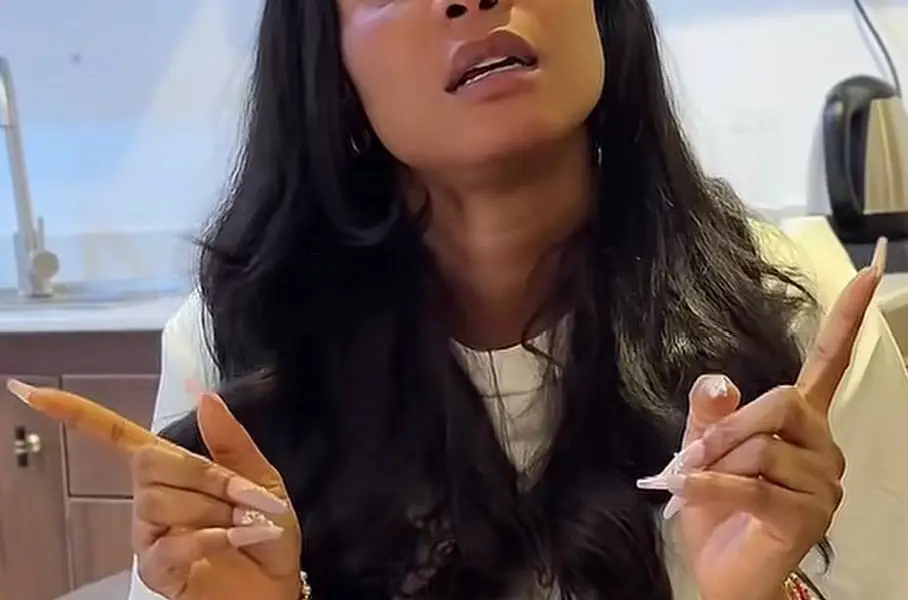
The actress, popularly known as the “Queen Mother,” expressed her anger in a video shared on her social media platforms after disclosing that North-East TV in Ghana aired the second part of her new movie, The Memory of You, without her permission, agreement, or payment.
Visibly upset by the act, Iyabo Ojo did not hold back in condemning those behind the unauthorized broadcast, accusing them of destroying the hard work of filmmakers who struggle and invest heavily to survive in the industry. She questioned the irony of people who are considered brothers and sisters turning around to undermine the efforts of others.
“We call ourselves our brothers and sisters but we are the same people who are doing ourselves,” she said, before calling on divine punishment against those involved.
“Whoever you people are, as you gather to destroy the hard work of someone who is struggling and putting in all effort to survive, may God and thunder in heaven strike you dead. May God destroy you as you have decided to sit in your corners and destroy other people’s work. May thunder destroy you,” she added.
The thespian said she finds it disappointing and unfair that some Ghanaian television stations wait for filmmakers to put in the work, release their movies, and then broadcast them without seeking approval while making money from the content without compensating the producers.
According to her, she released The Memory of You 2 on YouTube and, barely 24 hours later, discovered that the movie had been aired on a Ghanaian television station without her consent. She questioned how filmmakers would recover their investments after spending huge amounts of money and resources on movie production when their works are allegedly taken and broadcast without authorization.
“Why are you pirating my movie? You have no right whatsoever. You didn’t communicate with me. You just took my movie that I posted on my YouTube channel and put it on your TV for people to watch for free and then make money,” she stated.
Iyabo Ojo further questioned how producers would recoup their investments when their movies are allegedly taken from online platforms and shown elsewhere without permission.
“How will people go on YouTube to watch the movie so we make our money back?” she asked.
The filmmaker also revealed that she had heard similar complaints from other Nigerian producers, referencing the case of Bimbo Adeboye, who previously raised concerns about the alleged unauthorized use of her movie by a Ghanaian television station. She added that she believed the issue had already received attention from Ghana’s National Film Authority, headed by Kafui Danku, but expressed disappointment that the situation continues.
Iyabo Ojo subsequently called on the Ghanaian government, the National Film Authority, the Ministry of Tourism, Arts and Culture, and President John Dramani Mahama to intervene and address what she described as a growing challenge affecting filmmakers.
Read Also: “Why Are You Pirating My Movie?” — Angry Iyabo Ojo Calls Out Ghanaian TV Station
In a caption accompanying her video, she wrote:
“Ghana, we need to talk. My movie THE MEMORY OF YOU 1&2 is being aired on TV channels in Ghana without my permission. No call. No license. No payment. Just pure theft.”
She urged authorities to enforce Ghana’s copyright laws, particularly the Copyright Act, 2005 (Act 690), and protect the intellectual property of filmmakers.
“Piracy kills creativity, kills jobs, and kills investment. We are not asking for favors. We are demanding what is rightfully ours: respect and protection for our intellectual property,” she stated.
Several Nigerian actors and movie producers, including Uchenna Mbunabo, Bimbo Adeboye, Omoli Oboli, Ruth Kadiri, and Nosa Rex, among others, have in recent times expressed frustration over alleged unauthorized airing of Nollywood movies by some Ghanaian television stations.
Their concerns have also been echoed by some Ghanaian filmmakers, including Juliet Ibrahim and Xandy Kamel, who have raised concerns about the impact of copyright violations on the growth and sustainability of the film industry. The repeated complaints have reignited calls for stronger enforcement of copyright laws and better protection for filmmakers’ intellectual property.
Meanwhile, executives of Ghana’s National Film Authority, including Chief Executive Officer Kafui Danku and other officials such as James Gardiner, have on different occasions addressed concerns surrounding copyright violations in the film industry. They have assured stakeholders that steps are being taken to protect filmmakers’ intellectual property and deal with unauthorized use of creative works.
The authority has also warned that television stations and other platforms that air movies without the necessary permissions risk facing sanctions, including possible action against their licenses.