

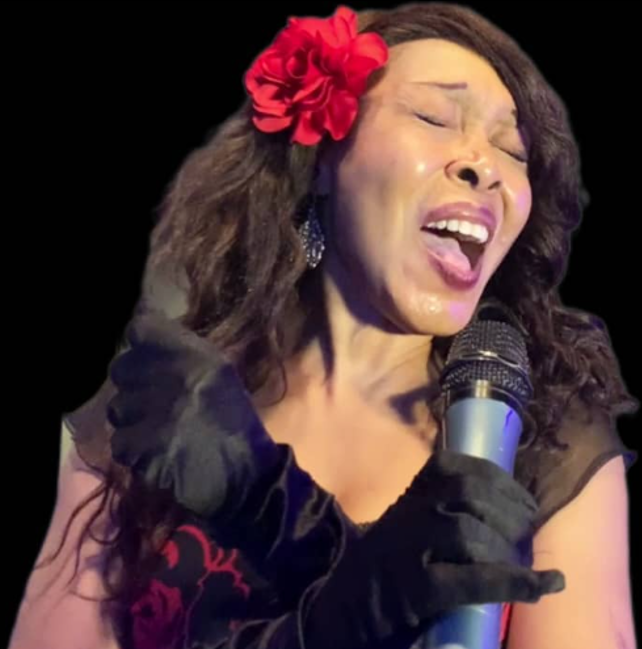
…Jazz appreciation, the socio-economic situation of Billie holiday, Ella Fitzgerald throughout their music careers
It was an unexpected backlash. …Brash…Brutal…Bold! It literally cut short my moment of satisfied self-accomplishment like a “killjoy” knife. I summoned what was left of my partially-deflated triumph to answer her question, thinking “should I exaggerate or should I give a straight answer…?” Neither option appealed to me, after all I did not need her validation or owed her any explanation.
Besides I had just successfully interviewed the most celebrated Jazz Musician on the Planet, had pictures with him, had an audio recording of the interview, and my published Newspaper article about him titled “When the Pied Piper of Jazz came to town”. Legendary Wynton Marsalis had been to Accra, Ghana and had personally endorsed my Jazz Radio programme, Maximum Jazz, after his concert. But when I shared all this with the female, a supposed friend, sitting next to me at a buffet function, the response she gave me was neither complimentary nor encouraging; it was a spitefully- sounding “Is there Money in it?” I was not prepared for this!
The question was equivalent of asking how much I made as monthly income (mind you someone recently asked me this, both condescendingly and intrusively) but for this female sitting next to me, it was in addition, most uncouth and inelegant of her.
After a brief pause, I gave her a sincere but constructive response “I haven’t started making money from it yet” and with a slight smirk she turned her head away with an unimpressed look and disinterest written on her face. I then wondered what she would have done if I’d responded saying there was lots of money to be made from it – Jazz
In this month of Jazz Appreciation – April, one factor that cannot be overlooked is the disparity in the socio-economic structures for Jazz practitioners from different parts of the world i.e. the West, Europe, Africa, Asia and other regions.
In this episode I shall narrow down my Jazz Appreciation to its socio-economic considerations using the profile of two women whose lives, experiences, struggles and vocal/ musical artistry have deeply influenced both my and others appreciation of the Jazz genre. They are the iconic Billie Holiday & Ella Fitzgerald both of whom are April- born.
So once again I consider the question ” Is there Money in it?” not with discomfort or embarrassment as I did in the earlier account, but from a realistic consideration of the Burden and Financial rewards or lack thereof, which pursuing Jazz has on its Loyalists, Musicians & Promoters, 3 categories which I belong to.
Billie Holiday: Born Eleanora Fagan on April 7, 1915, was an American jazz and swing music singer. Nicknamed “Lady Day” by her friend and music partner, Lester Young. Holiday made significant contributions to jazz music and pop singing. Her vocal style, strongly influenced by jazz instrumentalists, inspired a new way of manipulating phrasing and tempo. Holiday was known for her vocal delivery and improvisational skills
Billie Holiday’s music serves as a raw, emotional diary of a precarious socio-economic situation, reflecting her journey from extreme poverty and abuse to becoming a celebrated, yet constantly exploited and targeted, artist. Her work highlight’s themes of financial independence, racial injustice, and the personal cost of navigating fame as an African American woman in a segregated society.

Key themes from her music, life:
Poverty and financial independence (“God Bless the Child”): First released in 1941, inspired by an argument with her mother over money, this song is a direct reflection of her, often chaotic, financial life. The lyrics “God bless the child that’s got his own” emphasize the necessity of self-reliance and the harsh reality that she, despite her eventual success, often had to fight for her financial security
Racial injustice and social status (“Strange Fruit”): Released in 1939, this song addressed the lynching of African Americans, highlighting her role as a voice against the systemic racism of the era. Her insistence on singing it, despite danger in the segregated South, highlights her low, precarious social standing as a black woman, constantly threatened by established white power structures
Abuse, exploitation, and personal turmoil: Holiday’s music was shaped by her experiences with sexual abuse as a child, working in brothels, and enduring abusive, exploitative relationships with men who often stole her earnings
Substance abuse and institutional targeting: Her struggles with drug and alcohol addiction, which plagued her career and contributed to her death, were intensified by her socio-economic environment and harassment from authorities like the Federal Bureau of Narcotics, who targeted her, particularly after she became famous, hindering her ability to perform
The “Tragic Icon”: Her later recordings, such as Lady in Satin (1958), reflect a life of hardship taking a physical toll on her voice, which became more fragile and rawer, mirroring her declining personal, physical, and financial health
Billie Holiday died in hospital at age 44, on April 17, 1959 of pulmonary edema and heart failure caused by cirrhosis. While in the hospital, special agents of the Federal Bureau of Narcotics (FBN) came to her hospital room and placed her under house arrest, handcuffing her to the bed, for narcotics possession. She died in this position.
Her music was never just entertainment; it was a profound testament to a life lived on the margins of society, even while in the spotlight. It is such tragedy when one so rich in talent, as Billie Holiday, could live and die so poor!
Ella Fitzerald
Ella Jane Fitzgerald was born April 25, 1917 June 15, 1996). She was an American singer, songwriter and composer, sometimes referred to as the “First Lady of Song”, “Queen of Jazz”, and “Lady Ella”. She was noted for her purity of tone, impeccable diction, phrasing, timing, intonation, and a “horn-like” improvisational ability, particularly in her scat singing.
Ella Fitzgerald’s socio-economic situation was characterized by a dramatic trajectory, moving from extreme childhood poverty and teenage hardship to international stardom, ultimately allowing her to use her wealth to support charitable causes. Her life was significantly shaped by the challenges of racial segregation, systemic discrimination, and personal tragedy
Here is a breakdown of the socio-economic situations throughout her life:
Early life (poverty and hardship): Born in 1917, Fitzgerald grew up in a working-class, mixed neighborhood in Yonkers, NY. Her family struggled financially, with her stepfather working as a driver and her mother in a laundromat. Following her mother’s death in 1932, she faced a period of extreme hardship, dropping out of school, suffering abuse in a reform school, and eventually living on the streets before finding success, according to the Yonkers Ledger and the Gulf Coast Symphony
Rise to success (great depression): Despite the Depression, her 1934 win at the Apollo Theater Amateur Night launched her career. She quickly moved from poverty to becoming a young performer in the Harlem music scene
Racial and social challenges: Despite achieving fame as the “First Lady of Song,” Fitzgerald faced severe racial discrimination, including being denied the right to board a plane due to her race and being arrested in 1955 in a “gambling” raid that was described as a form of racist humiliation. Listen to the lyrics of her “Lady be Good” the 1947 recording. and from her 1959 album.
Economic independence: She overcame a career slump in the 1940s by partnering with manager Norman Granz at Verve Records. This allowed her to build significant wealth and gain independence in the music industry
Later life and philanthropy: In her later years, Fitzgerald used her financial success to make generous, often quiet donations to children’s homes and disadvantaged youth organizations
Health challenges: Her final years were marked by complications from diabetes, including the amputation of her legs in 1993, forcing her to stop touring before passing away on June 15, 1996
Throughout her career, she maintained a simple, elegant approach, rarely allowing the immense glamour of her public persona to alter her focus on music and quiet charity
In conclusion, when one juxtaposes the lives of the 2 ladies both iconic and influential in Vocal Jazz / Music careers, it could be said that while both existed under similar difficult times for a black Singer, one enjoyed wealth and economic advantage while the other experienced poverty and died penniless.
So the question “Is there Money in it? is a very subjective one in that it is possible to make money from Jazz with the right support systems, conscious strategic planning and marketing intelligence. These are things Ella Fitzgerald had which Billie Holiday didn’t. Also having a Caucasian/ Jew, Norman Granz, as Manager and someone to maintain her law – abiding status was also advantageous for Ella. This Billie never had. Also, Billie was unapologetic and direct about her Civil Rights activism which, like other Musicians of her time, cost her career. Ella was more subtle in this aspect.
The reality is that most Jazz Musicians do not have a Norman Granz, but don’t we all need one?
(‘Me & My Jazz’ are the weekly musings of Jazz Singer & Jazz Radio Host, Yomi Sower. Her programme Maximum Jazz airs on Saturdays 4-7PM on Ghana’s Guide Radio 91.5FM. She is a Professional Voice Coach also offering Vocal Jazz Tuition @YomiSower – Facebook, Instagram, TikTok, X and E- mail: [email protected])
Post Views: 14
Discover more from The Business & Financial Times
Subscribe to get the latest posts sent to your email.