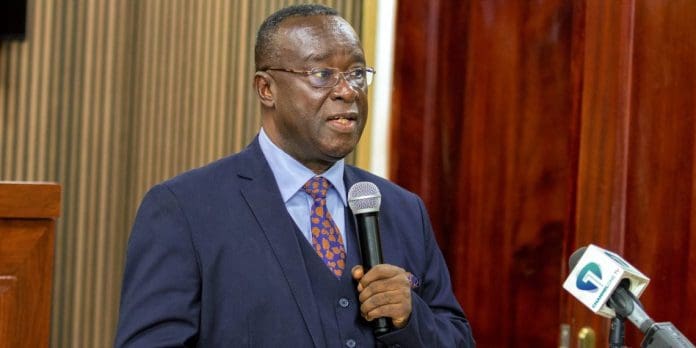

The Deputy Minority Whip and Member of Parliament (MP) for Weija Gbawe, Jerry Ahmed Shaib, has disputed characterizations of the Minority caucus walking out during the vetting of Chief Justice nominee Justice Paul Baffoe-Bonnie, describing the incident as a case of power abuse by the Majority.
Speaking on the Asaase Breakfast Show on Tuesday, Ahmed Shaib insisted that Minority members arrived prepared to participate in the vetting process but faced obstruction when attempting to raise constitutional concerns and pose questions to the nominee.
“Nobody staged a walkout. We came in prepared. What we witnessed was an abuse of power and a deliberate attempt to silence the Minority,” the lawmaker stated during the interview.
Ahmed Shaib explained that the Minority caucus intended to question whether the vetting should proceed given multiple pending court cases related to the Chief Justice position. He indicated that six to seven different matters concerning the office were currently before the courts, raising questions about the appropriateness of continuing with parliamentary processes.
“Our interest was to ask very relevant questions, to determine whether it was appropriate to continue the vetting when there were unresolved court cases,” he added.
The MP alleged that Majority leadership prevented Minority Leader Alexander Afenyo-Markin from delivering opening remarks during the session. He characterized the proceedings as chaotic and lacking democratic principles, suggesting the conduct reflected broader concerns about parliamentary procedure.
According to Ahmed Shaib, the Majority’s actions demonstrated what he described as a troubling pattern of democratic erosion. He warned that Ghana’s judiciary faces risks of losing its independence and becoming subordinate to executive authority.
“What we are seeing is an overreach of power. The independence of the judiciary, which upholds the sanctity of our democracy, is at the verge of breaking down,” the Deputy Minority Whip cautioned.
He maintained that the Minority’s departure from the vetting session constituted a protest against procedural irregularities rather than a boycott of the process itself. Ahmed Shaib emphasized that caucus members remained willing to fulfill their oversight responsibilities if given proper opportunity.
“We didn’t walk out. We were ready to do our work, but the process itself was compromised,” he said.
The Minority caucus has formally declared its rejection of Justice Baffoe-Bonnie’s nomination to serve as Chief Justice. The opposition cited constitutional violations and the existence of unresolved petitions submitted to the president regarding the Chief Justice office as grounds for their position.
The controversy surrounding the vetting session highlights ongoing tensions between the parliamentary caucuses over judicial appointments. It also reflects broader debates about separation of powers and the independence of Ghana’s judiciary from political influence.
Chief Justice nominations require parliamentary approval following presidential selection. The vetting process typically allows both Majority and Minority members to question nominees about their qualifications, judicial philosophy, and approach to constitutional matters.
The disputed session occurred amid heightened political sensitivity surrounding judicial appointments and their implications for Ghana’s democratic institutions. Opposition parties have increasingly voiced concerns about maintaining judicial independence as a safeguard against potential executive overreach.
The Majority caucus has not yet publicly responded to the specific allegations made by Ahmed Shaib regarding the conduct of the vetting session. Parliamentary leadership typically plays a key role in managing such proceedings and ensuring all caucuses receive adequate opportunity to participate.
Legal observers note that pending court cases related to governmental positions can sometimes raise procedural questions about confirmation processes. However, the specific nature of the six to seven cases referenced by the Minority has not been detailed in public statements.