By Eddie Boateng OPOKU
There are many things car owners do that seem harmless on the surface, but quietly create expensive problems down the line. One of them is so common that it has almost become normal practice. And honestly, it does my head in every time I see it.
I didn’t even plan to write about this until a recent experience forced my hand.
The Car Search
I was helping an uncle buy a vehicle. That’s something I get pulled into often because, well, everyone knows I’m always talking cars and how to get the best out of them.
We had a clear use case, so SUVs were the natural direction. We looked at several options within budget, inspected a few, rejected some, and eventually settled on one that ticked the right boxes.
The test drive went well. No warning signs. We knew we would have to do some work on it after purchase, that was expected given the budget, but nothing alarming.
After buying the car, I took it to a tyre shop near my office to assess the underbody and plan the refurbishment.
That’s when things went left.
The Missing Piece
We put the car on a hoist. One look underneath and I froze.
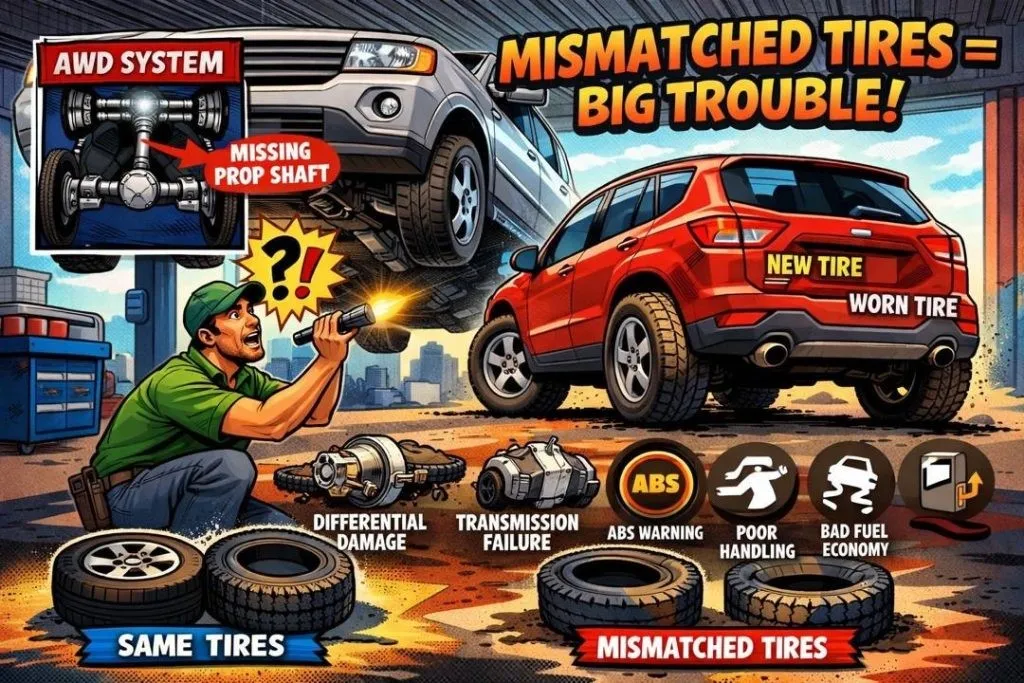
The prop shaft was missing. For context, the prop shaft is what connects the front and rear of an all-wheel-drive system. Without it, the car is no longer AWD. It becomes front-wheel drive.
Someone had deliberately removed it. Even more concerning, the vehicle’s design meant this wouldn’t trigger any warning lights on the dashboard. So, to an average buyer, everything would seem perfectly fine.
At that point, I had two choices: try to return the car or fix it.
If you understand how refunds can go in our market, you already know how that decision ended. We fixed it. But not without more surprises.
The Real Problem Reveals Itself
My suspicion was correct. The rear differential had failed, which is why the previous owner removed the prop shaft in the first place.
Instead of fixing the problem, they worked around it. Eventually, we repaired everything properly and restored the vehicle to full working condition.
But the big question stayed with me:
What caused the AWD system to fail in the first place?
The answer is something many drivers overlook every day.
Culprit?
Mismatched Tires.
It sounds simple, almost harmless. But it is one of the fastest ways to destroy a drivetrain, especially in SUVs with all-wheel-drive or four-wheel-drive systems.
Tyre mismatch happens when you mix:
- Different brands
- Different tread patterns
- Different sizes
- Different levels of wear
Even if the tyre size looks the same on paper, the actual rolling diameter can vary slightly between brands and models.
That small difference is where the trouble begins.
All-wheel-drive systems depend on all four wheels rotating at the same speed. When tyres don’t match, one wheel rotates slightly faster or slower than the others. The system interprets this as wheel slip and constantly tries to correct it.

That constant correction puts stress on:
- The transmission
- The transfer case
- The differential
Over time, components wear out or fail completely.
Exactly what happened in case of my uncle’s car.
“But my car is not AWD” you say?
Even if you drive a front-wheel or rear-wheel drive car, mismatched tyres still cause problems.
You may notice:
- Poor fuel economy
- Uneven tyre wear
- Reduced grip and traction
- Less stable handling
- Increased braking distance
- ABS or traction control irregularities
It may not destroy your drivetrain immediately, but it chips away at performance and safety.
You’ve probably seen this before:
A driver gets a flat tyre and replaces just one tyre with whatever is available. Maybe a different brand, maybe a used tyre, maybe even a slightly different size.

Then they keep driving like that for months. Or someone replaces only the front tyres and leaves the rear ones worn out. It feels like a cost-saving move at the time. But in reality, it’s a slow and expensive problem in the making.
The Guide
If there’s one takeaway from this, it’s simple: Your tyres must match.
Ideally:
- Same brand
- Same model
- Same size
- Similar wear level
If you must replace tyres, do it in pairs at the very least. For AWD vehicles, replacing all four is often the safest option.
Emergencies Are the Only Exception
Yes, mismatched tyres can be used temporarily but only in an emergency.
The Bigger Lesson
What struck me most about this experience wasn’t just the missing prop shaft. It was the mindset. Instead of fixing the root problem, someone chose a shortcut. And that shortcut was passed on to the next owner.
That’s how hidden issues travel through the used car market. And that’s why awareness matters. Cars are systems. Everything is connected. Something as simple as tyres, often overlooked, can determine whether your vehicle runs smoothly or quietly drains your wallet.
Consider this: sometimes, the cheapest option today becomes the most expensive mistake tomorrow.
Happy Motoring…
Post Views: 18
Discover more from The Business & Financial Times
Subscribe to get the latest posts sent to your email.