
The Minister for Energy and Green Transition, Dr John Abdulai Jinapor, has disclosed that negotiations between the Government of Ghana and the United States on a peaceful nuclear cooperation agreement have stalled over a disagreement on a specific clause.
Appearing before the Government Assurance Committee of Parliament on Tuesday, March 24, 2026, the minister reaffirmed Ghana’s commitment to its nuclear power programme, which is expected to significantly boost the country’s electricity generation capacity amid growing energy challenges.
Responding to a question from the Member of Parliament for Ablekuma North, Ewurabena Aubynn, Dr Jinapor revealed that Ghana is currently engaged in talks with several countries, including China, Russia and the United States, as it pursues the development of nuclear power.
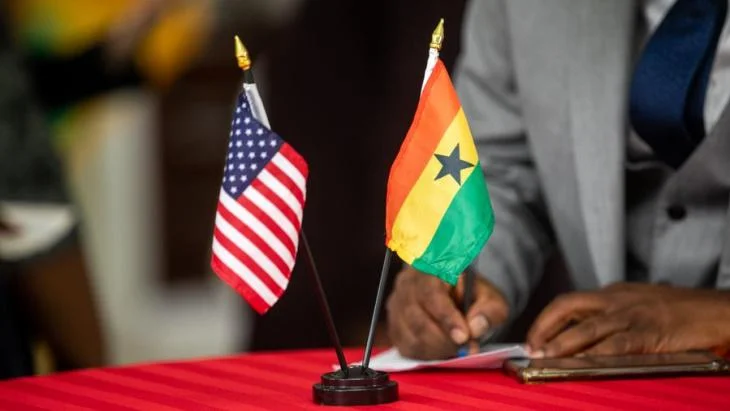
He explained that negotiations with the US for the agreement — a key requirement for deeper bilateral nuclear cooperation — had hit a snag due to a disagreement over the wording of a particular clause, which security agency representatives on the Ghanaian team are strongly insisting upon.
“We’re going through the whole process, and it takes a bit of time. That’s the truth with nuclear because of the safety concerns and all that. Last two weeks, we had a meeting with the United States where we are trying to sign an agreement with them. We just have some slight difference with a particular clause, where the Ghanaian security part of the negotiation team is insisting on some phraseology. Once we are done with that, we will sign it and we would accelerate the phase of nuclear power,” the minister stated.
Expressing concern about the reasons for the delay, the Ablekuma North MP remarked, “I hope it is not what I am thinking; the clause?”
Dr Jinapor responded: “I don’t think so.”
The Chairman of the Committee, Dominic Nitiwul, urged the minister to “be brave” in advancing the nuclear programme, warning that the initiative could fail without firm resolve.
Ghana’s nuclear ambitions date back to the early post-independence era. In 1961, President Kwame Nkrumah launched the Kwabenya Nuclear Reactor Project as part of his vision to use peaceful atomic energy for national development and industrialisation. Two years later, in 1963, he established the Ghana Atomic Energy Commission (GAEC) to oversee research, training, and the application of nuclear technology in medicine, agriculture, and industry.
Although the 1966 coup halted early reactor plans, the foundation for Ghana’s peaceful nuclear programme remained. In 1994, Ghana commissioned its first research reactor, the Ghana Research Reactor-1 (GHARR-1), a 30-kilowatt Chinese-designed facility at the GAEC campus in Accra. The reactor went critical in December 1994 and was officially inaugurated in March 1995. Its core was later converted from highly enriched to low-enriched uranium in 2017, underscoring Ghana’s commitment to nuclear safety and non-proliferation.
Ghana is now advancing towards commercial nuclear power to meet rising electricity demand and support its energy transition goals. The country has progressed to the later preparatory phases of its IAEA-aligned nuclear power programme, with site selection completed and vendor engagements underway for a planned gigawatt-scale plant targeted for the mid-2030s.
Successive governments have strengthened key institutions, including Nuclear Power Ghana as the prospective operator, while maintaining a strict focus on peaceful uses of nuclear energy under rigorous international oversight.