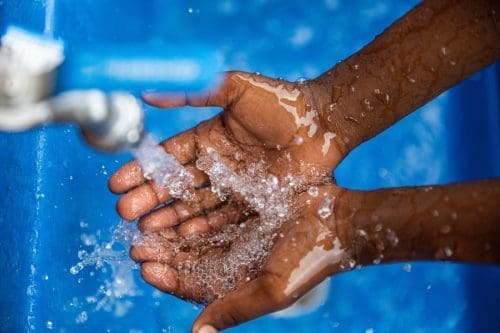
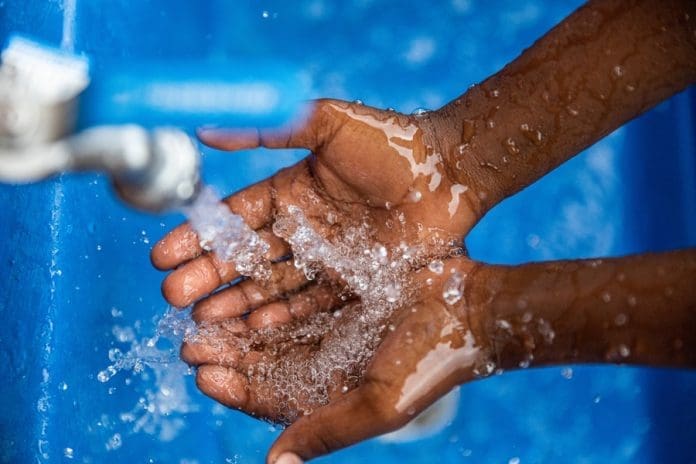

For more than four months, residents of Nungua and surrounding communities have been deprived of regular water supply, forcing families to ration every drop while grappling with soaring costs and severe hardship.
Mothers, fathers and children alike are enduring a crisis that has transformed access to water from a basic right into a daily struggle for survival. Families that once depended on Ghana Water Limited (GWL) for their daily needs now find themselves stranded, with children arriving late to school and businesses struggling to operate.
The prolonged water shortage affects multiple communities across the Krowor Municipality, including Nkpor, Adormi Park, Adogon Adom, Nungua Maamli, Royal and Cold Store. Taps in these areas have remained dry for extended periods, compelling residents to queue at commercial water tankers, boreholes and private suppliers to meet basic needs.
The crisis has particularly affected institutions like Adogon Seventh Day Adventist (SDA) School and the LEKMA Polyclinic, as well as small businesses that heavily rely on regular water supply to operate effectively. Speaking to media outlets, residents expressed mounting frustration over the situation.
Agnes Nuga, a trader, explained how the water scarcity has brought daily life to a halt, even affecting her husband’s work as a water tanker driver. “Water scarcity has become a very big issue for us. We have even decided to go on a demonstration. We are really struggling. My husband is a water tanker driver, but he has no water to supply,” she said.
Some residents noted they have been reluctant to use seawater despite proximity to the coast, citing health and hygiene concerns. Benissah Amoako, a food vendor, also explained that the shortage has taken a significant toll on her business operations.
Community leaders including Sir Samuel Thompson have lamented that the scarcity has driven up the cost of living substantially. The price of a bucket of water has risen sharply in recent weeks, placing additional financial burden on households already struggling with economic challenges.
The water crisis in Nungua coincides with the October 2025 shutdown of the Teshie Nungua Desalination Plant, a major source of potable water for residents along Accra’s eastern coastal corridor. GWL announced the temporary closure due to unresolved contractual challenges and lack of critical maintenance required to ensure safe and efficient operations.
The 126 million dollar desalination facility, commissioned in April 2015, was designed to produce 60,000 cubic metres of potable water daily, serving approximately 500,000 residents in Teshie, Nungua, Spintex, parts of Sakumono, La and nearby communities. The plant operated under a 25 year Build, Own, Operate and Transfer contract with Befesa Desalination Development Ghana Limited and Sojitz Corporation of Japan.
However, the facility has faced recurring operational and contractual difficulties since inception. GWL first shut down the plant in January 2018 because of high operational costs and persistent contractual challenges. In 2020, the Government of Ghana officially terminated the controversial contract with Befesa, citing the plant’s financial burden on the state water utility.
The recent shutdown in October 2025 was intended to address long standing technical and contractual issues affecting the plant’s ability to operate optimally. GWL assured the public that measures had been put in place to minimise impact, including rerouting water from other treatment plants and prioritising supply to essential service institutions such as hospitals, schools and health centres.
However, residents in Nungua and surrounding areas report that alternative supply measures have been inadequate to meet demand, leaving many communities without reliable access to potable water for months.
Stanley Martey, Director of Communications at GWL, recently explained that irregular water supply in parts of Accra can be addressed through consistent feedback from residents. Speaking on the Citi Breakfast Show on January 7, 2026, Martey noted that GWL’s recently published rationing programme is meant to inform the public about water distribution schedules.
“We published the new rationing programme so that everybody will know when they will have water. This programme has been on since. Our issue now is that we need feedback from the people to ensure that water goes everywhere. So we go round the community, take feedback from people, and see things for ourselves,” he said.
However, many Nungua residents question why rationing schedules appear not to be functioning in their areas, leaving them entirely without supply rather than receiving water according to a predictable timetable.
The crisis highlights broader challenges facing Ghana’s water sector, including aging infrastructure, inadequate treatment capacity, distribution inefficiencies and financial sustainability concerns. The shutdown of the desalination plant underscores how contractual disputes and maintenance issues can have severe consequences for vulnerable communities.
Community leaders have appealed to the government for swift intervention, stressing that access to clean water is a basic necessity that must not be compromised. Residents are also urging local authorities to engage GWL to find a lasting solution to the crisis.
The situation has sparked discussions about the need for improved water infrastructure planning, better contract management in public private partnerships, and more responsive systems for addressing supply disruptions before they escalate into prolonged crises.
For assistance, enquiries or to report supply concerns, GWL has advised the public to contact the following numbers: 0800 40000 (toll free on Vodafone lines), 0302 2218240, 0207385088, 0207385089, 0207385090, or via the GWL WhatsApp lines at 0555123393 and 0555155524.
As Nungua residents enter their fifth month without reliable water supply, calls for urgent action grow louder. The crisis serves as a stark reminder of the critical importance of functional water infrastructure and the devastating impact on communities when systems fail.