
Every so often, I meet a very accomplished professional who says, “I’m ready for media.”
They have the experience.
They have the credentials.
They have the confidence.
Then the camera comes on.
And suddenly… things change.
Sentences become longer.
Answers become wider.
And somewhere between the question and the response, the message quietly disappears.
Let me say this upfront: being good at your job does not automatically make you good in media.
Media is a different environment. It rewards clarity, composure and control. Under pressure.
So how do you know if you’re not quite ready yet?
Here are a few signs.
1. You ramble
This is the most common one.
You are asked a simple question.
You begin with enthusiasm.
Then you add context.
Then background.
Then “just one more point.”
Before you know it, you are three minutes in, and even you are not entirely sure where the answer is going.
Rumbling answers feel productive to the speaker.
They feel exhausting to the audience.
In media, less is more.
A clear, concise answer is far more powerful than a long, wandering one.
In fact, the ability to say something meaningful in a few sentences is one of the strongest indicators of media readiness.
If your answers regularly require a deep breath halfway through, it may be time to simplify.
2. You fear tough questions
At some point in every interview, a difficult question will appear.
Sometimes it is direct.
Sometimes it is loaded.
Sometimes it feels like it came from left field.
Your reaction in that moment tells us everything.
If your instinct is to:
- Become defensive
- Avoid the question entirely
- Or hope the interviewer moves on
…then you are not yet in control.
Here’s the thing: tough questions are not a trap. They are part of the process.
They give you an opportunity to demonstrate composure and leadership.
A prepared communicator does not fear difficult questions. They expect them.
And when they come, they handle them calmly, clearly and confidently.
3. You lack message clarity
This one is subtle and dangerous.
You speak well.
You sound confident.
You answer every question.
But at the end of the interview, if I ask, “What was your main point?”… there is no clear answer.
That is a problem.
Media is not just about responding to questions.
It is about delivering a message.
If you have not defined that message before the interview, you will drift.
You will follow the interviewer’s direction instead of leading the conversation.
Strong communicators do the opposite.
They decide in advance what matters.
They return to it consistently.
They make sure the audience leaves with something clear and memorable.
Final thought
Media interviews are not casual conversations.
They are high-stakes communication moments with real consequences for your credibility and your brand.
The good news is this: every one of these issues can be fixed.
You can learn to:
- Speak with clarity
- Handle tough questions with confidence
- Deliver your message with precision
But it requires training.
Because when the camera comes on, you do not rise to the level of your intelligence.
You fall to the level of your preparation.
If you would like to build the skills to handle media interviews with confidence and authority…
Send “MEDIA.”
Stay on cue.
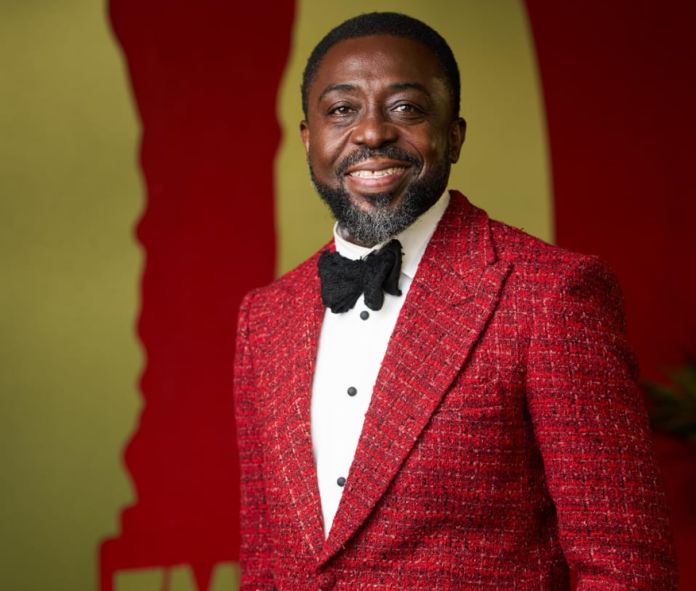
Kafui Dey is an award-winning broadcaster, professional MC, media trainer and public speaking coach. He is the host of Kafui Dey Interviews on YouTube.
Phone/WhatsApp +233240299122
Post Views: 47
Discover more from The Business & Financial Times
Subscribe to get the latest posts sent to your email.