
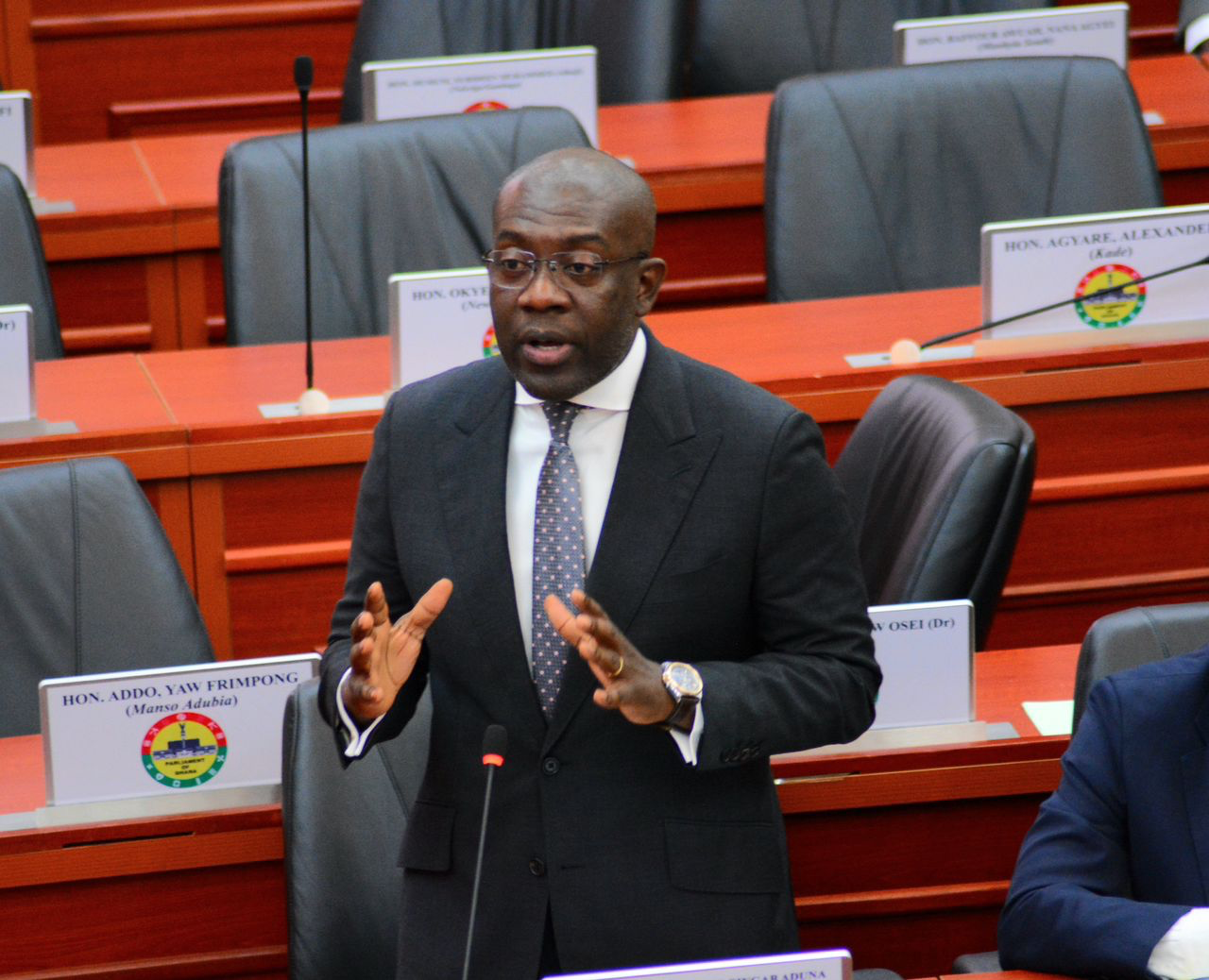
The Ranking Member on Parliament’s Economy Committee, Kojo Oppong Nkrumah, has called on the Bank of Ghana (BoG) to disclose the full amount of monetary financing provided to support the Domestic Gold Purchase Programme (DGPP), following reports of substantial losses linked to the initiative.
His call comes after the International Monetary Fund (IMF) disclosed that the central bank’s Domestic Gold Purchase Programme recorded losses exceeding **US$1.7 billion** in 2025, despite playing a significant role in boosting Ghana’s foreign exchange reserves.
Speaking on Citi FM on Wednesday, August 5, Mr Oppong Nkrumah argued that while attention had largely focused on the reported losses, there was a need for greater transparency regarding the total amount of money the central bank injected into the programme.
He maintained that the public deserved a complete picture of the financial arrangements behind the initiative, particularly the overall value of monetary financing extended to the Ghana Gold Board.
The former Minister for Works and Housing further suggested that the financing arrangement could have implications for the wider economy, including the Bank of Ghana’s ongoing liquidity sterilisation measures aimed at reducing excess money in circulation.
He also expressed concern over what he described as a lack of full disclosure surrounding the programme, indicating that the Minority Caucus and the New Patriotic Party (NPP) would continue scrutinising the available data.
“The other question that we will need to get into eventually is the 1.7 only the loss. What was the gross monetary financing that the Bank of Ghana availed to the Gold Board to be used for this?… In the coming days the Minority and the NPP, as we dig through the numbers some more, we’ll update the nation on what we are finding,” Mr Oppong Nkrumah said.
According to the IMF’s 2026 Article IV Consultation and proposed Policy Coordination Instrument (PCI) report, the Domestic Gold Purchase Programme became a major source of foreign exchange inflows and reserve accumulation for the Bank of Ghana, although it also generated losses exceeding US$1.7 billion during the 2025 financial year.
DISCLAIMER: The Views, Comments, Opinions, Contributions and Statements made by Readers and Contributors on this platform do not necessarily represent the views or policy of Multimedia Group Limited.
DISCLAIMER: The Views, Comments, Opinions, Contributions and Statements made by Readers and Contributors on this platform do not necessarily represent the views or policy of Multimedia Group Limited.
Source link