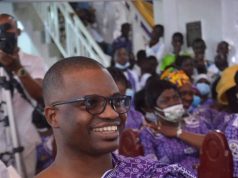

Mussa Dankwah, Executive Director of Global InfoAnalytics, has argued that the report detailing the findings of the Operation Recover All Loot (ORAL) committee should be handed over to the Office of the Special Prosecutor (OSP) rather than the Attorney-General.
Speaking on Facebook, Dankwah expressed concern that if these cases—which total an estimated $21.19 billion in potential recoveries—are managed by the Attorney-General, they risk being derailed by political shifts, especially if the current National Democratic Congress (NDC) fails to win the 2028 elections.
According to Dankwah, a significant portion of the so-called “loot” is tied not to easily recoverable funds but to faulty fiscal policies and spending practices that have already been executed. He pointed out that funds allegedly misappropriated through actions such as the illegal printing of money, dubious National Service Scheme transactions, and classified payments for presidential jet hires have already been expended, leaving little in the way of recoverable assets. This, he argued, makes setting a target of recovering 12.5% of the alleged loot—a figure that would amount to roughly $2.6 billion—a stretch at best.
The ORAL committee, chaired by Samuel Okudzeto Ablakwa, presented its report to President John Mahama on February 10, with the claim that if these funds can be recovered, Ghana might avoid the conditionalities associated with an IMF bailout. In response, the President remarked that Ghana is no longer a safe haven for corruption and forwarded the report to the Attorney-General for action. However, Dankwah warned that the legal gymnastics witnessed in previous administrations suggest that handing these politically charged cases to the Attorney-General might not guarantee a sustained prosecution, particularly beyond the current government’s four-year term.
He argued that the OSP, being more insulated from the political fray, should be strengthened and adequately resourced to take on these cases. By doing so, the prosecutions could continue without being hampered by political pressures or the risk of nolle prosequi filings should the political landscape change after the 2028 elections. Dankwah’s call comes at a time when past practices have seen both current and previous administrations accused of acting as “clearing agents” for politically motivated prosecutions, rather than rigorously pursuing justice.
In his view, depoliticizing these investigations is essential for ensuring that the trials proceed independently and effectively, regardless of the party in power. The debate over whether the Attorney-General or the OSP should handle such sensitive cases highlights a broader issue within Ghana’s legal system: the need to create robust institutional safeguards that prevent political interference and uphold the integrity of the judicial process. As discussions continue and legal experts weigh in, Dankwah’s suggestion is gaining attention as a potential path toward ensuring that the recovery of state assets does not become yet another victim of political expediency.
Send your news stories to newsghana101@gmail.com
Follow News Ghana on Google News