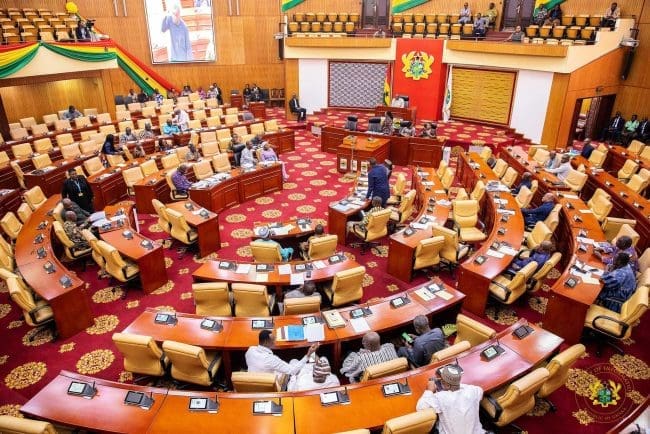
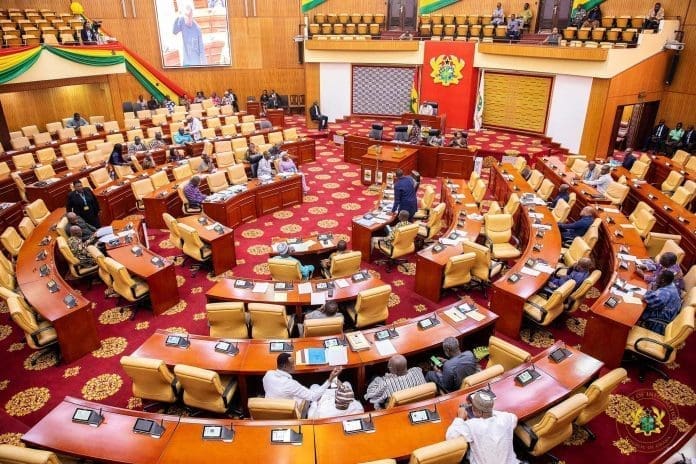

A persistent gap between approved spending and actual fund disbursement has paralyzed essential infrastructure development at Ghana’s local government level, lawmakers learned Wednesday during parliamentary review of the ministry’s 2026 allocation.
Francis Asenso-Boakye, ranking member on Parliament’s Committee on Local Government, Chieftaincy and Religious Affairs, revealed that chronic shortfalls in releasing Capital Expenditure (CapEx) and Development Partner funds have frozen multiple ongoing initiatives. Regional coordinating council office complexes, staff housing units, and spatial planning facilities remain incomplete as promised resources fail to materialize, the Bantama Member of Parliament (MP) told colleagues during debate on the GH¢4.79 billion ministry budget.
The committee’s assessment found that worker compensation alone consumes 65% of the 2026 allocation, leaving constrained fiscal room for actual service delivery and physical infrastructure. Even the modest remaining allocation for Goods and Services plus CapEx suffers from delayed or incomplete disbursement that further weakens implementation capacity.
These financing inconsistencies have cascading effects beyond stalled construction. Monitoring activities that ensure accountability and quality control face resource constraints. Logistics support to Metropolitan, Municipal and District Assemblies (MMDAs) remains inadequate. Human resource strengthening initiatives that build technical capacity at district level lack sufficient funding despite being recognized as critical pillars for effective local governance.
The legislator described the financial disconnection as undermining the ministry’s ability to execute its mandate. When approved budgets don’t translate into timely cash flow, planning becomes meaningless and project contractors face payment uncertainty that disrupts implementation schedules and drives up costs through delays.
Despite these structural problems, the committee acknowledged genuine progress in several areas during 2025. Data system upgrades modernized information management across districts. Civil registration improvements enhanced service delivery for citizens accessing vital documentation. Temporary employment programs provided income opportunities for over 65,000 vulnerable persons, offering economic relief in communities facing hardship.
However, the committee characterized persistent funding gaps as a major structural challenge that threatens project continuity and undermines value for money. When multi year infrastructure initiatives face stop-start financing, costs escalate through contractor mobilization and demobilization cycles, design changes to accommodate delays, and inflationary pressures on materials and labor.
The Ministry of Finance faces direct pressure to improve release predictability and prioritize critical service areas. Without more disciplined disbursement practices, national development stalls at the local level where citizens directly experience government performance through roads, water systems, health facilities, and educational infrastructure.
Parliament appeared poised to approve the GH¢4.79 billion allocation, subject to recommendations for enhanced financing discipline and improved resource flow. The committee’s report essentially tells Finance Ministry officials that approving budgets creates legal authorization to spend but actual development requires matching that authorization with timely cash that allows implementation to proceed without destructive interruptions.
The challenge reflects broader tensions within Ghana’s public financial management system. On paper, budgets allocate resources across competing priorities through a deliberative process involving executive proposals, parliamentary scrutiny, and formal approval. In practice, cash management constraints, revenue shortfalls, competing demands, and institutional coordination failures mean approved allocations often don’t translate into proportional spending.
For MMDAs navigating this environment, the uncertainty creates impossible planning conditions. District chief executives cannot confidently commit to projects when past experience shows budget approval doesn’t guarantee funding arrival. Contractors demand higher contingency margins to protect against payment delays, driving up government procurement costs. Communities lose faith in local authorities who promise improvements that never materialize due to factors beyond district control.
The compensation share consuming nearly two thirds of the ministry’s allocation reflects Ghana’s public sector employment structure where permanent staff costs create rigid commitments that constrain discretionary spending. When payroll obligations absorb such dominant portions of budgets, governments have limited flexibility to redirect resources toward changing priorities or respond to emerging needs.
This dynamic appears across multiple sectors beyond local government. Health, education, security, and administrative ministries face similar pressures where compensation eats increasing shares of total allocations while service delivery components shrink. The pattern raises fundamental questions about public sector efficiency and whether Ghana maintains more civil servants than optimal resource allocation would suggest.
Reforming this structure requires politically difficult decisions about staffing levels, wage policies, and service delivery models that emphasize productivity over headcount. No government finds such reforms easy to execute given resistance from organized labor, concerns about unemployment, and short term political costs versus long term fiscal benefits.
For now, local government projects languish incomplete while approved budgets gather bureaucratic dust awaiting disbursement approvals that may come months late or not at all. The committee’s call for improved financing discipline reflects frustration with a pattern that has persisted across multiple administrations regardless of which party controls executive authority.
Whether the Finance Ministry will respond with substantive changes to disbursement practices or offer familiar explanations about cash flow constraints and competing priorities remains uncertain. Past parliamentary recommendations on similar issues have produced limited behavioral change, suggesting deeper institutional reform may be necessary to break cycles that continue undermining development implementation despite repeated identification of root causes.
The 2026 allocation debate highlighted these dynamics with unusual clarity, but whether such clarity produces different outcomes depends on political will to confront structural problems rather than managing them through incremental adjustments that preserve dysfunctional patterns.