
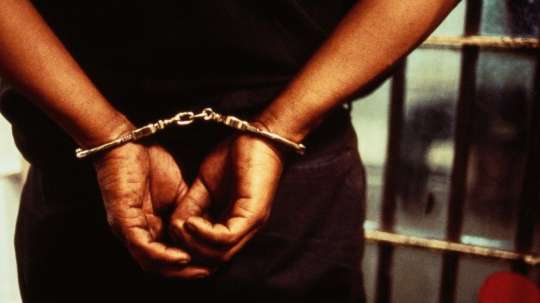

The Upper East Regional Police Command arrested four suspects Thursday during a targeted operation against drug peddling and illegal gaming activities at criminal hideouts in Paga, seizing narcotics and gaming machines.
Police identified the suspects as Kofi Boateng, Eric Owusu, and Godwin Agosa, all porters, and Abdul Aziz Bukari, a driver’s mate. The December 18 intelligence-led operation focused on locations along the Paga border known for illicit activities.
Officers retrieved multiple exhibits during the swoop including eight jackpot gaming machines, thirteen rolls of dried leaves suspected to be Indian hemp, three mobile phones, three pairs of scissors, three lighters, one power bank, one empty phone case, and twenty-five Ghana cedis in cash.
The operation forms part of intensified police efforts to dismantle drug trafficking networks and illegal gambling operations within Upper East border communities. Police emphasized that the border location creates unique enforcement challenges as criminals exploit cross-border movement to evade detection.
All four suspects remain in police custody assisting with investigations. The Ghana Police Service indicated that those found culpable will face prosecution and the full rigors of the law. The command has not disclosed whether additional suspects are being sought in connection with the seized items.
The recovered gaming machines represent violations of gaming regulations requiring proper licensing and oversight. Jackpot machines operate in many communities despite legal restrictions intended to prevent gambling-related social problems and protect vulnerable populations from addiction.
The thirteen rolls of suspected Indian hemp await laboratory testing to confirm their nature. Police typically send seized substances to forensic laboratories for chemical analysis establishing their composition before filing formal charges. Cannabis possession and distribution carry substantial penalties under Ghana’s narcotic drugs legislation.
The mobile phones recovered during the operation likely contain communications evidence linking suspects to broader distribution networks. Digital forensics teams typically examine seized devices for contact lists, transaction records, and location data revealing organizational structures and operational patterns.
Paga’s position as a border town with Burkina Faso creates enforcement complexities. The porous border enables movement of contraband and persons between countries without passing through official checkpoints. Police forces on both sides coordinate to address cross-border criminal activities.
The December operation reflects broader police initiatives targeting drug peddling ahead of the Christmas season. Multiple regional commands conducted similar sweeps during mid-December, arresting dozens of suspects and seizing various narcotics across Ghana.
The Central Regional Police Command arrested seven suspects December 13 during operations at Cape Coast drug peddling hotspots in Effutu, Poly Amisano, and Nkanfoa. Officers recovered assorted narcotics including timaking, Tdrona, royal fart, dried leaves suspected as Indian hemp, tobacco products, and gaming machines.
The Eastern North Regional Police Command arrested three suspects at Kwahu Nkwatia, recovering forty-six wraps of suspected narcotic drugs and ten rounds of BB ammunition. The suspects, aged between twenty-five and forty-five, are assisting investigations into drug distribution networks operating in the area.
Tema and surrounding communities saw thirty-eight arrests during Christmas special operations at Prampram, Tema Newtown, Sege, and Kpong. The coordinated raids targeted known criminal hideouts ahead of increased festive season travel and social activities.
Police described the nationwide operations as intelligence-led efforts to clamp down on drug peddling, illegal gambling, and other criminal activities. The simultaneous operations across multiple regions demonstrate coordination among regional commands implementing unified enforcement strategies.
Narcotic drug abuse represents a growing concern across Ghanaian communities. Police statistics indicate increasing seizures of cannabis, prescription medications used recreationally, and synthetic substances. Youth involvement in drug abuse particularly troubles authorities given long-term health and social consequences.
The porters arrested in Paga likely represent the lowest tier of distribution networks. Street-level dealers typically lack organizational authority but face prosecution nonetheless. Authorities seek to work up distribution chains toward suppliers and financiers who rarely handle drugs directly.
Driver’s mates occupy unique positions in transport-related criminal activities. Their mobility and access to vehicles make them valuable for moving contraband between locations. Some driver’s mates engage in distribution while conducting legitimate work, using their cover to avoid suspicion.
The twenty-five cedis seized suggests small-scale transactions consistent with retail drug sales. Larger operations typically involve thousands or millions of cedis in cash alongside substantial drug quantities. However, even minor dealers contribute to broader networks requiring disruption.
Gaming machine seizures address concerns about illegal gambling’s social impact. Unregulated gaming exposes participants to exploitation while generating no tax revenue for government services. Children and vulnerable adults particularly risk developing gambling addictions when machines operate without proper controls.
The scissors and lighters recovered likely served packaging and consumption purposes. Drug dealers use scissors to prepare cannabis for sale while lighters enable consumption. These seemingly innocuous items become evidence when found alongside narcotics at crime scenes.
The power bank and phone case recovered alongside mobile phones suggest suspects maintained constant communication capability. Drug dealers rely heavily on mobile technology for coordinating transactions, receiving orders, and arranging deliveries. Maintaining charged devices becomes operationally critical.
Police custody procedures require suspects receive appropriate treatment while investigations proceed. Officers must document arrests properly, preserve evidence chains, and ensure suspects understand their rights. Any procedural failures could jeopardize subsequent prosecutions.
Laboratory analysis of seized substances typically requires several weeks depending on facility workload. Forensic chemists test samples to identify specific compounds, measure purity levels, and quantify total amounts. These findings determine charge severity and potential sentences.
Defense attorneys will examine whether police followed proper search and seizure procedures. Evidence obtained through illegal searches faces exclusion from court proceedings. Police must demonstrate they possessed reasonable grounds for searches or obtained proper warrants.
Prosecutors will evaluate available evidence to determine appropriate charges. Simple possession carries lighter penalties than possession with intent to distribute, which prosecutors must prove through evidence like quantity, packaging, scales, or communications indicating sales activity.
The gaming machines seizure may involve separate charges under gaming and lottery regulations. Authorities typically charge both machine operators and location owners benefiting from illegal gaming activities. Penalties include fines, imprisonment, and permanent business closure.
Community cooperation proves essential for sustained enforcement success. Residents who report suspicious activities enable police to target specific locations rather than conducting random patrols. Anonymous tip lines encourage information sharing without exposure risks.
The Paga operation demonstrates police capacity for intelligence-led enforcement. Rather than reactive responses to reported crimes, proactive operations based on gathered intelligence enable dismantling criminal networks before they expand. This approach requires sustained surveillance and analysis.
Border communities face unique challenges balancing legitimate cross-border commerce and social ties with security requirements. Many Paga residents maintain family and business relationships across the border, complicating efforts to restrict movement and monitor transactions.
The Upper East Region experiences particular drug trafficking pressure given its position along routes connecting coastal areas with Sahelian countries. Traffickers exploit Ghana’s road network and porous borders to move contraband northward toward markets in Burkina Faso, Niger, and Mali.
Regional cooperation between Ghana Police Service and Burkina Faso security forces aims to address cross-border crime. Joint operations, intelligence sharing, and coordinated patrols help both countries combat trafficking networks operating across national boundaries.
The Ghana Police Service has emphasized zero tolerance for drug trafficking and related crimes. Senior officers regularly announce intensified enforcement during public statements intended to deter potential offenders while reassuring concerned citizens that authorities actively address drug problems.
Public education initiatives complement enforcement efforts. Police visit schools, community centers, and religious institutions to discuss drug abuse dangers and encourage youth to reject substance use. Prevention programs aim to reduce demand that sustains trafficking networks.
Treatment and rehabilitation services remain inadequate for Ghana’s drug abuse problem scale. While enforcement disrupts supply chains, addressing demand requires accessible treatment facilities, counseling services, and social support helping users achieve sobriety and rebuild productive lives.
The Christmas season enforcement surge reflects recognition that holiday periods see increased drug use and criminal activity. Celebrations involving alcohol consumption sometimes include other substances, while economic pressures drive some toward illegal income sources.
Police resources face strain during festive periods requiring simultaneous attention to traffic management, crime prevention, crowd control, and emergency response. The special operations demonstrate commitment to maintaining order despite competing demands on limited personnel and equipment.
Success in the Paga operation will be measured not just by arrests and seizures but by whether criminal networks experience lasting disruption. Effective enforcement requires sustained pressure preventing organizations from simply replacing arrested members and resuming operations.
The four suspects face uncertain futures depending on investigation outcomes. First-time offenders caught with small quantities might receive lighter sentences than repeat offenders or those proven to operate distribution networks. Ghana’s criminal justice system considers multiple factors when imposing penalties.