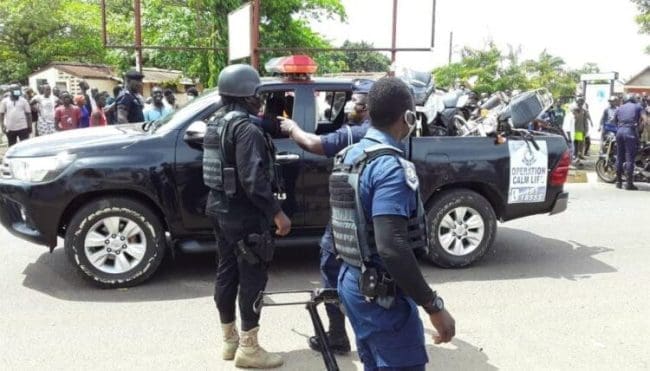
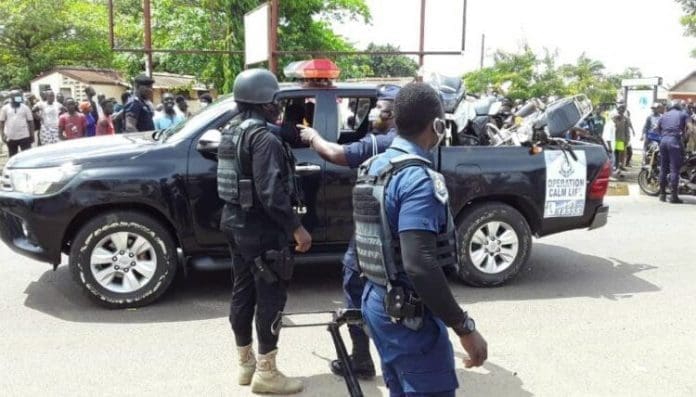

Police have arrested three more suspects described as key gang leaders linked to the Adabraka gold robbery, bringing the total number of suspects in custody to seven following months of intelligence led operations and surveillance by the Inspector General of Police’s Special Operations Unit.
The latest arrests were carried out on Monday afternoon, January 19, 2026, in Ashaiman. The suspects have been identified as Nashiru Abubakari, also known as Soldier; Fatao Mohammed, known as Motorway; and a third individual called 50 Cent.
Police sources indicate that the operation represents the culmination of meticulous intelligence gathering, continuous monitoring, and targeted tactical action aimed at dismantling the criminal network responsible for the violent robbery that shocked the nation in November 2024.
With these arrests, the total number of suspects in custody now stands at seven, following the earlier detention of four others connected to the robbery. The Ghana Police Service stated in a release on January 20 that investigations are ongoing to trace and apprehend other accomplices while efforts are underway to recover exhibits linked to the crime.
The suspects are currently in police custody and will be processed for court in line with due process. The arrests represent a significant breakthrough in investigations into the brazen daylight robbery that saw armed men steal 7.5 million cedis from a jewellery shop at Adabraka in Accra.
The Adabraka robbery occurred on November 2, 2024, when a group of armed men stormed the area in broad daylight and attacked a jewellery shop. The assailants targeted a vehicle transporting proceeds from a gold transaction being conveyed to a bank.
Viral videos from the scene showed at least five heavily built men wielding various firearms and firing shots into the air as they loaded stolen items, including bags believed to contain money, into a silver vehicle. Witnesses said the robbers ordered a bystander who had raised his hands in surrender to comply with their demands.
At one point, the suspects were seen scattering some of the money they had seized while continuing to fire warning shots. After loading the stolen items, the robbers sped off while firing additional shots into the air. The incident left at least one person injured after being hit by gunfire from the suspected robbers.
Preliminary investigations indicated that the suspect and his accomplices, who were armed with AK 47 assault rifles, intercepted the victim’s vehicle and fired several shots to scare away members of the public. The brazen nature of the attack, conducted in broad daylight near the busy Adabraka Market area, sparked widespread public concern across Accra.
The first major arrest in the case came on November 20, 2025, when police apprehended Salim Mohammed, also known as Fariwata, at a hospital in Ashaiman where he had gone to seek medical care. The arrest was made through the Office of the Special Operations Assistant to the Inspector General of Police after months of intelligence led investigations.
On January 7, 2026, police arrested two additional suspects identified as Hamza Agerego, also known as Nene Bawku or Lambert, and Alhassan Elliasu, also known as Arab Man. They were picked up from their hideouts at Ashaiman through operations conducted by the Office of the Special Operations Assistant to the Inspector General of Police.
According to police, Hamza Agerego was first arrested and detained at the Katamanso District Police Headquarters in connection with the robbery. Acting on intelligence, a follow up operation was conducted at Ashaiman, leading to the arrest of Alhassan Elliasu at his hideout.
A search of the premises resulted in the recovery of a cache of weapons and other items, including two pump action guns, 43 rounds of AK 47 ammunition, 239 rounds of assorted ammunition, 14 mobile phones, and a quantity of foreign currencies believed to be connected to the robbery or other criminal activities.
On January 15, 2026, police retrieved a Toyota Highlander vehicle believed to have been used in the high profile Adabraka Gold Jewellery Shop robbery. The vehicle was recovered at Ashaiman Lebanon from its owner, suspect Abdul Samid Larry, popularly known as Touch, who was arrested during the operation.
The Toyota Highlander, identified as an exhibit in the Adabraka gold robbery case, has been impounded for further investigations. The suspect is currently in lawful custody and assisting with investigations as efforts intensify to determine his level of involvement and trace other persons linked to the robbery.
Police sources have told media outlets that the latest arrests on January 19 targeted key gang leaders believed to be behind the Adabraka robbery. The three suspects, Nashiru Abubakari, Fatao Mohammed, and the individual known as 50 Cent, are suspected of playing central roles in planning and executing the robbery.
The arrests demonstrate sustained police commitment to investigating the case and bringing all perpetrators to justice despite the months that have elapsed since the November 2024 incident. The recovery of weapons, ammunition, vehicles, and other exhibits strengthens the prosecution’s case as suspects face court proceedings.
In recognition of the investigative work that led to the initial arrests, the Ghana Police Service promoted 35 officers who played key roles in tracking down suspects in the Adabraka gold robbery incident. The promotions acknowledged the professionalism, dedication, and commitment demonstrated by the officers in conducting the complex investigation.
The Adabraka robbery represents one of the most high profile criminal cases in recent years, capturing national attention due to the brazen nature of the attack conducted in broad daylight in a busy commercial area. The thieves’ willingness to use heavy weaponry and fire shots in crowded public spaces raised serious concerns about public safety and security.
For the victims, the theft of 7.5 million cedis represented a devastating financial loss that disrupted business operations and created trauma for those directly affected by the violent attack. The protracted investigation has kept the case in public consciousness as police methodically tracked down suspects across various locations.
The concentration of arrests in Ashaiman suggests the area may have served as a base of operations or hideout location for members of the criminal network. Security analysts note that organized criminal groups often establish presences in densely populated urban areas where anonymity is easier to maintain and movement can be concealed among regular commercial activity.
The recovery of substantial quantities of weapons and ammunition during the arrests raises questions about the suspects’ involvement in other criminal activities beyond the Adabraka robbery. Police have not disclosed whether investigations are examining possible connections to additional armed robberies or other violent crimes.
Legal proceedings against the seven suspects currently in custody will determine their individual roles and culpability in the robbery. Under Ghanaian law, armed robbery carries severe penalties including lengthy prison sentences for those convicted of planning, participating in, or facilitating such crimes.
The use of aliases by all suspects arrested in connection with the case, including Soldier, Motorway, 50 Cent, Fariwata, Touch, Nene Bawku, Lambert, and Arab Man, suggests organized criminal activity with members using street names to conceal their identities and complicate law enforcement efforts to track their activities.
Investigators face the challenge of establishing chains of command within the criminal network, identifying who planned the robbery, who recruited participants, who provided weapons, who conducted surveillance, and who executed the actual attack. Forensic analysis of recovered exhibits including vehicles, weapons, and communications devices will support prosecution efforts.
The Ghana Police Service has assured the public that investigations into the Adabraka Gold Jewellery Shop robbery are ongoing and reiterated its commitment to bringing all persons involved to justice. Additional arrests are expected as police continue tracing accomplices who may have provided support, resources, or safe harbor to the primary suspects.
For the jewellery shop owners and employees who experienced the trauma of the violent robbery, the arrests may provide some measure of closure and justice, though the financial losses and psychological impacts of the attack likely continue affecting them months after the incident.
The case highlights ongoing challenges facing law enforcement in combating armed robbery and organized crime in urban areas. Success in this investigation demonstrates the effectiveness of sustained intelligence gathering, inter agency coordination, and tactical operations when properly resourced and executed.
As the seven suspects await court proceedings and police continue searching for additional accomplices, the Adabraka robbery case serves as a reminder of both the audacity of criminal enterprises and the determination of law enforcement to pursue justice regardless of how long investigations require.