

By Melissa Sackey
Director of Communications of the United Party, Solomon Owusu, has raised concerns about weaknesses in Ghana’s educational system, particularly pointing to the management of examination registration and students’ academic records. Following the growing practice of Junior High School One (JHS 1) and JHS 2 pupils registering to write the Basic Education Certificate Examination (BECE) ahead of their prescribed academic period.
Mr Owusu questioned how students who have not appropriately gone through JHS 3 are able to register for the examination through other schools without the required cumulative assessment records.
“Every child has a cumulative record from Primary One to JHS Three. So, if a student from a private school in JHS One goes to register for the BECE in a government school, how did the school get the cumulative assessment for that student who has never been in JHS Three?” he questioned.
He argued that the practice raises concerns about the credibility of the examination registration process and could disrupt educational planning, particularly as government budgetary allocations and senior high school placement projections are based on the expected number of students entering and completing JHS 3.
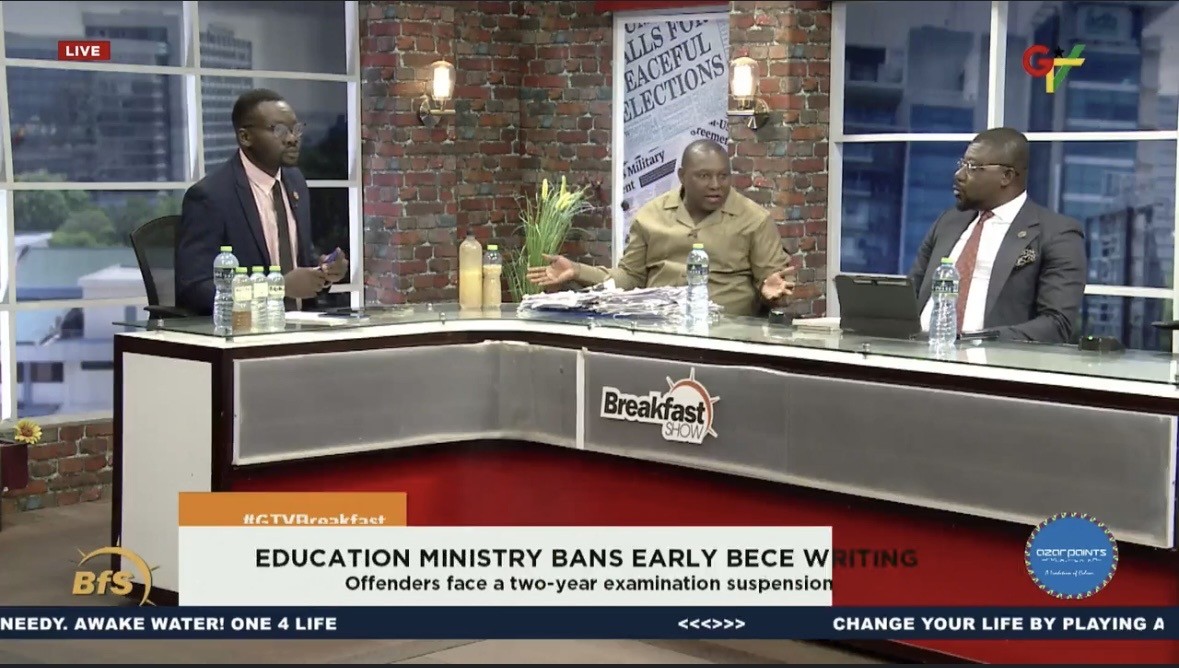
Mr. Solomon Owusu made the observations during discussions on GTV’s Breakfast Show, regarding the directive by the Minister of Education, Haruna Iddrisu, instructing the Education Ministry to enforce an immediate ban on early BECE registration.
Under the directive, offenders face a two-year suspension from participating in the examination. The measure is intended to stop JHS 1 and JHS 2 pupils from sitting for the BECE before completing the prescribed academic period, with the Minister stressing the need to ensure fairness and equal opportunities for all candidates.
Contributing to the discussion, a member of the NDC National Communications Team, Kingsley Haruna Amaliba, emphasised the importance of education to national development and urged parents to take responsibility for ensuring their children follow the appropriate academic progression.
He described education as the bedrock of society and cautioned parents against allowing their children to write the BECE before their scheduled time, since the practice is likely to negatively affect students who jump the prescribed progression, as they go further in their academic exploits.
Meanwhile, a member of the NPP Legal Directorate, Ross Osei Owusu, called for an investigation into the West African Examinations Council (WAEC), citing concerns about the comparative performance of candidates in the recent WASSCE and BECE examinations.
He described this year’s WASSCE results as exceptionally good compared with the BECE results and said his party would closely monitor the examination process from January 2027 through to the conduct of the examinations.
The discussion highlighted concerns about examination integrity, the verification of students’ academic records and the need for stronger monitoring to ensure credibility in Ghana’s basic education assessment system.