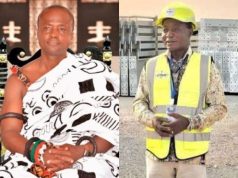


Isham Alhassan, a presidential staffer and Ashanti Regional Organiser of the ruling National Democratic Congress, has announced his intention to contest the party’s Ashanti Regional Chairmanship ahead of the 2028 general election.
Alhassan said his decision was driven by years of grassroots and regional experience within the party, arguing that the NDC needs an experienced and unifying leader in the politically strategic Ashanti Region. He told reporters in Kumasi that he has served the party at every level, from branch organiser through ward organiser to regional organiser.
The presidential staffer explained that he has worked under at least six regional chairmen, including the current one, and believes that experience positions him well to lead the party. He stressed that the 2028 elections would be critical for the NDC, especially as the incumbent regional chairman completes his term.
According to Alhassan, the NDC must present someone who understands the grassroots, has institutional memory, and can unite the party ahead of the task. He expressed confidence that if he files to contest, he will win and also bring his opponents together for the bigger objective.
Alhassan’s declaration comes as the NDC seeks to consolidate recent electoral gains in the Ashanti Region, long considered a stronghold of the New Patriotic Party. In the 2024 general election, the NDC secured more than 34 percent of the presidential vote in the region and won parliamentary seats in constituencies previously dominated by the NPP.
He called on party members and executives to maintain unity as the internal contest intensifies, warning that divisions could undermine the party’s momentum. The Ashanti Regional Chairmanship race is expected to be closely fought, with several contenders preparing to unseat the current chairman, Augustus Andrews Nana Akwasi.
The Ashanti Region represents the most populous voting bloc in Ghana and has historically delivered overwhelming majorities for the NPP in presidential and parliamentary elections. However, the NDC’s improved performance in 2024 has energized the party’s base and attracted increased attention to regional leadership positions.
Alhassan’s dual role as presidential staffer and regional organiser gives him both national visibility and deep regional networks, potentially strengthening his candidacy. Presidential staffers typically have direct access to party leadership and government resources, advantages that could prove significant in internal party elections.
His emphasis on institutional memory and experience working under multiple regional chairmen positions him as a continuity candidate familiar with party structures and processes. This contrasts with potential challengers who may present themselves as agents of change or fresh leadership.
The NDC won parliamentary seats in constituencies including Manhyia South, Nhyiaeso, and Bantama in the 2024 elections, breaking decades of NPP dominance in urban Kumasi. These victories have been credited partly to improved grassroots organization and mobilization, areas where the regional organiser plays a crucial role.
Alhassan’s call for unity reflects concerns within the NDC about potential divisions as the party prepares for internal elections across all levels. Contested leadership races can generate tensions that persist beyond the elections, potentially affecting campaign cohesion during general elections.
The current Ashanti Regional Chairman, Augustus Andrews Nana Akwasi, has served multiple terms and presided over the party’s gradual growth in the region. His tenure has seen the NDC move from single-digit parliamentary representation to winning multiple seats in the 2024 elections.
However, some party members have questioned whether the NDC can build on recent gains without fresh leadership approaches. This debate between continuity and change is likely to feature prominently in the chairmanship contest.
Alhassan’s confidence that he can unite opponents after winning suggests an awareness that internal party elections can create divisions requiring active reconciliation. His statement may be intended to reassure party members concerned about post-election tensions.
The timing of his announcement, more than three years before the 2028 general elections, indicates that internal party positioning has begun early. NDC regional elections are typically held in election years or the year preceding, meaning the actual contest may not occur until 2027 or early 2028.
Political analysts note that early declarations can help candidates build momentum, secure endorsements, and fundraise for their campaigns. However, early frontrunners also face extended scrutiny and potential opposition organization.
The Ashanti Regional Chairmanship carries significant influence within the NDC’s national structure, with regional chairmen sitting on important party decision-making bodies and controlling substantial organizational resources. The position also commands respect within the Ashanti political landscape beyond party structures.
Alhassan has not detailed specific policy proposals or strategic priorities for the region, focusing instead on his experience and unifying potential. Candidates typically develop detailed manifestos as campaigns intensify and party delegates prepare to vote.
Other potential contenders for the position have not yet formally declared their intentions, though party sources suggest several prominent figures are considering challenging for the chairmanship. The emergence of multiple credible candidates could lead to a competitive election.
The NDC’s national leadership has not commented on Alhassan’s declaration or the upcoming Ashanti Regional elections. Party officials typically maintain neutrality during internal contests to avoid perceptions of interference or favoritism.